What you’ll learn
We’ll break down what causes hair loss during menopause, what it looks like, and which evidence-based treatments can help manage thinning and encourage regrowth.
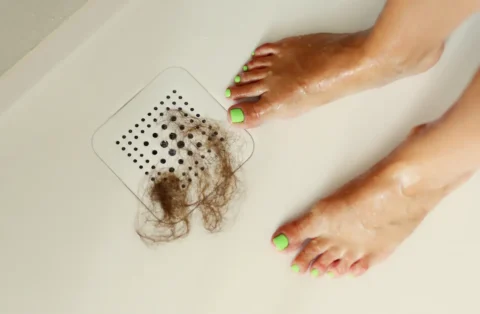
Have you noticed more hair in the shower drain or your brush lately? Does your ponytail feel noticeably thinner or your part seem a little wider in certain lighting? If you’re going through perimenopause or menopause, these changes are common, and you’re definitely not alone. Thinning hair during menopause is one of the less talked-about symptoms, but it affects a significant number of women.
While it can feel alarming and frustrating, menopausal hair loss is usually slow-moving, and there are evidence-based treatments that can help. Here’s what you need to know about why it happens and what you can do about it.
How hair usually grows
Your hair is always cycling through different growth phases, and every single follicle is on its own timeline. That’s why you always have a mix of hair at different stages at all times. Understanding these phases helps explain how menopause can throw things off balance. Here are the four phases each hair goes through:
- Growth phase (anagen): Your hair follicle actively produces new hair during this phase, which can last 2 to 6 years. Most of the hair on your head is in this phase at any given time.
- Transition phase (catagen): This is the winding-down stage where your hair follicle shrinks and detaches from its blood supply. Growth stops, and the hair stays in place. This phase lasts about 1 to 2 weeks.
- Resting phase (telogen): The follicle is at rest, and the old hair stays put but starts to loosen. This phase lasts around 2 to 3 months.
- Shedding phase (exogen): The old hair falls out, usually when you’re washing or brushing your hair, or just going about your day.
Why do perimenopause and menopause cause hair loss?
During perimenopause and menopause, the levels of estrogen and progesterone your body produces start to decline. Beyond affecting your periods and how often you get hot flashes, these hormones also help keep your hair thick and shiny. When hormone levels drop, they can change how your hair follicles work, leading to more shedding, thinner strands of hair, or slower regrowth.
Here are some of the ways hormonal changes can contribute to hair loss or thinning:
Lower estrogen levels
With the help of estrogen, hair stays in the growth phase longer. When estrogen levels drop, hair will move into the resting and shedding phase sooner than normal. Over time, this looks like thinning, and you may notice more hair in your brush or shower drain.
Changes in scalp oil
Hormonal shifts during menopause, especially declines in estrogen, reduce the amount of natural oil (sebum) your scalp produces. Less sebum leads to a drier scalp and hair, which can feel more brittle and prone to breakage. Even without losing more hair at the root, fragile strands that break easily can make your hair look less full.
Reduced blood flow and follicle support
When hormones shift, blood flow to your scalp can decrease, which means your hair follicles get less of the nutrients they need for growth and strength. The result is hair that grows in finer, shorter, and weaker than before.
Metabolism and body changes
Menopause often brings changes in metabolism, weight, sleep, and stress levels, and all of these can affect your hair too. Common symptoms of menopause, like poor sleep and high stress, can amplify the shedding that’s already happening from hormonal shifts. Meanwhile, inflammation and blood sugar changes can interfere with how well your body absorbs nutrients your hair needs, like iron, vitamin D, and protein.
Treatments for menopausal hair loss
Thinning hair is upsetting for many women going through menopause. Fortunately, there are several evidence-based treatments that can slow shedding and support regrowth.
As Dr. Sheryl Ross (Dr. Sherry), Chief Medical Officer of Women’s Health here at QuickMD, explains,
“The good news is not all women will experience noticeable hair loss during perimenopause or menopause, and the extent of hair loss may vary. If you’re concerned about excessive hair loss, consulting with a healthcare professional or a dermatologist can be helpful to provide personal guidance and treatment options.”
Here are the most common treatments and how they work:
Menopause hormone therapy (MHT)
Because hormone changes are a major trigger for hair thinning during menopause, menopause hormone therapy may help some women by stabilizing estrogen and progesterone levels. MHT can sometimes slow further thinning and support healthier growth while also improving other symptoms like hot flashes, night sweats, and mood swings.
Topical minoxidil
Minoxidil (which you may recognize by the brand name Rogaine) is one of the most common treatments for female pattern hair loss. It’s applied directly to the scalp once or twice daily and helps extend the growth phase of hair and increase blood flow to the follicles. After several months of use, many women notice less shedding and some regrowth, especially along the part and crown. It can be used over the long term to maintain results, though some women experience mild scalp irritation or dryness.
Targeted shampoo and scalp treatments
Shampoos and scalp treatments designed for thinning hair support growth by creating a healthier scalp environment. Look for ingredients like biotin, caffeine, or saw palmetto that can reduce buildup, gently exfoliate, and add volume to individual strands.
Nutritional supplements
If recent lab work has shown low levels of iron, B12, vitamin D, or other nutrients, bringing those levels back up can improve your overall hair quality. Supplements designed for hair, skin, and nails can support healthy hair growth, but they can’t override strong genetic or hormonal factors. Check with your provider before starting a new supplement, especially if you take other medications.
Lifestyle and haircare changes
Reducing heat styling with hair dryers, curling irons, and flat irons can help minimize breakage. So can avoiding tight hairstyles that pull at the roots and switching to wide-tooth combs and soft brushes. Beyond hair care, managing stress, getting quality sleep, and eating a nutrient-dense diet can make your hair more resilient and may help other treatments work better.
Interested in learning more about menopause hormone therapy (MHT)? Talk to QuickMD doctors today
Not all women will experience noticeable hair loss during menopause. But, if you’re concerned about excessive hair loss, consulting with a healthcare provider can help you find the right treatment for you, whether that’s MHT, minoxidil, or other treatment and prevention options.
Frequently asked questions
Does hair regrow after menopause?
Hair regrowth after menopause is possible, but results vary based on the individual and the underlying cause of hair loss. Treatments such as menopause hormone therapy (MHT) and topical minoxidil have shown some effectiveness in promoting hair growth or slowing loss in menopausal women.
What does menopausal hair loss look like?
Menopausal hair loss usually looks like overall thinning, especially along the part or crown. You may notice a widening part, more scalp showing in bright light, or a skinnier ponytail than usual.
When does menopausal hair loss usually happen?
Menopause-related hair thinning generally starts during perimenopause, which often happens in a woman’s 40s or early 50s. If you’re around this age and noticing gradual thinning, hormonal shifts may be the culprit.
Does hair grow back thicker after its cut?
No, cutting your hair doesn’t make it grow back thicker. It only appears thicker because a fresh cut shows the full width of the hair shaft, while natural ends are tapered.