What you’ll learn
This article will walk you through eight different types of resources available for recovery from opioid use disorder (OUD). You’ll learn about medical treatments, counseling options, and community resources that form a stronger network of support when you need them on your recovery journey.
Recovery looks different depending on where someone is in it. The resources that help most in the early days aren’t always the same ones that matter a year or two in. This guide covers eight types of support available for opioid use disorder, from medical treatment to community connection, so anyone can find what fits where they are right now.
Some of these resources will be familiar. Others might fill a gap that’s been hard to name. The goal isn’t to use all of them. Knowing what’s available makes it easier to find the right option when it’s needed.
Across the country, there are a variety of compassionate resources available to support you or your loved ones in overcoming opioid use disorder (OUD). From Medication-Assisted Treatment (MAT) programs to emotional support networks, this guide is here to connect you with resources and provide encouragement.
8 types of opioid addiction resources
Whether you’re seeking medical treatment, counseling, or peer support, there are a number of resources available to help you:
1. When there’s a need for somewhere to start: SAMHSA hotline
The Substance Abuse and Mental Health Services Administration (SAMHSA) offers a confidential, free, 24/7 information service for individuals and families battling substance use disorders. Their National Helpline provides referrals to local treatment facilities, support groups, and community-based organizations. If you’re feeling overwhelmed or unsure where to start, calling 1-800-662-HELP (4357) can connect you with someone who understands what you’re going through and can help guide you to appropriate resources in your area.
2. When the physical side of recovery needs more support: Medication-Assisted Treatment (MAT)
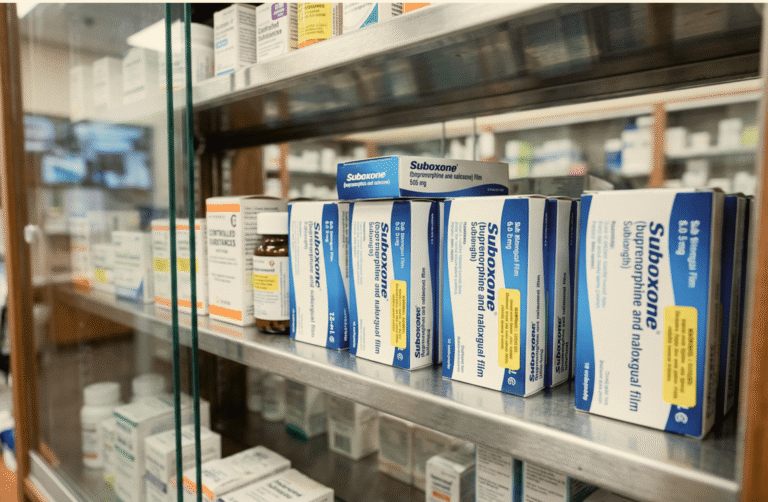
Medication-Assisted Treatment combines FDA-approved medications (like Suboxone®) with counseling and behavioral therapies to address both the physical and emotional aspects of OUD.
This approach helps manage withdrawal symptoms and cravings, giving individuals the stability they need to focus on long-term recovery. Research shows that combining MAT with behavioral therapy ensures the best chance of lasting recovery for most patients.
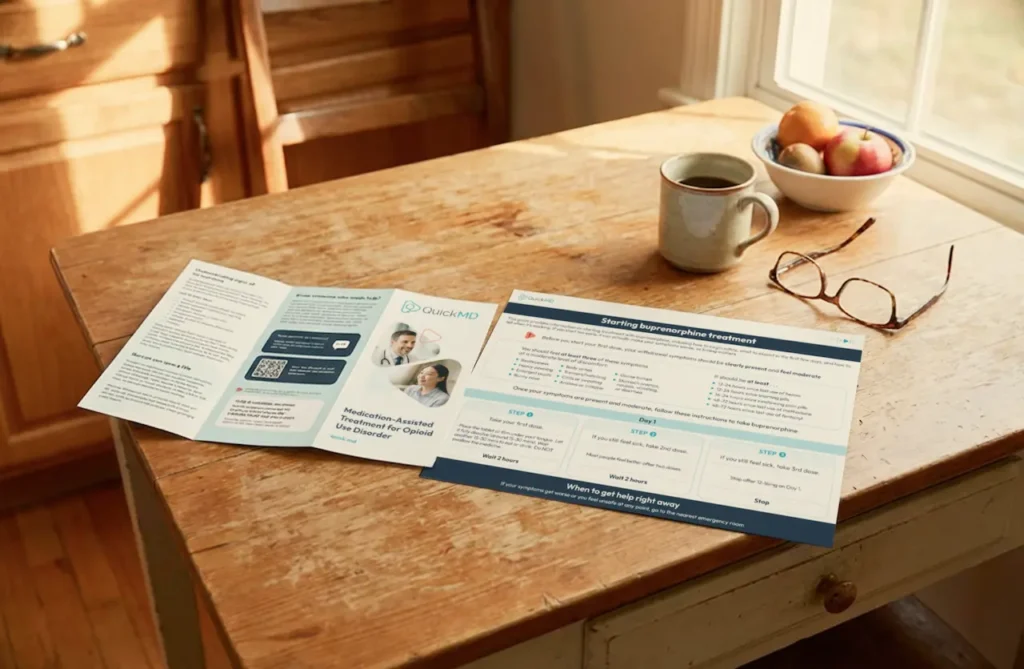
Additionally, telemedicine services like QuickMD offer convenient access to MAT options, including Suboxone, through online consultations with certified clinicians. This makes starting treatment more accessible than ever before. (We’ll cover teleMAT resources in greater detail later in this guide.)
In both the MAT and teleMAT programs, your doctor will work with you to find a medication that works for your unique situation. FDA-approved medications used to treat OUD include:
Suboxone®
Suboxone combines buprenorphine (a partial opioid agonist) with naloxone (an opioid antagonist) to help reduce cravings and withdrawal symptoms while discouraging misuse. Available as tablets or films that dissolve under the tongue, Suboxone can often be prescribed through telemedicine providers like QuickMD, giving people a more convenient and private option throughout recovery. The FDA-approved medication works by binding to the same receptors as other opioids but with less intense effects, helping to stabilize brain chemistry during recovery.
Naltrexone
Naltrexone works differently from other MAT medications by blocking opioid receptors entirely, preventing any euphoric effects if opioids are used. Naltrexone is available as a daily pill or a monthly injection (under the brand name Vivtrol®). According to the FDA, naltrexone should only be started after a person has been opioid-free for at least 7-10 days to avoid precipitated withdrawal.
Buprenorphine
Buprenorphine is a partial opioid agonist that helps reduce cravings and withdrawal symptoms with a lower risk of misuse compared to full opioid agonists. Available as sublingual tablets, films, or implants, buprenorphine (often prescribed as Suboxone when combined with naloxone) can be prescribed by certified providers in various settings, including telemedicine platforms.
Methadone
Methadone is a long-acting opioid agonist that helps reduce cravings and withdrawal symptoms without producing the euphoric effects of other opioids. It’s available in various formats, including liquid, tablet, or powder. Regardless of format, methadone is typically dispensed daily at specialized clinics. It’s been used successfully for decades to help people stabilize their lives during recovery.
3. When getting to appointments is the barrier: TeleMAT programs
TeleMAT programs offer the same proven effectiveness of in-person MAT, but give people the option to get support and guidance on their recovery through a telemedicine platform. This approach combines FDA-approved medications like Suboxone with the convenience and privacy of virtual care, offering the same benefits as traditional MAT programs without the need for frequent clinic visits.
QuickMD has been at the forefront of making recovery more manageable through TeleMAT services and revolutionizing how individuals access life-changing care. By simplifying access to Suboxone and other MAT options online, we make it easier than ever to start and maintain recovery from the comfort and privacy of home. TeleMAT can be especially helpful for people who live far from treatment centers or who don’t have a reliable means of transportation. TeleMAT makes it more convenient for people to create a recovery schedule that works for them, allowing patients to focus on sobriety and rebuilding a full life without worrying about traveling to an appointment.
Through QuickMD’s TeleMAT services, you can consult with doctors who specialize in OUD, get prescription medications if appropriate, and access ongoing support through their platform. This flexible approach means appointments are available online 7 days a week, combining the power of MAT with supportive, judgment-free counseling in a comfortable, convenient setting.
4. When there’s a need for someone to talk to: Counseling and therapy
Counseling plays a crucial role in recovery by addressing the emotional and psychological factors behind OUD. It provides a safe space to explore personal challenges, develop coping strategies, and build a stronger foundation for lasting recovery.
Different approaches work for different people, which is why having options matters. Types of therapy include:
- Individual therapy: One-on-one sessions to explore personal challenges and goals.
- Group therapy: A supportive space to connect with others facing similar struggles.
- Family therapy: Resources for loved ones to heal together and build stronger relationships.
Finding the right fit can make all the difference in your recovery journey. Look for local counseling centers, online therapy platforms, or programs that include counseling as part of their services.
QuickMD’s counseling services
Seeking counseling should be easy and stress-free. That’s why QuickMD offers telemedicine counseling services for patients enrolled in an MAT program. You can access professional support one-on-one, from the comfort of home, with same-day appointments available. For just $19 per session, you can connect with compassionate counselors who are here to listen and assist you in your recovery.
5. When isolation is the hardest part: Support groups
Support groups provide a judgment-free space to share experiences, gain inspiration, and build connections with others who understand what you’re going through. Being around people who’ve walked a similar road can be incredibly comforting, reminding you that you’re never alone in your recovery journey.
Some examples of support groups include:
- Narcotics Anonymous (NA): A 12-step program offering peer support and structured recovery meetings worldwide.
- SMART Recovery: A science-based program focusing on self-empowerment and cognitive-behavioral techniques.
- Local recovery meetups: Community-based gatherings that offer informal support and connection.
- QuickMD Peer Support Groups: Dedicated virtual gatherings specifically for QuickMD patients to share experiences and encouragement, led by peer leaders who have lived through OUD themselves.
6. When understanding the condition helps: Educational resources
Understanding opioid addiction and recovery can empower you to make informed decisions about your treatment. Knowledge really is power when it comes to navigating recovery.
There are lots of free resources available from trustworthy sources, including your MAT provider, SAMHSA, and the National Institute on Drug Abuse (NIDA). Here are some ideas to get you started:
- Free online guides and articles about OUD.
- Videos or podcasts featuring experts and personal stories of recovery can offer both information and inspiration.
- Local workshops or webinars hosted by addiction specialists offer opportunities to learn and connect with others in your community.
7. When recovery affects more than just sobriety: Community and nonprofit resources
Community-based organizations and nonprofits provide a range of services tailored to support people in recovery. These resources often address not just addiction but also the life challenges that can accompany it, like housing insecurity, unemployment, or lack of access to education.
These organizations offer holistic support, helping people rebuild stability in multiple areas of their lives while creating a sense of belonging and encouragement in their communities. You can get started by looking for local nonprofits or community centers offering addiction recovery services. National directories like the SAMHSA Treatment Locator can connect you with free or low-cost community programs in your area.
8. When more intensive support is the right call: Inpatient rehabilitation
Inpatient rehabilitation programs provide intensive, round-the-clock care in a residential setting, offering structured support during the early stages of recovery. These programs typically last 30 to 90 days, though some may be longer depending on individual needs. They combine medical supervision, counseling, group therapy, and life skills training to help people start building a foundation for their recovery.
Inpatient treatment can be especially helpful for people with co-occurring mental health conditions or unstable living situations. To find a facility near you, you can use the SAMHSA Treatment Locator or speak with your healthcare provider about appropriate referrals.
The support that helps most will shift over time. That’s okay.
The resources that matter most will change as you evolve in recovery. What helps in the first weeks of recovery isn’t always what’s needed a year in, and that’s not a problem. It’s just how recovery works.
We offer MAT, counseling, and peer support groups, all virtually, all available seven days a week. Whether it’s a first appointment or a next step in an ongoing recovery, our care team is here to help figure out what fits right now.
You’re never alone with QuickMD
Disclaimer
Articles on this website are meant for educational purposes only and are not intended to replace professional medical advice, diagnosis or treatment. Do not delay care because of the content on this site. If you think you are experiencing a medical emergency, please call your doctor immediately or call 911 (if within the United States). This blog and its content are the intellectual property of QuickMD LLC and may not be copied or used without permission.
References
Cleveland Clinic. (2025). Opioid Use Disorder. https://my.clevelandclinic.org/health/diseases/24257-opioid-use-disorder-oud
SAMHSA. (2023). SAMHSA’s National Helpline. https://www.samhsa.gov/find-help/helplines/national-helpline
Pew Research. (2016). Medication-Assisted Treatment Improves Outcomes for Patients With Opioid Use Disorder. https://www.pew.org/en/research-and-analysis/fact-sheets/2016/11/medication-assisted-treatment-improves-outcomes-for-patients-with-opioid-use-disorder
SAMHSA. (2025). Treatment Options for Substance Use Disorder. https://www.samhsa.gov/substance-use/treatment/options
Geneva: World Health Organization. (2009). Methadone maintenance treatment. Clinical Guidelines for Withdrawal Management and Treatment of Drug Dependence in Closed Settings. National Library of Medicine. https://www.ncbi.nlm.nih.gov/books/NBK310658/
Drugs.com (2025). Vivitrol. https://www.drugs.com/vivitrol.html
U.S. Food & Drug Administration (FDA). (2022). FDA Drug Topics: Naltrexone Injection for Opioid Use Disorder: FDA’s Efforts to Reduce Medication Errors. https://www.fda.gov/media/173250/download
QuickMD has strict referencing policies and relies on reputable sources, including peer-reviewed research, clinical guidelines, medical organizations, and government and public health agencies, among others. Learn more about how we ensure accuracy in our content by reading our editorial guidelines.