What you’ll learn
Treatment for kratom or 7-OH doesn’t require a waiting room or a referral. We’ll walk you through exactly how an online visit works, step by step, and what it costs.
A lot of people question if online treatment actually works, or worry that starting Suboxone® just means trading one dependence for another. These are common and understandable questions, especially when you’re trying to decide what kind of treatment is right for you.
Understanding how online care works, what Suboxone does, and what treatment may look like day to day can help you make a more informed decision.
We’ll walk through what’s actually true about each, so you know what to expect before you book a visit.
Can you really get treated for kratom and 7-OH addiction online?
Yes. Kratom and 7-OH act on the same opioid receptors as traditional opioids, so regular use can lead to real physical dependence or addiction. Your QuickMD doctor can provide treatment with the same medication used for opioid use disorder.
- Kratom itself isn’t approved by the FDA as a treatment for anything, and the agency has flagged real safety concerns with kratom and 7-OH products. That’s a big part of why having a doctor in your corner matters.
- A video visit skips the waiting room and the referral, and it doesn’t matter how far you live from a clinic. For most people, it’s simply the fastest way to get seen.
- We see patients in 40+ states, often the same day.
If you’re weighing your options, here’s how QuickMD compares to other online treatment providers.
How online treatment works, step by step
Here’s what actually happens between booking and getting a treatment plan.
Step 1: Book a visit
You book online and are often seen the same day; no insurance required. It’s a private video call with a licensed doctor, not a walk-in clinic or a waiting room. An addiction treatment visit costs $99.
Step 2: Talk with a licensed doctor
Your QuickMD doctor will ask what you’re using, how much, how long, when you last used, your symptoms, and your health history, including any other medications or substances. The visit is private and judgment-free, so you can be straightforward about where you’re at without worrying about how it sounds.
Step 3: Get your treatment plan
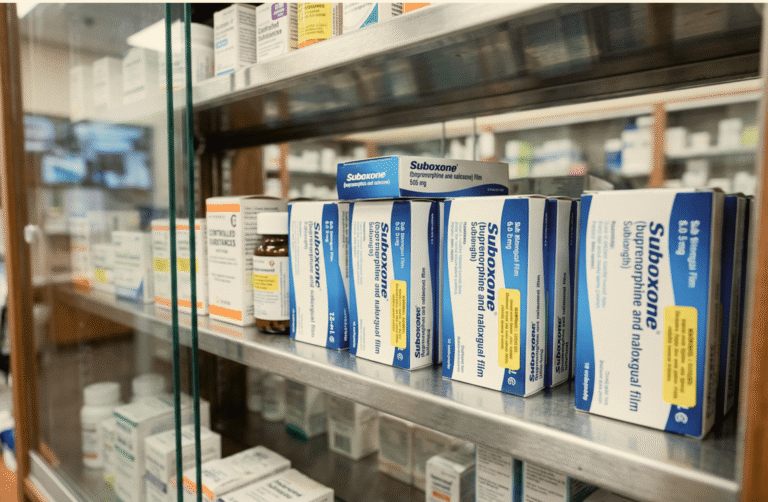
If medication is appropriate for you, your QuickMD doctor sends a Suboxone (buprenorphine-naloxone) prescription to the pharmacy you choose, or you can decide to have it delivered to your door if eligible. Your doctor sets the right dose for you based on your history and symptoms, not a standard starting number.
Step 4: Start Suboxone at the right time
Suboxone isn’t started right away or based on a set number of hours. Your doctor will have you wait until withdrawal symptoms reach mild to moderate, then guide you on when to take your first dose based on how you’re feeling.
Taking Suboxone too soon can temporarily make withdrawal symptoms worse, a reaction known as precipitated withdrawal. That’s why timing is based on your symptoms rather than the clock. Your QuickMD doctor will guide you through when to take your first dose, so you know what to do and when to do it.
Step 5: Ongoing support
Follow-up visits let your QuickMD doctor check how you’re doing and adjust your plan for as long as you need it.
Between visits, many people also lean on peer support groups for extra encouragement, or engage in mindfulness practices useful for managing stress and cravings day to day.
Why Suboxone works for kratom and 7-OH
Suboxone is commonly used to treat opioid use disorder, but it can also be used by clinicians to help people struggling with kratom or 7-OH dependence.
- Buprenorphine, its main ingredient, partially activates the same opioid receptors that kratom and 7-OH act on, which is what eases cravings and withdrawal.
- The naloxone in Suboxone adds a layer of safety. It helps discourage misuse of the medication, which is one reason Suboxone is commonly used as part of treatment for opioid use disorder.
- Suboxone itself is FDA-approved for opioid use disorder. It isn’t specifically approved for kratom or 7-OH, but case reports have shown it works well for kratom and 7-OH too.
If you want more details on the science behind it, read how Suboxone works for kratom and 7-OH.
Am I just trading one addiction for another?
No, Suboxone works differently from other types of medication. A consistent, doctor-managed dose of Suboxone doesn’t create the cycle of cravings, highs, and withdrawal that kratom or 7-OH use can. It keeps your body stable instead of taking you up and down.
How long you stay on it is between you and your doctor. Some people have explored tapering, others stay on longer, and neither path is more right than the other.
If this worry is a big part of what’s holding you back, we go deeper on trading one addiction for another in a separate article.
“I’m not addicted, I just use kratom for pain or energy”
However you got here, whether it be pain, energy, anxiety, or coming off another opioid, physical dependence can develop either way. You don’t need a label for what’s happening to deserve help with it. In one survey of adults who’d used kratom, close to 3 in 10 met the criteria for kratom use disorder, so if this sounds like you, you’re not alone.
If you’re already thinking about what stopping might look like, our article on how to quit 7-OH walks through the process.
What does treatment cost?
A visit costs $99, and no insurance is required.
- Medication cost is separate from the visit.
- If medication is prescribed, it goes to the pharmacy you choose, just like any other prescription, or we can deliver it to your door if eligible through QuickMD Home Delivery.
What states does QuickMD serve?
We currently see patients in 40+ states. If we serve your state, you can seek treatment for kratom or 7-OH use with us. You can check the states we serve to see if we offer treatment in your state.
Looking for information about kratom laws instead? See our guide on state-by-state kratom bans for the latest updates.
Frequently asked questions about online kratom and 7-OH treatment
Do I need to detox before I start treatment?
No. You don’t need to complete a separate detox before starting treatment. Your doctor will talk with you about your recent use and withdrawal symptoms, then guide you on when to start.
How soon can I be seen?
Often, the same day. Visits happen by video or phone, so there’s no waiting room and no referral needed first.
Do I have to stop using kratom or 7-OH before my visit?
No. Your doctor will talk with you about your current use and figure out the safest next step together, based on your symptoms rather than a set timeline.
How long will I need to take Suboxone?
It depends on you and your doctor’s recommendation. Some people may stay on Suboxone for a shorter period than others, but what works for one person may not work for another. Treatment is individualized, and you can work with your doctor to find the best path forward.
Will my insurance cover treatment?
QuickMD does not currently accept insurance for visits. Addiction treatment visits are $99 a visit, with no insurance required.
Is online treatment as effective as going to a clinic?
For kratom and 7-OH dependence, yes. A video or phone visit gives your doctor what they need to review your history, ask about your symptoms, and prescribe medication when it’s appropriate. It’s still care from a licensed doctor evaluating you directly, just by video or phone instead of in person.
What if I use other substances too?
Tell your doctor. It won’t disqualify you from treatment, and a full picture of what you’re dealing with helps your doctor build a plan that actually fits.
Disclaimer
Articles on this website are meant for educational purposes only and are not intended to replace professional medical advice, diagnosis or treatment. Do not delay care because of the content on this site. If you think you are experiencing a medical emergency, please call your doctor immediately or call 911 (if within the United States). This blog and its content are the intellectual property of QuickMD LLC and may not be copied or used without permission.
References
Substance Abuse and Mental Health Services Administration. TIP 63: Medications for Opioid Use Disorder (buprenorphine induction guidance), via New York State Department of Health, Buprenorphine Clinical Use module. https://www.health.ny.gov/publications/0112.pdf
Arhin, M., Mobley, J., Hamad, H., & Remick, P. (2023). Successful management of kratom use disorder with buprenorphine and naloxone. Cureus, 15(6), e41146. https://pmc.ncbi.nlm.nih.gov/articles/PMC10386870/
U.S. Food and Drug Administration. FDA and Kratom. https://www.fda.gov/news-events/public-health-focus/fda-and-kratom
Smith, K. E., Dunn, K. E., Rogers, J. M., Garcia-Romeu, A., Strickland, J. C., & Epstein, D. H. (2022). Assessment of kratom use disorder… Journal of Addiction Medicine. https://pubmed.ncbi.nlm.nih.gov/35220331/
QuickMD has strict referencing policies and relies on reputable sources, including peer-reviewed research, clinical guidelines, medical organizations, and government and public health agencies, among others. Learn more about how we ensure accuracy in our content by reading our editorial guidelines.