What you’ll learn
You’ll discover which states have banned kratom entirely, which have implemented new consumer protection laws, and what a major new federal action means if you’re currently using kratom. We’ll walk you through federal status, state-by-state updates, and what to do if kratom has become harder to stop than you expected.
If you’re using kratom or considering it, you’ve probably wondered: Is this even legal where I live? More importantly, is it safe?
Kratom’s legal status is changing rapidly across the United States, and for good reason. In the past year, state lawmakers have grown increasingly concerned about public safety as reports of liver toxicity, respiratory depression, and physical dependence continue to mount. And federal action has caught up. On July 1, 2026, the DEA moved to place high-concentration 7-hydroxymitragynine (7-OH) and three related compounds in the same drug category as heroin. As of August 26, 2026, three of those compounds are officially scheduled. Concentrated 7-OH itself is still under review.
Kratom legal status by state: Sept. 2026
Ten states have banned kratom as of September 17, 2026. More than 20 states have passed the Kratom Consumer Protection Act (KCPA) or an equivalent consumer protection framework. The remaining states treat kratom as legal but unregulated. Status can change, check your state’s legislature for pending bills.
State-by-state kratom laws
Showing all 50 states
| State | Status | Notes |
|---|---|---|
| Alabama | Banned | Kratom is banned statewide; mitragynine and 7-OH are controlled substances. |
| Alaska | Legal/unregulated | No statewide kratom- or 7-OH-specific regulatory framework currently in effect. |
| Arizona | Regulated | Kratom is legal but subject to statewide product and sales requirements. |
| Arkansas | Banned | Kratom is banned statewide; its principal alkaloids are controlled substances. |
| California | Regulated | Kratom-derived and 7-OH products are prohibited from manufacture or sale for consumption. |
| Colorado | Regulated | Kratom is legal but subject to age, labeling, product, and 7-OH limits; synthesized/semi-synthesized alkaloids are prohibited. |
| Connecticut | Banned | Kratom and 7-OH are classified as Schedule I controlled substances. |
| Delaware | Pending | Legislation would establish statewide restrictions on kratom and certain 7-OH products. |
| Florida | Regulated | Kratom is legal but subject to statewide age and product requirements, with additional restrictions affecting 7-OH. |
| Georgia | Regulated | Kratom is legal but subject to statewide age, labeling, and product requirements affecting kratom and 7-OH. |
| Hawaii | Legal/unregulated | No statewide kratom- or 7-OH-specific regulatory framework currently in effect. |
| Idaho | Legal/unregulated | No statewide kratom- or 7-OH-specific regulatory framework currently in effect. |
| Illinois | Regulated | Kratom is legal but subject to statewide age restrictions. Illinois’s definition expressly includes mitragynine and 7-OH. |
| Indiana | Banned | Kratom is prohibited through state controlled-substance laws covering kratom alkaloids. |
| Iowa | Pending | Kratom remains legal statewide, but legislation would designate kratom as a Schedule I controlled substance. |
| Kansas | Banned | Mitragynine and specified 7-OH-related substances are Schedule I controlled substances. |
| Kentucky | Pending | Kratom is legal for adults 21+ but subject to purity, testing, and 7-OH limits; a statewide sales ban takes effect January 1, 2027. |
| Louisiana | Banned | State law criminalizes possession or distribution of kratom. |
| Maine | Legal/unregulated | No statewide kratom- or 7-OH-specific regulatory framework currently in effect. |
| Maryland | Regulated | Kratom is legal but subject to statewide age and product restrictions. |
| Massachusetts | Banned | Temporary statewide ban on kratom under an emergency Schedule I order. |
| Michigan | Legal/unregulated | No statewide kratom- or 7-OH-specific regulatory framework currently in effect. |
| Minnesota | Regulated | Kratom is legal but subject to statewide age requirements. |
| Mississippi | Regulated | Kratom is legal but subject to statewide age and product requirements. |
| Missouri | Legal/unregulated | No statewide kratom- or 7-OH-specific regulatory framework currently in effect. |
| Montana | Legal/unregulated | No statewide kratom- or 7-OH-specific regulatory framework currently in effect. |
| Nebraska | Regulated | Kratom is legal but subject to statewide product and sales requirements. |
| Nevada | Regulated | Kratom is legal but subject to statewide product and sales requirements. |
| New Hampshire | Legal/unregulated | No statewide kratom- or 7-OH-specific regulatory framework currently in effect. |
| New Jersey | Legal/unregulated | No statewide kratom- or 7-OH-specific regulatory framework currently in effect. |
| New Mexico | Legal/unregulated | No statewide kratom- or 7-OH-specific regulatory framework currently in effect. |
| New York | Regulated | Kratom is legal but subject to statewide age and labeling requirements; additional restrictions may apply to certain products. |
| North Carolina | Legal/unregulated | No statewide kratom- or 7-OH-specific regulatory framework currently in effect. |
| North Dakota | Banned | Kratom and 7-OH are banned statewide under an emergency executive order and Board of Pharmacy rule. |
| Ohio | Regulated | Certain 7-OH and mitragynine-related compounds are Schedule I; naturally occurring parts of kratom treated differently. |
| Oklahoma | Regulated | Kratom is legal but subject to statewide product and sales requirements, including restrictions involving synthetic alkaloids and 7-OH. |
| Oregon | Regulated | Kratom is legal but subject to statewide age, product, and sales requirements. |
| Pennsylvania | Legal/unregulated | No statewide kratom- or 7-OH-specific regulatory framework currently in effect. |
| Rhode Island | Regulated | Kratom is legal for adults but subject to licensing, age, labeling, packaging, and product requirements. |
| South Carolina | Regulated | Kratom is legal but subject to the state’s Kratom Consumer Protection Act. |
| South Dakota | Regulated | Kratom is legal but subject to statewide age, labeling, and product restrictions. |
| Tennessee | Banned | Kratom is prohibited statewide under legislation. |
| Texas | Regulated | Kratom is legal but subject to statewide manufacturing, distribution, labeling, and sales requirements. |
| Utah | Regulated | Kratom is legal but subject to extensive statewide product and sales requirements, including restrictions affecting 7-OH. |
| Vermont | Banned | Kratom is banned statewide. Mitragynine is classified as a regulated drug. |
| Virginia | Regulated | Kratom is legal but subject to statewide age, labeling, and product requirements. |
| Washington | Legal/unregulated | No statewide kratom- or 7-OH-specific regulatory framework currently in effect. |
| West Virginia | Regulated | Kratom is legal but subject to statewide age, permitting, and product requirements. |
| Wisconsin | Banned | Mitragynine and 7-OH are classified as Schedule I controlled substances. |
| Wyoming | Regulated | Kratom is legal but subject to statewide age, testing, product, and sales requirements. |
| No states match Check the spelling or clear the filters to see all states. | ||
Table reflects state laws as of September 17, 2026. State laws change. Check your state legislature for updates for the most up-to-date information.
Why is kratom banned?
What’s driving the kratom ban push? Many kratom products now contain unnaturally high levels of 7-hydroxymitragynine (7-OH), a compound that is found naturally in kratom, but only in very small amounts. At the higher concentrations now common in gas station and smoke shop products, 7-OH acts like a powerful opioid, which can increase the risk of addiction, overdose, and other serious health effects. The FDA continues to warn consumers about these risks, including seizures and substance use disorder.
Here’s what’s happening: kratom bans have picked up speed since last year. Ten states now ban it outright, one state has reversed a ban in favor of regulation, and on July 1, 2026, the DEA moved to schedule concentrated 7-OH federally for the first time. Beyond outright bans, most states that still allow kratom have added their own guardrails: minimum purchase ages (usually 21+), caps on 7-OH concentration, mandatory lab testing, and clearer labeling. We break down exactly what’s changed state by state below.
At QuickMD, we help people every day who started using kratom or 7-OH for chronic pain or opioid withdrawal but found themselves struggling with dependence. If stopping has become difficult, our guide on how to quit 7-OH explains your options and what to expect. Many discover that what they thought was a natural alternative has become harder to stop than expected, especially with today’s enhanced kratom and 7-OH products. For patients considering medication support, we explain how Suboxone works for kratom dependence.
Whether you’re currently using kratom or 7-OH, trying to understand these legal changes, or looking for support to transition away from kratom use, we’ll walk you through exactly where things stand as of now and what safer alternatives exist.
Is kratom federally legal?
The federal picture now has two parts, since these compounds didn’t move on the same timeline.
Mitragynine pseudoindoxyl, MGM-15, and MGM-16, three synthetic compounds related to 7-OH, are officially Schedule I controlled substances as of August 26, 2026. That status took effect immediately and lasts two years, with a possible one-year extension, while the DEA pursues permanent scheduling.
Concentrated 7-OH itself, the compound in most gas station and smoke shop products, hasn’t been scheduled yet. The DEA proposed a threshold of 0.05% 7-OH by dry weight in botanical material, or 0.05% by weight or volume (or more than 1 milligram) in processed products like extracts and edibles. HHS reopened public comment on that threshold, with a new deadline of September 10, 2026. Until a final order is issued, 7-OH above the threshold remains legal at the federal level, though several states have already restricted or banned it on their own
This is the first time federal regulators have drawn a clear legal line between natural kratom leaf and the manufactured 7-OH products that have flooded convenience stores. It follows an FDA recommendation, made in July 2025, that concentrated 7-OH be scheduled, and it comes after DEA’s own toxicology program linked 7-OH to dozens of overdose cases, most of them fatal.
None of this changes the DEA’s stance on natural kratom leaf itself, which remains unscheduled. The agency attempted a broader, temporary Schedule I reclassification of kratom back in 2016, but reversed course after unprecedented public pushback: kratom organizations rallied at the White House, and more than 145,000 people signed a petition opposing the ban.
The FDA has never approved kratom for any medical use and states that:
Kratom is not lawfully marketed as a dietary supplement and cannot be lawfully added to conventional foods…kratom is not lawfully marketed in the U.S. as a drug product, a dietary supplement, or a food additive…
A CDC report published in March 2026 shows how fast kratom and 7-OH use has escalated. Poison centers logged more than 14,000 kratom-related exposure reports over the past decade, but 2025 alone accounted for approximately 3,400 of them, a roughly 1,200% jump from 2015. Of the 233 kratom-associated deaths reported in that period, nearly 80% involved kratom combined with other substances, most often opioids, benzodiazepines, stimulants, or alcohol.
The rise of enhanced kratom products containing dangerous levels of 7-OH is exactly what’s driving both the new federal action and the wave of state bans below.
Where is kratom banned?
Even with new federal action underway, states remain the primary battleground for kratom regulation. The result is a confusing landscape where kratom might be legal in one state but completely banned in the neighboring one, or even legal statewide but prohibited in specific cities.
Which states have banned kratom?
As of September 17th, 2026, ten states ban kratom outright. See the table above for the full list. Washington, D.C.’s kratom status is unclear. Current D.C. regulations list 7-hydroxymitragynine as a Schedule I controlled substance, but they do not appear to specifically address mitragynine or natural kratom leaf, per the Legislative Analysis and Public Policy Association’s state law tracker, and California doesn’t have an outright ban but has effectively blocked commercial sales through administrative action from its public health department.
More than half the states, plus the District of Columbia, now have some form of kratom regulation, though which states fall into that bucket keeps shifting as more move toward full bans.
Why states are implementing kratom bans and regulations
The American Kratom Association has been pushing for Kratom Consumer Protection Acts (KCPA) across the country, arguing that regulation is better than prohibition. But state lawmakers are increasingly motivated by different concerns, particularly reports of liver toxicity, respiratory depression, and physical dependence among kratom users.
Many state representatives have been contacted by families who’ve lost loved ones to kratom-related incidents, leading to legislation aimed at protecting consumers rather than simply expanding access. These laws typically include age restrictions (usually 21+), testing requirements for heavy metals and contaminants, and labeling standards that reveal actual alkaloid content.
7-hydroxymitragynine (7-OH) products driving kratom ban efforts
A major factor pushing states toward action is the rise of concentrated kratom products sold in convenience stores and smoke shops. Unlike traditional kratom leaves used in Southeast Asia, many commercial products now contain unnaturally high levels of 7-hydroxymitragynine. That’s the compound that acts like a potent opioid.
Local governments are also taking action. Even in states where kratom remains legal, cities and counties have implemented their own bans. For instance, kratom is legal throughout California but banned in San Diego, and legal in Colorado except in Denver, where it’s prohibited for human consumption, and, as of July 2026, banned for sale in Idaho Falls following a string of kratom-related overdose deaths reported by the local coroner.
This patchwork of laws creates confusion for kratom users. It makes it difficult to know what’s legal where you live, which is exactly why understanding the specific changes happening in 2026 is so important.
Want to learn more about 7-OH, kratom, and more? Check out our Learning Center for advice, insight, and tips on addiction.
These concerns about enhanced products have directly influenced the wave of new legislation we’ve seen this year. Here’s how individual states have responded.
2026 kratom and 7-OH ban updates
The legal landscape shifted dramatically across several key states in 2026. Here’s a look at the newest updates.
Virginia bans the sale of 7-OH
Virginia already regulated kratom sales under a 2023 consumer protection law, but a new law signed by Governor Abigail Spanberger on May 26, 2026, goes further. Effective July 1, 2026, retailers can no longer sell products containing concentrated 7-hydroxymitragynine (7-OH), while natural kratom leaf stays legal for adults 21 and older.
Kratom must also be kept behind the counter or in a locked case, and every package needs a warning that it may cause dependence and opioid-like withdrawal. The bill followed testimony from a Virginia father whose son developed a kratom dependence after using it in college.
Tennessee bans kratom: Matthew Davenport’s Law
Tennessee’s ban took effect July 1, 2026. Governor Bill Lee signed House Bill 1649, known as Matthew Davenport’s Law, on May 7, 2026. It’s named for a 27-year-old Chattanooga man whose family testified before lawmakers about his death after taking kratom alongside a prescription medication. Under the law, knowing possession is a misdemeanor, and manufacturing or selling kratom is a felony. A competing bill that would have regulated kratom instead of banning it did not advance.
Kansas bans kratom
Kansas moved against kratom on two fronts. Governor Laura Kelly signed House Bill 2365 on April 10, 2026, classifying 7-OH as a Schedule I controlled substance, the same category as heroin. The same day, the House also passed Senate Bill 430, a companion measure adding mitragynine, kratom’s other primary alkaloid, to Schedule I as well, closing what would otherwise have been a gap between the two compounds. Together, the two bills mean both of kratom’s main active alkaloids are now banned statewide. Both bills took effect July 1, 2026.
Ohio’s synthetic kratom ban becomes permanent
Ohio’s 180-day emergency ban on synthetic kratom and 7-OH products, issued by the state Board of Pharmacy in December 2025, became a permanent rule on May 19, 2026. Loose natural kratom leaf and powder remain legal, but the rule also captured capsules, drinks, and other processed natural-kratom products, a scope the American Kratom Association has publicly disputed. Governor Mike DeWine has continued to advocate for classifying all kratom compounds, natural and synthetic, as Schedule I, but that broader change hasn’t happened.
Rhode Island reverses its kratom ban
While several states banned kratom, Rhode Island reversed its stance, becoming the first state ever to roll back a kratom ban. Lawmakers noted that the ban wasn’t effective and hadn’t stopped products from being sold illegally. The Rhode Island Kratom Act, signed in July 2025 and effective April 1, 2026, creates strict regulations focused on consumer safety: retailer licensing, a 21+ age requirement, and mandatory product testing, along with a continued ban on synthetic 7-OH.
Connecticut bans kratom
Connecticut’s ban took effect March 25, 2026. The path there was unusual: Governor Ned Lamont signed House Bill 6855, a hemp and cannabis regulation bill, in June 2025, which gave the Department of Consumer Protection authority to schedule kratom without a separate vote. The department’s Legislative Regulation Review Committee used that authority in February 2026, unanimously classifying kratom and its derivatives, including 7-OH, as Schedule I controlled substances, the same category as heroin.
New York kratom regulations
Governor Kathy Hochul signed two kratom bills into law on December 22, 2025: one banning kratom sales to anyone under 21, the other requiring warning labels and barring companies from marketing kratom as “all natural.” Enforcement is civil, not criminal, so adults 21 and older can still legally buy and possess kratom throughout most of the state. Some counties, including Nassau and Suffolk, have gone further with their own local restrictions.
California’s commercial kratom ban
California doesn’t have a statewide law banning kratom, but its public health department declared kratom and 7-OH products illegal to sell or manufacture, effective October 24, 2025. By March 2026, retailer compliance with that order had reached 95%, making California a de facto no-sale state even without new legislation from the statehouse.
Texas kratom ban 2026: strictest laws in the U.S.
Texas has adopted some of the country’s strictest regulations on concentrated 7-hydroxymitragynine (7-OH) products while continuing to regulate natural kratom separately. The state requires all products to pass lab testing for safety and strength. Sales to anyone under 21 aren’t allowed, and the law specifically targets gas stations and convenience stores, where untested kratom products have been widely sold.
Florida bans concentrated 7-OH
Florida’s kratom law didn’t come from the legislature. Attorney General James Uthmeier issued an emergency rule on August 13, 2025, that immediately classified isolated and concentrated 7-OH as a Schedule I controlled substance, the same category as heroin. Natural kratom leaf sold to adults 21 and older is still legal; it’s the extracted, high-potency 7-OH products, sold as tablets, gummies, and shots, that are now off the shelves. State agencies have since pulled nearly 18,000 products statewide.
A legal challenge from kratom retailers, arguing the rule wasn’t properly enacted, was rejected in December 2025. After manufacturers reformulated products to sidestep it, Uthmeier signed an expanded emergency rule on June 22, 2026, adding six more compounds to the same schedule. State agencies have pulled more than 23,000 products statewide. Sarasota County has banned kratom outright since 2014, and Manatee County is considering becoming the second Florida county to do the same.
Louisiana bans kratom
Louisiana’s kratom ban took effect August 1, 2025, classifying kratom as a Schedule I controlled dangerous substance. As of August 2025, it is illegal to use, manufacture, distribute, or possess kratom in Louisiana. Those who violate this law can face stiff penalties of up to five years in prison or fines up to $50,000.
Colorado kratom regulations
Colorado’s Daniel Bregger Act, signed into law in May 2025, caps 7-OH at 2% of a product’s total alkaloid content, bans synthetic kratom, requires clearer labeling, and prohibits marketing kratom in ways that could appeal to children. It’s named for a Denver man who died in 2021 after combining a concentrated kratom extract with an over-the-counter sleep aid.
Mississippi kratom regulations
Mississippi’s Kratom Consumer Protection Act took effect July 1, 2025. It raised the minimum purchase age to 21, requires kratom to be sold behind the counter, and bans synthetic kratom extracts and products with high concentrations of 7-OH. More than 30 counties have gone further with their own local bans despite the statewide framework.
Georgia Kratom Consumer Protection Act
Georgia’s kratom law took effect January 1, 2025, after families who lost loved ones to kratom pushed for change. It requires kratom to be kept behind store counters and sets limits on how much of the active compounds can be in each serving.
Key provisions:
- Must be 21 to buy (up from 18)
- Products need clear serving size labels
- Can’t be used in vaping devices
- Penalties range from fines to felony charges for manufacturers who break safety rules
A 2026 bill that would have banned kratom outright (HB968) died in committee, leaving this framework in place.
Kentucky’s regulated status has an expiration date
Kentucky currently allows kratom for adults 21 and older under purity, testing, and 7-OH concentration limits. But that framework is set to disappear: House Bill 757 establishes a statewide sales ban on kratom products effective January 1, 2027.
States to watch: pending kratom legislation
These states haven’t banned or fully regulated kratom yet, but legislation is moving:
- Delaware
- North Carolina
- Pennsylvania
More states prohibit sales of kratom products to anyone under 21
You must be 21+ in order to purchase kratom in the following states:
- Colorado
- Florida
- Georgia
- Kentucky
- Maryland
- Mississippi
- New York
- Oregon
- South Carolina
- South Dakota
- Texas
- Virginia
- West Virginia
These state-by-state changes tell a story. What started as a plant-based supplement you could pick up at any gas station is now being regulated like a controlled substance or age-restricted consumer product depending on the state. The days of unregulated kratom products are ending, and lawmakers are making it clear they see kratom as something that needs real oversight.
If you’ve been using kratom regularly, especially the stronger extracts, these legal changes might be worth paying attention to, and might signal it’s time to examine your own relationship with it.
Kratom dependence and withdrawal
These changing laws reflect a growing recognition that kratom isn’t the harmless herbal supplement many people thought it was.
If you started using kratom to manage chronic pain or opioid withdrawal but now find yourself needing it just to feel normal, you’re not alone, and there are medically supervised alternatives that can help you quit. Our kratom and 7-OH treatment program can connect you with a licensed doctor often the same day. If concentrated 7-OH is your main concern, QuickMD offers a doctor-guided way to get help to quit 7-OH online.
Signs it might be time to get help:
- You need kratom every day to avoid feeling sick
- You’ve tried to stop but experienced anxiety, muscle aches, or nausea
- You’re using enhanced products or extracts to get the same effects
- You’re worried about the legal changes affecting your access
There’s a safer path forward. At QuickMD, we help people every day transition from kratom dependence to medically supervised treatment that’s both safer and more effective for long-term recovery.
Suboxone® for kratom withdrawal
Medication-Assisted Treatment (MAT) is a clinically proven approach that integrates FDA-approved medications with counseling and behavioral therapies.
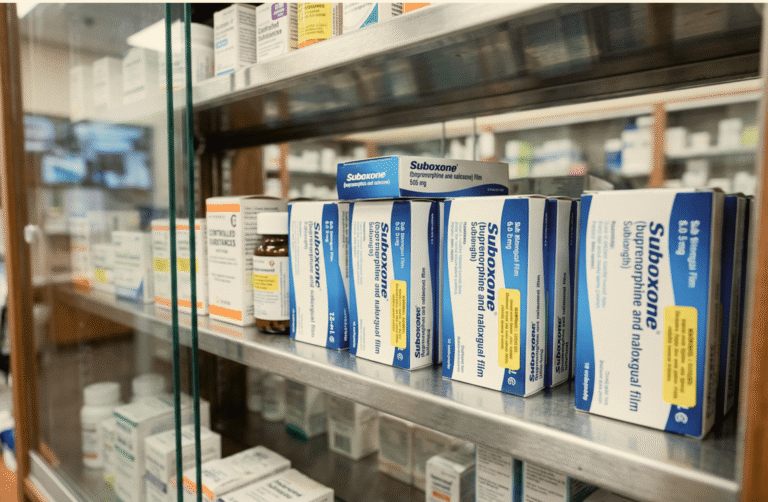
Suboxone® (buprenorphine-naloxone) is among the most effective treatments, helping reduce cravings and withdrawal symptoms while supporting long-term recovery.
- How Suboxone® helps: Unlike kratom products with unpredictable potency, Suboxone® provides consistent, medically supervised relief from withdrawal symptoms and cravings. It’s highly effective for traditional opioids, but also works for treating dependence on substances like kratom.
- The difference: Instead of relying on unregulated products from gas stations or convenience stores with unknown alkaloid content, you get FDA-approved medication prescribed by licensed doctors who understand addiction medicine.
- Getting started is simple: You can get a same-day appointment. We know it takes courage to ask for help. Our doctors won’t judge you, they’re just here to support you.
Whether the legal changes have you worried about access, you’ve realized kratom has become harder to stop than you expected, or you’re just ready to try something safer, we’re here to help you take that next step.
What we offer:
- Evidence-based, doctor-recommended care.
- Personalized and non-judgmental support.
- Affordable and proven care to support recovery.
- Simple online booking with same-day availability.
- Available 7 days a week with licensed doctors.
Frequently asked questions about kratom bans
Can I travel with kratom between states?
Traveling with kratom can put you at serious legal risk, even if it’s legal where you live. If you’re flying or driving through a state where kratom is banned (see table above), you could face criminal charges for possession.
Do employers test for kratom use?
Yes, some employers test for kratom, especially for safety-sensitive jobs in transportation, healthcare, and law enforcement.
While kratom doesn’t show up on standard drug panels, specialized tests can detect mitragynine and 7-hydroxymitragynine for several days after use. Some employers in states considering kratom bans may have updated their drug policies to include kratom testing.
What should I do if I’m using kratom and my state is considering a ban?
If your state is moving toward prohibition, this might be the right time to consider transitioning to medically supervised treatment. Waiting until kratom becomes illegal can leave you facing withdrawal symptoms without legal alternatives. Working with addiction medicine specialists before a ban takes effect allows for a smoother transition to FDA-approved medications. You can begin addiction treatment online through QuickMD today, without waiting for restrictions.
Don’t wait until you’re in crisis. Reach out to providers experienced in kratom dependence who can help you develop a plan that works for your situation.
Can kratom be shipped to a state where it is banned?
No. Shipping kratom to a banned state violates state law. The ten states where kratom is banned as of September 2026 are: Alabama, Arkansas, Connecticut, Indiana, Kansas, Louisiana, North Dakota, Tennessee, Vermont, and Wisconsin. Sellers and carriers who ship to these states may face legal liability, and recipients may face penalties under state law.
Disclaimer
Articles on this website are meant for educational purposes only and are not intended to replace professional medical advice, diagnosis or treatment. Do not delay care because of the content on this site. If you think you are experiencing a medical emergency, please call your doctor immediately or call 911 (if within the United States). This blog and its content are the intellectual property of QuickMD LLC and may not be copied or used without permission.
References
American Kratom Association. (2026, July 1). DEA scheduling action confirms chemically manipulated 7-OH opioids are not kratom [Press release]. https://finance.yahoo.com/news/dea-scheduling-action-confirms-chemically-234700011.html
Bains, J. (2025). AB 1088 – Public health: kratom [Bill]. California State Legislature. https://legiscan.com/CA/text/AB1088/id/3134789
Brumback, K. (2024, May 2). Georgia governor signs law adding regulations for the production and sale of herbal supplement kratom. Associated Press. https://apnews.com/article/kratom-legislation-georgia-501378dc662b5577ab5e8cd719dc4315
California Department of Public Health. (2025, October 24). Foods, dietary supplements and medical drugs containing kratom and 7-OH are dangerous and illegal to sell or manufacture [Press release]. https://www.cdph.ca.gov/Programs/OPA/Pages/NR25-016.aspx
Campbell, G. (2025). H 468 – Regulate kratom products [Bill]. North Carolina General Assembly. https://www.billtrack50.com/billdetail/1873670
Centers for Disease Control and Prevention. (2026, March 26). Increases in kratom-related reports to poison centers — National Poison Data System, United States, 2015–2025. Morbidity and Mortality Weekly Report, 75(11). https://www.cdc.gov/mmwr/volumes/75/wr/mm7511a1.htm
City of Idaho Falls. (2026, June 5). City Council approves ordinance prohibiting the sale of kratom in Idaho Falls. https://www.idahofallsidaho.gov/m/newsflash/Home/Detail/2963
Colorado General Assembly. (2025). Senate Bill 25-072: Regulation of kratom (Daniel Bregger Act). https://leg.colorado.gov/bills/sb25-072
Connecticut Department of Consumer Protection. (2026, February 24). Department of Consumer Protection applauds passage of controlled substance drug schedule updates [Press release]. https://portal.ct.gov/dcp/news-releases-from-the-department-of-consumer-protection/2026-news-releases/department-of-consumer-protection-applauds-passage-of-controlled-substance-drug-schedule-updates
Farzan, A. (2026, March 26). Kratom becomes legal on April 1. One RI lawmaker wants it locked up. The Providence Journal. https://www.providencejournal.com/story/news/politics/2026/03/26/kratom-will-be-legal-in-ri-on-april-1-but-should-it-be-locked-up-in-stores/89248570007/
Flakus, G. (2016, September 13). Impending US ban on Asian painkiller stirs rally in DC. Voice of America. https://www.voanews.com/a/impending-united-states-ban-asian-painkiller-kratom-stirs-rally-washington/3505987.html
Florida Office of the Attorney General. (2025, August 13). Attorney General James Uthmeier files emergency rule; immediately removing dangerous 7-OH from store shelves [Press release]. https://www.myfloridalegal.com/newsrelease/attorney-general-james-uthmeier-files-emergency-rule-immediately-removing-dangerous-7
Gershman, K., Timm, K., Frank, M., Lampi, L., Melamed, J., Gerona, R., & Monte, A. A. (2019). Deaths in Colorado attributed to kratom. New England Journal of Medicine. https://pubmed.ncbi.nlm.nih.gov/30601742/
Gianutsos, G. (2017, March 17). The DEA changes its mind on kratom. US Pharmacist, 41(3), 7–9. https://www.uspharmacist.com/article/the-dea-changes-its-mind-on-kratom
Henkel, C. (2025, June 17). North Carolina lawmakers advance bill to regulate hemp THC products and restrict kratom. Marijuana Moment. https://www.marijuanamoment.net/north-carolina-lawmakers-advance-bill-to-regulate-hemp-thc-products-and-restrict-kratom/
Jones, S. (2025). Kratom is now illegal in Louisiana – what that means. WDSU 6 News. https://www.wdsu.com/article/kratom-is-now-illegal-in-louisiana-what-that-means/65578566
Kansas Office of the Governor. (2026, April 10). Governor Kelly signs bipartisan bill banning kratom products [Press release]. https://www.governor.ks.gov/Home/Components/News/News/1016/55
Legislative Analysis and Public Policy Association. (2026). Kratom: Summary of state laws. https://legislativeanalysis.org/kratom-summary-of-state-laws/
Louisiana Department of Revenue. (2025, July 31). New penalties for kratom in effect Aug. 1 [Press release]. https://revenue.louisiana.gov/news-and-announcements/2025/new-penalties-for-kratom-in-effect-aug-1/
Mississippi Legislature. (2025). House Bill 1077 (Regular Session 2025), as sent to governor. https://billstatus.ls.state.ms.us/documents/2025/html/HB/1000-1099/HB1077SG.htm
New York State, Office of Governor Kathy Hochul. (2025, December 22). Governor Hochul signs two pieces of landmark legislation to protect New Yorkers against the harmful effects of commercial herbal product known as kratom [Press release]. https://www.governor.ny.gov/news/governor-hochul-signs-two-pieces-landmark-legislation-protect-new-yorkers-against-harmful
Ohio Board of Pharmacy. (2026). Consumer and retailer notice: Kratom-related products now illegal in Ohio. https://www.pharmacy.ohio.gov/documents/pubs/special/kratom/consumer%20and%20retailer%20notice%20-%20kratom-related%20products%20now%20illegal%20in%20ohio.pdf
Owen, R. (2025). CS/HB 1489 – Kratom products [Bill]. Florida House of Representatives. https://www.flhouse.gov/Sections/Bills/billsdetail.aspx?BillId=82242
Pennycuick, T. (2025). SB 233 – Kratom Consumer Protection Act [Bill]. Pennsylvania General Assembly. https://www.billtrack50.com/billdetail/1816150
Pennsylvania House Democrats. (2025). Kinkead, Prokopiak announce bill to regulate opioid-mimicking plant [Press release]. https://www.pahouse.com/InTheNews/NewsRelease/?id=141325
Perry, C. (2025). SB 1868 – Relating to adding certain substances to the Texas Controlled Substances Act and regulating kratom and kratom products [Bill]. Texas Legislature. https://fastdemocracy.com/bill-search/tx/89/bills/TXB00077285/
Rhode Island General Assembly. (2025). Bill that regulates the distribution of kratom is signed into law [Press release]. https://www.rilegislature.gov/pressrelease/
Rhode Island Senate Bill 792. (2025). LegiScan. https://legiscan.com/RI/bill/S0792/2025
South Carolina General Assembly. (2026). 2025-2026 Bill 4641: Kratom. https://www.scstatehouse.gov/sess126_2025-2026/bills/4641.htm
State of Rhode Island. (2025). 2025 – H 5565: Substitute A relating to food and drugs – The Rhode Island Kratom Act [Bill]. https://webserver.rilegislature.gov/BillText/BillText25/HouseText25/H5565A.pdf
Tennessee General Assembly. (2026). House Bill 1649 (Matthew Davenport’s Law), Public Chapter 950. https://capitol.tn.gov/Bills/114/Bill/HB1649.pdf
Texas Office of the Attorney General. (2026, February). Attorney General Paxton sues kratom retailers for selling products containing nearly fifty times the legal limit of the potentially deadly alkaloid known as 7-OH [Press release]. https://www.texasattorneygeneral.gov/news/releases/attorney-general-paxton-sues-kratom-retailers-selling-products-containing-nearly-fifty-times-legal
Torrico, T., Patel, K., Nikolov, N., Salam, M. T., Padhy, R., & Weinstein, D. (2024). Presence of kratom in opioid overdose deaths: Findings from coroner postmortem toxicological report. Frontiers in Psychiatry. https://pmc.ncbi.nlm.nih.gov/articles/PMC10806006/
U.S. Department of Health and Human Services. (2026, July 1). HHS, FDA support DEA 7-OH scheduling [Press release]. https://www.hhs.gov/press-room/hhs-fda-support-dea-7-oh-scheduling.html
U.S. Drug Enforcement Administration. (2026, July 1). DEA to temporarily schedule 7-OH and related substances to protect public safety [Press release]. https://www.dea.gov/press-releases/2026/07/01/dea-temporarily-schedule-7-oh-and-related-substances-protect-public
U.S. Food and Drug Administration. (2024). FDA and kratom. https://www.fda.gov/news-events/public-health-focus/fda-and-kratom
U.S. Food and Drug Administration. (2025, July 29). Hiding in plain sight: 7-OH products. https://www.fda.gov/news-events/public-health-focus/hiding-plain-sight-7-oh-products
Virginia Mercury. (2026, May 27). Kratom product sales to be regulated in Virginia. https://virginiamercury.com/2026/05/27/kratom-product-sales-to-be-regulated-in-virginia/
Watford, A. (2025, August 11). Kratom faces increasing scrutiny from states and the feds. Stateline. https://stateline.org/2025/08/11/kratom-faces-increasing-scrutiny-from-states-and-the-feds/
Weinhofer, C. (2025). A Florida area may crack down on kratom. What to know about the designer drug. Miami Herald. https://www.miamiherald.com/news/state/florida/article312018147.html
WSB Radio. (2026, March 30). Calls to Georgia Poison Center related to kratom exposure surging. https://www.wsbradio.com/news/local/calls-georgia-poison-center-related-kratom-exposure-surging/YDBVZMKESNGZRIUUGTLGA4HBPI/
QuickMD has strict referencing policies and relies on reputable sources, including peer-reviewed research, clinical guidelines, medical organizations, and government and public health agencies, among others. Learn more about how we ensure accuracy in our content by reading our editorial guidelines.