What you’ll learn
We’ll cover what a recovery community is, why it matters for long-term sobriety, and how to start building one, step by step.
If you had a bad day tomorrow, who would you tell? Whether you’re early in your recovery journey or are years into it, building meaningful connections with others can be a huge help in staying on your path. People who stay connected tend to have fewer cravings and an easier time riding out the rough patches. That’s what a recovery community gives you. You’ll have people who show up when you need them and who can offer a reliable support system that reminds you that you’re never alone.
What is a recovery community?
Your recovery community is the network of people and groups that support you on your sobriety journey. Medication helps your body stabilize, and therapy helps you develop healthy coping strategies. But recovery also means rebuilding important aspects of your life, like routines, relationships, and self-confidence. That’s where community helps people do better, and research supports this.
People with strong social support tend to stay in recovery longer and feel better doing it. Your community might include the sponsor you can call anytime or the Tuesday night support group who’ve heard all your stories and shared some of their own experiences. Whether it’s with family, friends, peers, or counselors, recovery works well when you’re not doing it alone.
How community helps in addiction recovery
You know the feeling you get when you’re at a concert or sporting event, enjoying the same band with other fans or cheering for the same team? A recovery community is similar. There’s a shared language among people who have had similar experiences, and you don’t have to explain why you’re there. You can just be in the moment.
When you’re surrounded by people who value sobriety, you’re more likely to maintain it than if you tried on your own. Recovery communities support the healing process by:
- Surrounding you with people who get it and can offer advice because they’ve been where you are.
- Reducing feelings of isolation in recovery.
- Creating a social environment where sobriety is the norm, not something you have to explain or worry about being judged.
- Providing role models who show you what long-term recovery looks like in practice.
- Helping you build healthier coping skills through everyday connection and accountability.
- Making it easier to stick with treatment when motivation dips.
- Offering emotional stability and a sense of belonging when the rest of life feels uncertain.
How to build your recovery community step-by-step
Building a recovery community doesn’t mean overhauling your entire social life overnight. Sometimes it starts with one person you trust or one room where you feel a little less alone. From there, you add to it gradually.
1. Start with one supportive connection
You don’t need a whole community on Day One. All it takes is just one person who can keep you grounded to start. It could be the friend who checks in or the family member who stopped asking if you’re okay and started asking, “What do you need?” The right person for you doesn’t have to have all the right answers. They just have to be there, be reliable, and take your recovery as seriously as you do.
If you have someone in mind, pay attention to how you feel around them. Do you feel comfortable being vulnerable with them? Are they a good listener and easy to talk to? The right fit is someone who can sit with you through the hard stuff and be honest with you if you’re heading in the wrong direction.
2. Attend recovery meetings or support groups
There’s something different about walking into a room full of people who already know what you’re going through. You don’t have to catch anyone up or explain why last Friday was hard, just that it was hard. Recovery meetings and support groups give you a regular place where your story isn’t unusual, and nobody’s keeping score.
If you can, try showing up at the same time and day each week. The more familiar the faces get, the easier it is to actually talk. And the easier it is to talk, the more you get out of being there.
3. Reconnect with safe relationships
Sometimes recovery means reaching back out to the people in your life worth holding onto. It’s not always easy to invite them back into your life, but the people who care can become the ones you call at 10 p.m. when you need to get out of your own head. They don’t do it because they understand dependency, but because they know who you are beyond a diagnosis. Leaning on those people can help steady you when moments of anger show up or when working through other difficult emotions.
If you aren’t sure whether to reconnect with someone, ask yourself if it’s the right person and the right time. Focus on the people who will support where you’re headed, not the ones who will pull you back. Some connections aren’t safe to revisit right now, and that’s okay.
4. Join online communities
Making it to an in-person meeting every week isn’t possible for everyone. When obligations get in the way, online communities fill that gap and connect you with people who get what you’re going through. These platforms are available around the clock, so you can check in whenever you need to vent about a bad day or celebrate a milestone that only this community would understand.
Reddit, Facebook, and dedicated recovery forums all have active groups for people in recovery. Look for moderated spaces with a supportive vibe and honest conversation. If you’re logging off feeling worse than before you went on, it’s not the right space for you. If you’re looking for virtual meetings, In The Rooms and SMART Recovery are both good places to start. QuickMD also offers virtual peer support groups that meet regularly and connect you with others who are walking a similar path.
5. Participate regularly
It’s easy to show up to a meeting and stay quiet in the back. It counts, and maybe it’s all you can handle early on. In time, you might start with piping up, “Yeah, same,” when someone describes exactly what you’ve been feeling, then move on to sharing how your own week went.
No need to be the chattiest person in the room, just be honest when you do talk. And over time, that’s how you make friends in recovery. People you can lean on and who lean on you right back.
Professional recovery support with QuickMD
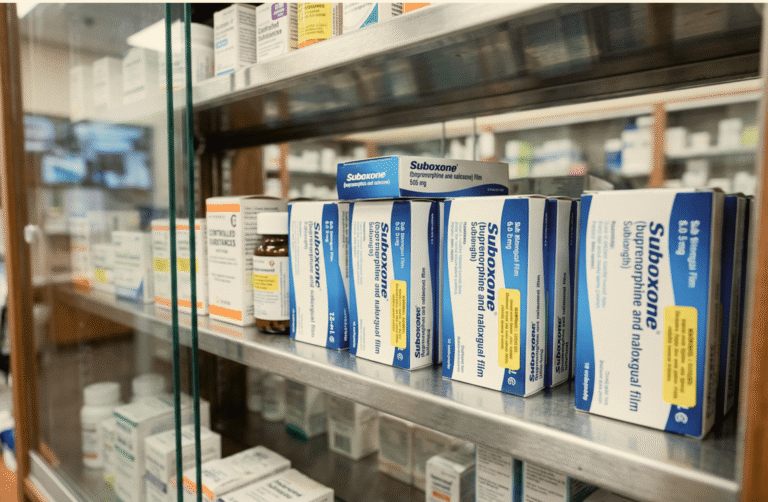
Whether it’s chatting with a counselor about life or working with your doctor to refill your Suboxone prescription or joining one of our peer support groups, we’re here for you when you need a little extra support.
Disclaimer
Articles on this website are meant for educational purposes only and are not intended to replace professional medical advice, diagnosis or treatment. Do not delay care because of the content on this site. If you think you are experiencing a medical emergency, please call your doctor immediately or call 911 (if within the United States). This blog and its content are the intellectual property of QuickMD LLC and may not be copied or used without permission.
References
Mills, R., Zullig, K.J., Theeke, L.A., et al. (2022). Assessing loneliness among adults receiving outpatient treatment with medication for opioid use disorder (MOUD). International Journal of Environmental Research and Public Health. 2022;19(20):13481. https://www.mdpi.com/1660-4601/19/20/13481
Kumar, N., Oles, W., Howell, B.A., et al. (2021). The role of social network support in treatment outcomes for medication for opioid use disorder: A systematic review. Journal of Substance Abuse Treatment. 2021;127(108367):108367. https://pmc.ncbi.nlm.nih.gov/articles/PMC9022048/
Bailey, A., Harrington, C., Evans, E.A. (2023) A scoping review of community-based post-opioid overdose intervention programs: implications of program structure and outcomes. Health & Justice. 2023;11(1). https://pmc.ncbi.nlm.nih.gov/articles/PMC9883127/
Rathinam, B., Ezhumalai, S. (2021). Perceived social support among abstinent individuals with substance use disorder. Journal of Psychosocial Rehabilitation and Mental Health. https://pmc.ncbi.nlm.nih.gov/articles/PMC8992735/
Islam, M.F., Guerrero, M., Nguyen, R.L., et al. (2023). The importance of social support in recovery populations: toward a multilevel understanding. Alcoholism Treatment Quarterly. 2023;41(2):222-236. https://pmc.ncbi.nlm.nih.gov/articles/PMC10259869/
Pettersen, H., Landheim, A., Skeie, I., et al. (2019). How social relationships influence substance use disorder recovery: a collaborative narrative study. Substance Abuse: Research and Treatment. 2019;13(1-8). https://journals.sagepub.com/doi/10.1177/1178221819833379
Bergman, B.G., Kelly, J.F. (2020> Online digital recovery support services: An overview of the science and their potential to help individuals with substance use disorder during COVID-19 and beyond. Journal of Substance Abuse Treatment. 2020;120:108152. https://pmc.ncbi.nlm.nih.gov/articles/PMC7532989/
QuickMD has strict referencing policies and relies on reputable sources, including peer-reviewed research, clinical guidelines, medical organizations, and government and public health agencies, among others. Learn more about how we ensure accuracy in our content by reading our editorial guidelines.