What you’ll learn
We’ll cover why structure protects long-term recovery, how to build habits that run on autopilot, and what to do when life knocks your routine off track.
In recovery, once your medication is stable and you’ve adjusted to a new schedule, your routine starts doing the heavy lifting for you. And with a firm foundation in place, you can fill your days with activities that feel fulfilling and help you carve out a new life. Structure itself isn’t a restriction. Rather, it’s the piece that turns treatment into a lasting recovery.
Even months or years into recovery, having a routine builds momentum for healthy habits that feel true to you. Let’s dive into why creating routines in recovery can make a big difference and how to get there.
Why routine matters in recovery
Having a routine turns healthy choices into habits you just do without much thinking. This is especially useful on low-motivation days.
Every decision you make, even small ones like what to wear or what to eat, uses mental energy. When it runs low, and you need to act, you default to whatever takes the least effort. That means takeout instead of cooking, scrolling instead of calling your friend back, or skipping your run to binge some TV. When you’re mentally drained, the easy choice usually wins out. Without a routine, the easy choice could be an unhealthy one.
Think about eating better. Which setup makes the healthy choice the easy one?
- You did some meal prep over the weekend, so dinner is already in the fridge waiting to be heated up.
- It’s noon, you’re hungry (maybe even hangry), and your options are junk food or cooking something from scratch.
Same person, same goal. But when the right choice is also the easy choice, you don’t have to fight yourself to make it.
Managing appointments, medication, triggers, and rebuilding your life can take up a lot of headspace. Habits and routine lighten the daily decision load so you have the mental energy for your recovery work.
Structure and routine work for you in recovery because they:
- Make the day feel more organized and easy to follow. When your day has structure, you’re not constantly deciding what to do next. That predictability lowers anxiety and helps you feel more in control.
- Reduce idle time and boredom. A structured day fills empty hours with healthy, meaningful activities, so there’s less room for old patterns to slip back in. This can make it easier to stay engaged and focused on recovery.
- Build self-reliance and confidence through consistent action. Every time you follow through on a small daily habit, you’re stacking evidence that you got this.
- Make it easier to stick with your treatment plan. With routine, things you have to think about, like taking your meds on time, become automatic. This reduces decision fatigue and procrastination, which supports long-term recovery.
You don’t have to rely on willpower alone. Routine and habits can do a lot of the heavy lifting for you.
How to build your recovery routine
Life is full of changes. Whether you’re in recovery for months or years, building routines can help you roll with the changes while giving yourself added stability. Some changes can be welcome, and making room for a new hobby or habit in your routine can feel like real progress.
However, trying to make too many changes at once may backfire, which can be discouraging. Instead, set yourself up for success by starting small and weaving new habits into what you’re already doing, so they fit naturally into your day.
Habits get built and reinforced in three steps:
Cue -> action -> reward
A cue tells your brain it’s time to do something, and the reward locks that behavior in. Cues can be an event, a time of day, a place, a feeling you have, or a person. Let’s take a coffee habit as an example:
- You feel tired (cue), so you make a cup of coffee (action), and then feel more energized (reward).
You can use this pattern to build habits for your recovery routine.
Make new habits very small and easy to do
Smaller is better, especially when you’re adding something new to your routine. So shrink the habit down to something that takes less than two minutes to do.
Instead of committing to an hour at the gym, commit to 15 minutes. Instead of a full journal entry, open the notebook and write one sentence. Instead of meditating for 30 minutes, just sit down for one minute. Once showing up becomes automatic, that small ritual will lead to a larger routine.
Attach your new habit to an anchor habit
Over time, you’ve built up habits that you do without thinking. These anchor habits are the things you do regularly and reliably, like using the bathroom after waking up, brushing your teeth, or making the bed. When you attach a new habit to an anchor, the anchor itself becomes the cue. This is called habit stacking, and it works by piggybacking on routines you do automatically, which involves less active decision-making on your part.
Here are a few best practices for habit stacking:
- Choose solid anchors: Go with habits you do consistently and without much thought.
- Be precise: Instead of saying, “After coffee, I will…” be even more specific with, “After I wash my coffee cup, I will…”
- Stack habits that make sense together: Pair things that share the same setting or time of day. Like taking vitamins after putting your toothbrush away is a good habit stack because it usually happens in the bathroom in the morning.
- Celebrate the win: Immediately reward yourself with a little positive reinforcement. Even just telling yourself you did a good job releases dopamine that boosts self-confidence and strengthens the habit.
- Write out your plan: Articulating a very specific plan of action can make it more likely that you’ll follow through.
Try this formula: “After I [do anchor habit], I will [do new habit]. Then I’ll celebrate with [a small reward].”
For example, “After I turn off the alarm and sit up in bed, I will say one positive affirmation. Then I’ll celebrate by saying, ’Good job!’ out loud.”
Set up your environment to support your new routine
The easier a habit is to start, the more likely you are to do it. The harder it is, the more likely you are to skip it. When you’re adding something new to your routine, you can design your environment to work for you by adjusting three things: visibility, friction, and setup.
| Habits you want to build | Habits you want to break | |
| Visibility | Make cues obvious and easy to see | Move cues out of sight |
| Friction | Reduce the steps it takes to start | Add steps and barriers |
| Setup | Set up your space so the habit is the easy choice | Set up your space so the habit takes effort |
If running is your new habit, lay out your workout clothes the night before and put your shoes by the door. Conversely, if you’re trying to cut down on doomscrolling social media, delete those apps from your phone.
Small changes in your environment can have big results. Google tested this in 2012 by changing snack locations to help employees eat healthier. They put healthy snacks in clear glass jars in high-traffic spots and moved the candy into opaque containers tucked out of the way. Nothing was banned or taken away, just rearranged. One office ended up consuming 3.1 million fewer calories over the span of seven weeks. Your environment has a big influence on your actions, which means making changes to it can do a lot of work for you.
Add new habits slowly
Starting slowly when building new habits is more sustainable and helps you avoid burnout. A good rule of thumb is to add only one or two small habits at a time, and give them a few weeks to settle in and become automatic before adding more.
If you find yourself skipping new habits or dreading doing them, you’re probably doing too much at once. Try cutting back on the number of new habits or making the ones you’re working on even smaller.
Use reminders and tools that help
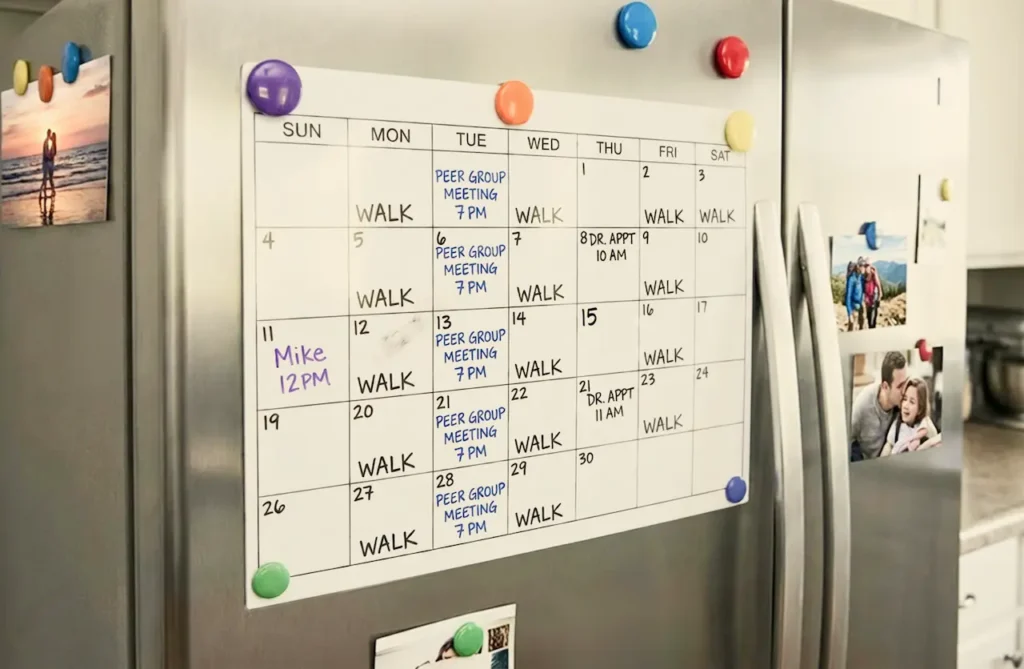
A routine is easier to stick with when you have external reminders to keep you on track. Phone reminders, calendars, habit trackers, sticky notes, and checklists can all make a habit easier to remember.
The best tools are the ones you’ll actually use consistently. Simpler is usually better. A phone reminder for your morning meds or a sticky note on the bathroom mirror can do more than a complicated system you stop using after three days.
Build accountability into your routine
Habits are easier to stick with when someone else knows you’re working on them. Looping in your sponsor, therapist, QuickMD doctor, or trusted friend on your goals can add an extra layer of encouragement that makes skipping harder and following through more rewarding.
Set regular check-ins with someone in your support system. Don’t forget to share your wins along with the struggles. When you tell your accountability buddy you nailed your morning routine three days in a row, that good feeling acts as a reward to reinforce the habit.
Adjust your routine as life changes
Your routine isn’t going to look the same in six months as it does today. And it shouldn’t, because life keeps moving. You might have a bad week, a schedule change, an illness, or some other disruption that forces a change in plans. Treat your routine more like a flexible framework than a rigid system that falls apart when something doesn’t go exactly right.
Once a week, take a few minutes to check in with yourself and ask a few questions:
- Which habits feel easy now?
- Which ones do I dread doing?
- What’s changed in my life that the routine hasn’t caught up to?
First, acknowledge the changes you’ve made and give yourself some kudos because this takes work. Then take an honest look at what isn’t working. If a habit isn’t sticking anymore, shrink it, move it, or swap it for something that fits better. Setbacks are part of the process, not a sign that you’ve failed at it.
What to include in your recovery routine
At the start of your recovery, you likely began with the basics like sleep, regular meals, movement, medication, and support from people you trust. What you’ve probably noticed on your journey is that what makes those habits stick is turning vague intentions into specific actions.
“I want to get better sleep” is a wishful statement. “Phone goes on Do Not Disturb at 9:30, lights out by 9:45, alarm set for 6:30” is a routine you can follow tonight.
- Get consistent sleep. A steady sleep schedule helps regulate mood, energy, stress, and cravings. When you’re going to bed and waking up on a consistent schedule, the rest of your day often feels easier to manage.
Start here: Turn on Do Not Disturb after you brush your teeth. Put your phone across the room so you can get into bed without screens.
- Take your medication on a schedule. Taking medication like Suboxone® at the same time each day can make treatment easier to stick with and help cut down on missed doses. Don’t pair Suboxone with eating or brushing your teeth because there’s a time window before and after dosing when neither is recommended.
Start here: Pair your medication with something you already do every morning, like using the bathroom or getting dressed. Keep it in the same visible spot you’ll see every day.
- Keep regular check-ins with your doctor. Your doctor monitors your progress to see if your medication needs adjustment and to catch small issues early. They also make sure you get your refills on time so you don’t run out of meds.
Start here: Schedule your next QuickMD follow-up before your current visit ends. Add it to your calendar right away with a reminder the day before and an hour before.
- Move your body. Movement can lift your mood, lower stress, and give restless energy somewhere to go. It doesn’t have to be intense to help, just done consistently. The CDC recommends at least 150 minutes of moderate-intensity activity every week.
Start here: Take 5-minute walks after lunch and build from there. Keep your shoes by the door so getting outside takes less effort.
- Eat well and keep simple foods on hand. Regular meals can help support steady energy, mood, and focus throughout the day. Try keeping easy-to-make foods handy for low-energy days so a good meal doesn’t depend on motivation to cook.
Start here: Make tomorrow’s lunch the night before instead of diving into a whole week of meal prep. Keep staples like yogurt, fruit, frozen meals, or soup on hand for days you don’t feel like cooking.
- Make time for the things you enjoy. Hobbies get you out of your head for a while and give you something to look forward to. Getting better at something, whether it’s playing guitar or finishing puzzles, also builds a quiet confidence that makes you more resilient.
Start here: Leave your book, sketchpad, puzzle, or guitar somewhere you can see it. After dinner, when the dishes are done, devote ten minutes to doing your favorite thing.
- Stay connected to supportive people. Staying in regular contact with the people who support you cuts down on isolation and makes it easier for you to reach out when things start to feel off.
Start here: Text one supportive person in your life once a week. Pick a touchpoint, like a meeting, check-in call, or coffee date, and treat it like a standing appointment.
Putting it all together
Some habits are already locked in, like your morning medication and sponsor check-in. Others, like journaling, are still being built. Yours won’t match this exactly because you’ll have different needs and quirks in your routine. This is just an example you can use to get ideas for how to start adding new things to your routine.
- Morning: After your alarm goes off, take your Suboxone and let it dissolve while you make the bed and get dressed. Once 30 minutes have passed since taking Suboxone, eat breakfast. After cleaning up from eating, take a few minutes to text your sponsor before heading out.
- Midday: After lunch, take a 5-minute walk around the block.
- Evening: Lay out tomorrow’s clothes, write one sentence in the journal left on your pillow as a reminder. After you close the journal, turn on Do Not Disturb, and get to bed by your usual time.
Notice how each new habit is small and built on top of an existing one. This schedule uses habit stacking, the two-minute rule, and setup (laying out clothes the night before, keeping things in sight) to create a low-friction day. Occasionally skipping a habit won’t undo your progress, and you should expect it to happen at some point. The goal is consistent daily effort, not perfection!
Routine as a relapse prevention tool
Routine provides structure that minimizes decision fatigue, reduces stress, and replaces idle time with healthy, meaningful habits. When these habits run on autopilot, it makes it easier to stay on track with your treatment. That steadier footing also helps when you are managing anger in addiction recovery and other difficult emotions that can surface day to day.
Routine fills unstructured time
Boredom and stretches of empty time are some of the most common triggers for cravings, even if you’ve been on track for months or years. A routine fills those gaps with something positive to do, so old habits have fewer opportunities to creep in.
Routine reduces stress through predictability
A predictable routine cuts down the number of decisions you have to make in a day, lowering your overall stress load. Fewer decisions means less mental fatigue, and less fatigue means you’re less likely to give in and pick whatever is quickest, easiest, or most enjoyable. Those choices don’t always support the goals you’re trying to reach.
Routine builds momentum through small wins
Every habit you follow through on is a small win. Every win builds confidence that keeps you moving. On low days when motivation is gone, those automatic habits will carry you through the harder stretches.
Routine reinforces commitment to recovery
Sticking to a routine is one of the clearest ways to remind yourself that recovery is your priority. Every day you follow through, even when you don’t want to, you’re reinforcing who you’re becoming. Those small, consistent steps are often what build a lasting recovery, something you can see reflected in real stories from people who’ve walked that path themselves.
Routine can act as an early warning system
When your routine starts to slip, it’s often the first sign that something else is going on. Watch out for:
- Skipping everyday habits you used to be on top of.
- Sleeping through your alarm or staying up much later than usual.
- Letting your meds run out before refilling.
- Missing appointments or meetings you’d normally make.
- Isolating from friends, family, and other support.
Catching these early gives you a chance to reach out to your provider, sponsor, or someone you trust before things get harder to manage.
Flexibility and evolution of recovery structure
Earlier in your recovery journey, you might have noticed that the structure that worked for you may have been less flexible, relying on timing, careful tracking, and more frequent appointments. Over time, you may have noticed your routine loosening up once you felt more stable in your medication, and new habits you built became second nature. Part of the recovery journey is learning that you can drop what you’ve outgrown and build new ones that fit your current life.
If your schedule, circumstances, or responsibilities change, your routine can change too. Your QuickMD doctor can help you decide what to keep, adjust, or replace as recovery progresses, no matter where you are.
Sticking to a routine can be hard, especially when your energy, mood, and life can change week to week. If your routine falls apart (and maybe more than once), that’s not a sign you’re doing recovery wrong. It happens to everyone at various points and is a normal part of figuring out what works and what doesn’t. Here are a few common problems people run into:
- Feeling overwhelmed: Trying to overhaul your whole day at once isn’t sustainable. Start with small habits that are easy to do and anchor them to habits already part of your routine.
- Motivation that comes and goes: Some days you’ll feel ready to do the work, other days you won’t. Routines are built for the days when motivation isn’t there, so you can keep moving without needing a spark of enthusiasm.
- Not seeing results right away: The benefits of new routines show up slowly, often in ways you don’t notice until you look back. If it feels like nothing’s changing, look back at where you were a month or two ago compared to where you are now.
- Life getting in the way: A new job, a new schedule, family stuff, or a rough week can knock you off course and mess up your routine. When that happens, take a step back to reevaluate and make adjustments to get back on track.
- Getting bored with it: Doing the same things every day can start to feel stale. If you start to feel restless, swap something out, add something new, or juggle your schedule around.
QuickMD helps build structure during recovery
Building a routine is easier when you have support. Your QuickMD doctor can help you create one that works with your treatment and fits your life. As your needs change throughout recovery, your doctor can help you adjust the routine so it keeps working for you.
Frequently asked questions about recovery routines
How long does it take for a recovery routine to feel automatic?
There is no fixed timeline. Many habits start to feel easier after a few weeks, but research on how to form habits found it takes an average of about 66 days, with a very wide range from 18 to 254 days. The goal is steady repetition, not speed.
What if I struggle to stick to my routine?
That is normal, especially early on. Missing a day does not mean the routine failed, but that something needs to be tweaked. Research on habits suggests one missed opportunity doesn’t usually derail the process, but repeated inconsistency is a sign to simplify and go back to one or two anchor habits.
Can I adjust my routine as my recovery progresses?
Yes. Recovery routines should evolve as your life and needs change. What works in early recovery often looks different a year or two in. Adjusting your routine over time is part of how it stays useful and relevant to your needs.
How should I involve my QuickMD doctor in planning my routine?
Ask your QuickMD doctor to help make the routine realistic. They can review your medication schedule, help you plan around sleep, stress, and cravings, and adjust your treatment as your needs change. Bring up any concerns early so small problems can be addressed before they become something more.
Disclaimer
Articles on this website are meant for educational purposes only and are not intended to replace professional medical advice, diagnosis or treatment. Do not delay care because of the content on this site. If you think you are experiencing a medical emergency, please call your doctor immediately or call 911 (if within the United States). This blog and its content are the intellectual property of QuickMD LLC and may not be copied or used without permission.
References
Snoek, A., Levy, N., Kennett, J. (2016). Strong-willed but not successful: The importance of strategies in recovery from addiction. Addictive Behaviors Reports. 2016;4:102-107. https://pmc.ncbi.nlm.nih.gov/articles/PMC5143362/
Arlinghaus, K.R., Johnston, C.A. (2018). The importance of creating habits and routine. American Journal of Lifestyle Medicine. 2018;13(2):142-144. https://pmc.ncbi.nlm.nih.gov/articles/PMC6378489/
Lang, M., Krátký, J., Xygalatas, D. (2022). Effects of predictable behavioral patterns on anxiety dynamics. Scientific Reports. 2022;12(1). https://pmc.ncbi.nlm.nih.gov/articles/PMC9649661/
Clear, J. (2018). How to stop procrastinating by using the “2-minute rule.” James Clear. https://jamesclear.com/how-to-stop-procrastinating
Cleveland Clinic. (2024). Everything You Need To Know About Habit Stacking for Self-Improvement. https://health.clevelandclinic.org/habit-stacking
Wood, W., Rünger, D. (2016). Psychology of habit. Annual Review of Psychology. 2016;67:289-314. https://dornsife.usc.edu/wendy-wood/wp-content/uploads/sites/183/2023/10/wood.runger.2016.pdf
Milne, S., Orbell, S., Sheeran, P. (2022). Combining motivational and volitional interventions to promote exercise participation: protection motivation theory and implementation intentions. British Journal of Health Psychology 2002 May;7(Pt 2):163-84. https://pubmed.ncbi.nlm.nih.gov/14596707/
Subramanian, C. (2013). Google study gets employees to stop eating so many M&Ms. Time. https://newsfeed.time.com/2013/09/03/google-study-gets-employees-to-stop-eating-so-many-mms/
CDC. (2023). Physical activity for adults: An overview. Physical Activity Basics. https://www.cdc.gov/physical-activity-basics/guidelines/adults.html
QuickMD has strict referencing policies and relies on reputable sources, including peer-reviewed research, clinical guidelines, medical organizations, and government and public health agencies, among others. Learn more about how we ensure accuracy in our content by reading our editorial guidelines.