What you’ll learn
We’ll go over what the Great American Recovery Initiative is, what it funds, how programs like STREETS and AOT grants work, and how QuickMD can help now if you need it.
Today, 48.4 million Americans live with substance use disorder. If you’re reading this, there’s a good chance that opioid use dependency has touched your life or the life of someone you care about. However, a new federal initiative offers hope alongside an action plan to help make recovery more accessible and expand aid to people and communities.
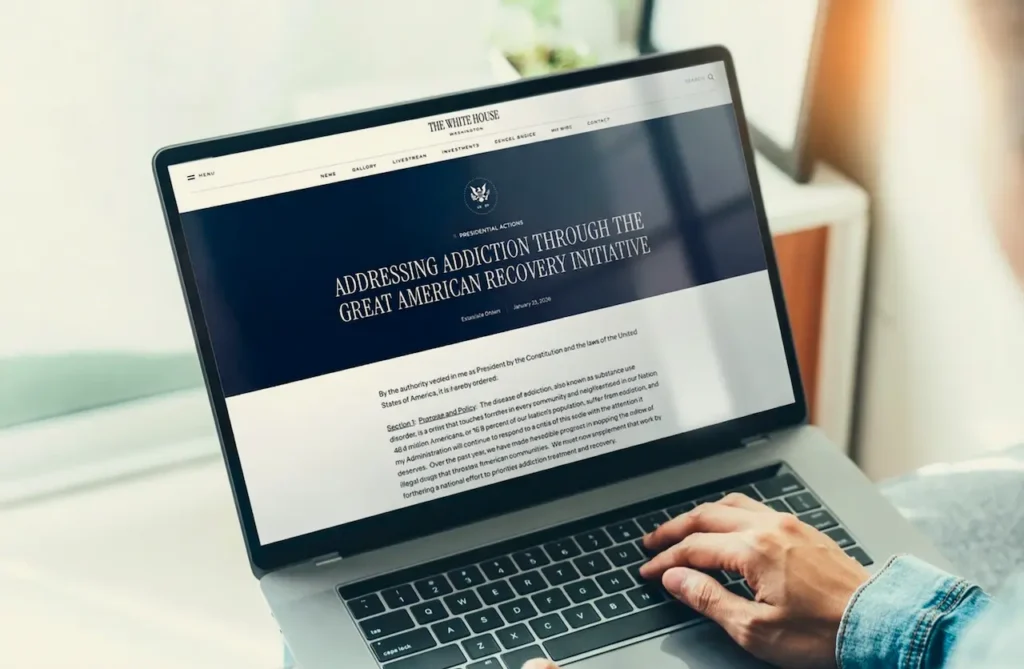
On January 29, 2026, the White House launched the Great American Recovery Initiative, a coordinated federal effort to change how the government responds to substance use disorder and homelessness. Instead of treating addiction like a moral failing, the initiative treats it like the chronic medical condition it actually is, just like asthma or hypertension. This new program acknowledges that, with the right support, recovery is possible and highly treatable at rates comparable to those of other chronic diseases.
What sets it apart from past efforts is its scope. The initiative requires federal agencies to work together instead of in silos. It also directs funding to local governments, faith communities, and nonprofits that are already doing the work on the ground to help prioritize long-term recovery and stability. The program is backed by over $110 million in new federal funding, launching pilots like the STREETS program and the Assisted Outpatient Treatment (AOT) grants program. Below, we’ll break down what these programs do and how they offer the potential to help so many.
America’s need for recovery
Of the nearly 50 million Americans living with substance use disorder, 87.7% didn’t receive treatment in the past year. And it’s not because they didn’t want help. Denial, cost, and stigma are the top roadblocks standing in the way.
The Great American Recovery Initiative is trying to change that by making treatment easier to access and removing the barriers that keep people from reaching out. It connects federal agencies with local community resources, so getting help can start with the people and places you already trust, like your clinic, your church, or your neighborhood. And it recognizes that people need ongoing support for long-term recovery, not just a 30-day program that puts a timeline on reclaiming your life.
Recovery works when people can access it easily, and resources are available at every step. That’s what drives what we do at QuickMD. We treat substance use disorder through telemedicine, so things like cost, travel, and time off work don’t get in the way of people getting the help they need.
What will the Great American Recovery Initiative do?
The initiative has five major goals designed to make addiction treatment more accessible and recovery more sustainable:
1. Establish a federal task force
The Great American Recovery initiative is co-led by President Donald Trump and Department of Health and Human Services (HHS) Secretary Robert F. Kennedy. The HHS Secretary himself has a deep personal understanding of the importance of recovery. “Addiction begins in isolation and ends in reconnection,” notes Kennedy. “We are bringing Americans suffering from addiction out of the shadows and back into community.”
This new task force also includes at least 14 other heads of state, including the Attorney General, Secretary of Housing and Urban Development, and Secretary of Labor. This multi-department approach takes a comprehensive look at the many factors that contribute to a person’s long-term recovery.
2. Coordinate addiction response across federal agencies
Right now, federal agencies usually approach response to substance use disorder in their own smaller silos. The new Great American Recovery Initiative aligns them around the same goals, so efforts aren’t duplicated, and nothing falls through the cracks.
3. Set national goals and track progress
Together, the task force will make informed recommendations to prevent substance use and also create guidelines for improved treatment and recovery programs.
In addition to setting goals and recommendations, the new program also requires regular public updates on what’s working and what isn’t.
4. Drive awareness and expand treatment access
The initiative treats addiction as a disease, not a personal failing, and works to shift public perception accordingly. A major goal of the program is to help people recognize when they or someone they love needs help, and make it easier to ask without shame or fear of judgment. Recovery deserves to be celebrated, not hidden.
Instead of offering disconnected services, the initiative links early intervention to treatment and then to ongoing care. It also includes re-entry programs for people transitioning out of jail, rehab, or inpatient care, so they have resources waiting for them instead of being released back into the same circumstances that could disrupt their recovery.
Grant funding will prioritize programs that prevent substance use before it starts, expand access to treatment, and help people stay stable after they’ve done the hard work of getting sober. That means funding goes toward things like housing assistance, job training, and continued care, not just an initial detox or 30-day program.
5. Engage local and private sector partners
The federal government can set the framework, but recovery happens locally. This initiative partners with state and local governments, tribal nations, nonprofits, faith-based organizations, and private groups to strengthen the networks that already exist in people’s communities. The idea is leaning on the people and organizations your community already trusts, and getting recovery resources to you where you actually are.
Great American Recovery programs
The Great American Recovery Initiative includes programs aimed at making it easier for people to get help. Two major efforts focus on people who need the most support.
- The STREETS program connects people experiencing homelessness and addiction with community services.
- Assisted Outpatient Treatment (AOT) grants help people with severe mental illness who end up going back and forth between emergency rooms, jails, and crisis centers without ever getting consistent care.
The goal for both is moving people from repeated crises to stable, ongoing care. Let’s take a closer look at each of these programs.
The STREETS program
Safety Through Recovery, Engagement, and Evidence-based Treatment and Supports (STREETS) is a $100 million pilot program launching in eight major U.S. cities. It targets people experiencing both homelessness and addiction, two problems that are incredibly hard to solve separately, let alone together.
The program funds outreach teams, psychiatric care, medical stabilization, and crisis intervention. What sets it apart is the follow-through. It connects people to housing and longer-term care, creating more stable situations for them to focus on sobriety and rebuilding their lives.
Assisted Outpatient Treatment (AOT) grants
The $10 million Assisted Outpatient Treatment (AOT) grant program funds community-based mental health care for adults with serious mental illness. These are people who haven’t been able to get what they need from traditional outpatient treatment. Without consistent support, they often end up cycling through emergency rooms, homelessness, or the criminal justice system.
AOT works through the civil court system, which sounds intense, but can actually be a lifeline. Instead of waiting for someone to relapse, it creates a framework for consistent medication, therapy, and support while they’re living in their community. The goal is to help people receive care that doesn’t disappear after discharge.
Start your recovery journey with QuickMD
The Great American Recovery Initiative is a big step toward addressing how this country handles substance use, with the potential to offer hope and help to millions. But if you need help right now, you don’t have to wait for policy changes.
At QuickMD, our doctors are experienced in treating substance use disorder through telemedicine, so you can begin treatment from home without rearranging your life to do it. We’ll help you build a plan, start Medication-Assisted Treatment (MAT) if you need it, and provide ongoing support that doesn’t disappear after your first appointment.
Disclaimer
Articles on this website are meant for educational purposes only and are not intended to replace professional medical advice, diagnosis or treatment. Do not delay care because of the content on this site. If you think you are experiencing a medical emergency, please call your doctor immediately or call 911 (if within the United States). This blog and its content are the intellectual property of QuickMD LLC and may not be copied or used without permission.
References
Cleveland Clinic. (2023). Addiction. https://my.clevelandclinic.org/health/diseases/6407-addiction
SAMHSA. (2025). Key Substance Use and Mental Health Indicators in the United States: Results from the 2024 National Survey on Drug Use and Health. https://www.samhsa.gov/data/sites/default/files/reports/rpt56287/2024-nsduh-annual-national-report.pdf
The White House. (2026). Addressing Addiction through the Great American Recovery Initiative. https://www.whitehouse.gov/presidential-actions/2026/01/addressing-addiction-through-the-great-american-recovery-initiative/
McGovern, M.P., Carroll, K.M. (2013). Evidence-based practices for substance use disorders. The Psychiatric Clinics of North America. 2013;26(4):991-1010. https://www.ncbi.nlm.nih.gov/pmc/articles/PMC3678283/
U.S. Department of Health and Human Services. (2026). Secretary Kennedy Announces $100 Million Investment in Great American Recovery. https://www.hhs.gov/press-room/secretary-kennedy-announces-100-million-investment-great-american-recovery.html
QuickMD has strict referencing policies and relies on reputable sources, including peer-reviewed research, clinical guidelines, medical organizations, and government and public health agencies, among others. Learn more about how we ensure accuracy in our content by reading our editorial guidelines.