What you’ll learn
We’ll walk you through the differences between Rybelsus® and Ozempic®, how each one works for weight loss, and what to consider when deciding which medication fits best with your goals and lifestyle.
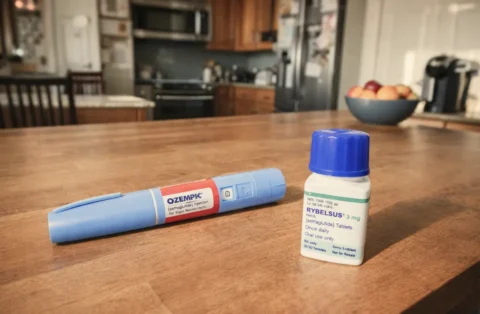
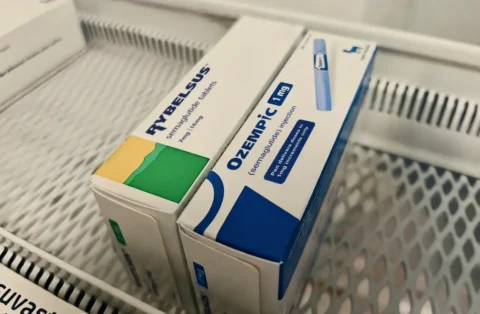
Rybelsus® and Ozempic® are two popular medications that contain semaglutide, a medication known for helping people with type 2 diabetes manage blood sugar. And both have a reputation for supporting weight loss when combined with healthy lifestyle changes. The biggest difference is that Rybelsus comes in a daily pill, while Ozempic is a once-weekly injection.
Choosing between them isn’t always easy. Your health goals, lifestyle, and personal preferences all matter. That’s why it’s important to speak with a provider who understands your options.
Here at QuickMD, we make that process simpler with convenient, affordable telemedicine visits, so you can talk to a licensed provider from the comfort of home without long waits or insurance hurdles.
If you’re thinking about taking either Rybelsus or Ozempic, we’ll walk you through key differences between the two, answer common questions, and help you understand which one might be the right fit for your weight loss journey.
What are Rybelsus and Ozempic?
Rybelsus and Ozempic are brand-name medications made by Novo Nordisk. Both contain the same active ingredient (semaglutide) and are FDA-approved for managing type 2 diabetes. However, both are also prescribed off-label for weight loss.
The biggest difference is that Ozempic is injected once a week, while Rybelsus is taken as a daily pill. That makes Rybelsus an appealing option for people who prefer to avoid needles or want something easier to take on-the-go.
What is Rybelsus?
Rybelsus is an oral version of semaglutide. Semaglutide is part of a group of medications called GLP-1 receptor agonists. These medications mimic a hormone your body naturally makes after eating that helps regulate blood sugar, reduce appetite, and slow digestion. These factors work together to help support weight loss.
Taking Rybelsus just once a day makes it easy to work into your daily routine and weight loss program, especially if you’re traveling or have a busy schedule. That said, research suggests Rybelsus may be slightly less effective for weight loss than injectable versions like Ozempic. But for many, the convenience of a pill still makes Rybelsus a great choice.
What is Ozempic?
Ozempic is a weekly injectable medication that is used off-label to support weight loss. While Ozempic has been shown to be highly effective, the need for regular injections can be a downside for some people, depending on their preferences.
Both medications use the same active ingredient. Ozempic is taken once weekly via a pre-filled pen, while Rybelsus is taken orally once daily, with dosage varying depending on formulation and where each person is at on their personal health journey.
Because Ozempic is taken just once a week, it can be a lower-maintenance option for people who want a “set it and forget it” approach. Some patients also experience more significant weight loss compared to daily oral semaglutide, but individual results vary.
Rybelsus vs. Ozempic: key differences
Both medications can be highly effective, but their form, frequency, and personal convenience factors might make one a better fit than the other.
Here’s a quick comparison to help you see how they stack up:
| Feature | Rybelsus | Ozempic |
| Form | Oral tablet | Injectable (once-weekly pen) |
| Frequency | Once daily | Once weekly |
| Primary use / FDA approval | Type 2 diabetesReducing cardiovascular risk in people with type 2 diabetes | Type 2 diabetesReducing cardiovascular risk in people with type 2 diabetesSlowing progression of kidney disease in people with type 2 diabetes |
| Off-label use | Weight loss | Weight loss |
| Convenience | No needles, easy for travel | Fewer doses, but requires injection |
| Cost | Similar price range for a monthly supply Retail cost: $1,028 (without insurance coverage) | Similar price range for a monthly supply Retail cost: $1,000-$1,000 (without insurance coverage)Self-pay: $349-$499 per month at chain pharmacies like Costco |
| Effectiveness | Successfully manages blood sugar levelsAids weight loss | Successfully manages blood sugar levelsAids weight loss with a slightly stronger effect than Rybelsus |
How does Rybelsus work for weight loss?
Rybelsus works to help you lose weight by:
- Curbing your appetite: Making you feel full sooner and reducing the urge to overeat.
- Regulating blood sugar: Reducing blood sugar spikes, which also helps keep cravings at bay.
- Slowing down digestion: Helping you feel full sooner and stay satisfied longer after meals.
How does Ozempic compare?
Ozempic works much like Rybelsus, but some studies suggest it may be more effective for weight loss due to its weekly dosing and slightly stronger impact on GLP-1 activity. It’s a good option for people who prefer not to think about medication every day or who want a little extra help with appetite control.
Who is Rybelsus right for?
Rybelsus might be a better fit for you than Ozempic if:
- You’re uncomfortable with injections and prefer a pill.
- You’re already used to a daily medication routine.
- You want a convenient option for travel or a busy schedule.
- You’re managing type 2 diabetes and weight loss at the same time.
Rybelsus is ideal for people who want the benefits of semaglutide but might be squeamish about needles. For some, an oral format can be a lot more convenient. However, like any medication, it’s important to talk to a healthcare provider to see if it’s a good fit.
Who is Ozempic right for?
Ozempic might be a good option if:
- You want to take your medication just once a week.
- You’re comfortable with self-injections.
- You’re looking for a stronger weight loss effect.
- You prefer a low-maintenance routine.
For some people, the simplicity of one dose per week makes all the difference in staying consistent.
Which one should you choose?
The decision between Rybelsus and Ozempic often comes down to personal preference and lifestyle. If you prefer the convenience of taking your medication once a week and are comfortable with injections, Ozempic might be the better option, particularly if you’re managing type 2 diabetes and also focused on weight loss.
If you prefer a daily pill and don’t mind taking your medication every day, Rybelsus is a great choice. However, Rybelsus isn’t your only option if you’re leaning towards a daily tablet. Recently, Novo Nordisk received FDA approval for a pill version of Wegovy®, making it the first and only oral GLP-1 approved specifically for weight loss. In either case, both Rybelsus and Wegovy are convenient options if you travel frequently or want to avoid injections.
The right choice depends on how you want to manage your treatment. It’s always a good idea to consult with a healthcare provider to determine which option fits your lifestyle. No matter where you are in your health journey, a QuickMD provider can help you weigh your options and help choose what’s right for you.
QuickMD can help you choose the right weight loss option
Whether you’re deciding between a once-weekly injection or a daily pill, we’re here to support you. With QuickMD, there’s no waiting room, no pressure, and no one-size-fits-all approach.
Our convenient online telemedicine visits connect you with licensed providers who are ready to listen and help you take control of your health. You’ll get expert guidance tailored to your body, goals, medical history, and preferences. And regardless of what GLP-1 feels like the best fit for you, we’ll send your prescription to your pharmacy of choice to help you get the best price possible.
Frequently asked questions about Rybelsus vs Ozempic
Is Rybelsus the same as Ozempic?
Both contain semaglutide, but Rybelsus is taken as a daily pill, while Ozempic is a weekly injection. The way your body absorbs and responds to each can be slightly different.
Is Rybelsus an alternative to Ozempic?
Yes. For people who prefer not to use injections, Rybelsus offers a needle-free way to get similar benefits.
Can I switch from Ozempic to Rybelsus?
In many cases, yes. If you’re looking for a different dosing schedule or a more convenient option, your provider can help guide a safe transition between the two.