What you’ll learn
We’ll cover why stress can hit harder in recovery, how your brain responds to stress differently now, and specific strategies you can use to manage stress.
Recovery isn’t easy, and if you’re here, you already know that. Getting through withdrawal is hard. Adjusting to life in recovery is hard. And recovery rarely progresses linearly. Even when you’re doing well, stress can sometimes pop up unexpectedly, throwing you for a loop. Maybe it’s a tough day at work, an argument with a loved one, or just an overwhelming sense of anxiety. In those moments, your brain may try to fall back on old patterns. The truth is, substance use disorder rewires your brain’s circuits for reward and self-control, so stopping feels like pushing against your biology, not just breaking a habit.
When stress hits hard, your body remembers what used to bring relief from that discomfort. That pull isn’t a weakness, and it doesn’t mean you’re failing. Everyone in recovery feels it at one point or another. It’s normal to feel the urge to activate old pathways, even when you want to move forward.
That’s why learning to work through your stress response instead of fighting it or pretending it doesn’t exist is such an important part of protecting your sobriety. You have an active role in your recovery and can take control by using specific strategies that account for what’s actually happening in your brain and body right now.
We’ll walk through how stress affects the brain, why it can feel especially intense during recovery, and what strategies will actually help you manage it. You’ll get concrete information about what’s happening and practical tools to support you wherever you are on your recovery journey.
Does stress impact addiction?
Stress has a major impact on your risk of developing a substance use disorder, how quickly use can escalate, and how vulnerable you are to relapse. While stress affects everyone, research shows that people recovering from opioid addiction are particularly vulnerable to stress-induced cravings.
Chronic stress physically changes how your brain’s stress and reward systems function. When you’re under constant stress, your brain chemistry shifts in ways that make substances feel more rewarding than they otherwise would. Stress hormones like cortisol directly influence dopamine pathways, which is why alcohol or drugs can seem like they’re doing more than just taking the edge off. This is because opioids and stress share a deep connection in the brain’s reward system, creating a cycle that can be difficult to break.
How stress activates cravings
When you feel stressed, your body floods with stress hormones like cortisol and adrenaline. These hormones activate the part of your brain that processes threats and emotions. At the same time, they also amplify your dopamine system. That’s the same system substances tap into to create feelings of relief and pleasure.
Stress puts your brain on high alert, searching for anything that will bring relief. Because you might have used substances before to manage stress, your brain has that filed away as a quick solution. When stress hits, it can trigger memories of using.
This happens because your brain has built associations over time:
- Physical sensations: Anxiety, tension, or racing thoughts can trigger memories of relief through using.
- Environmental cues: Certain places, people, times of day, or even smells can combine with stress and spark a craving.
- Emotional distress: Being hungry, angry, lonely, or tired (also known as HALT) lowers your ability to cope with stress and can make cravings feel more urgent.
- Automatic responses: Sometimes these connections fire so quickly that cravings feel like they came out of nowhere.
Your brain learned that substances change how you feel. So when stress shows up, those same neural pathways light up, making cravings feel more intense. These uncomfortable feelings are normal.
Knowing what’s going on in your brain and body can help you recognize old patterns. Adopting specific strategies that work with how your brain actually is functioning right now can give you new tools to help you take control of stress and cravings.
Why stress feels more overwhelming in recovery
People in recovery often experience higher sensitivity to stress, making even minor setbacks feel overwhelming. You aren’t imagining things. This happens for several reasons:
- Opioids once numbed stress. Opioids can temporarily dull stress and emotional pain. For many people, they reduced anxiety and made difficult situations feel more manageable. In recovery, the underlying stressors, such as trauma, relationship challenges, financial pressure, or other life difficulties, may still be present, but the numbing effect is no longer there. Without that buffer, stress can feel sharper and more intense.
- Your brain chemistry is recalibrating. Long-term opioid use disrupts stress regulation, making emotional responses more intense. When you stop using, your brain needs to reset and relearn how to function normally without substances. This adjustment period is called Post-Acute Withdrawal Syndrome (PAWS) and can cause mood swings, trouble concentrating, irritability, and sleep issues. It’s not permanent, but it makes things harder to deal with while it’s happening.
- Emotions you’ve been suppressing are surfacing. Substances stifle emotions, and recovery frees them. You may need to confront difficult emotions such as grief, shame, or unresolved trauma without anything to blunt them. That rawness is very real.
- New stressors are piling on. Recovery often brings fresh challenges such as rebuilding relationships, finding stable housing or work, managing cravings, and dealing with isolation. These new stresses can make emotional strain feel heavier.
This phase doesn’t last forever. Your brain rebuilds stress tolerance over time. Things like therapy, exercise, getting enough sleep, and having people who understand what you’re going through can make this stage more manageable.
Acute stress vs. chronic stress in recovery
Not all stress is the same or hits the same. And this matters for how you handle it.
- Acute stress comes on suddenly and is usually short-lived. This can be an argument with someone you care about, losing your job, or getting an unexpected bill you can’t afford. These moments can spike cravings hard, but they usually ease up once the situation resolves or you find a way through it.
- Chronic stress is a more dangerous pattern to deal with during recovery. This can come from the ongoing weight of unresolved trauma, financial instability, untreated mental health conditions, or living in situations where you don’t feel safe. Chronic stress keeps your brain’s reward system activated and constantly searching for relief. Unlike acute stress that spikes and fades, chronic stress grinds on you and makes relapse more likely over time.
Both types of stress can trigger cravings, but catching them early gives you more options for how to respond.
Recognizing stress before it may trigger a relapse
When you’re caught up in the middle of it, stress doesn’t always clearly announce itself. It may show up as irritability, exhaustion, or a tight feeling in your chest before you realize something’s wrong.
You don’t have to analyze every feeling as it happens, but noticing patterns over time can help you intervene earlier. This takes practice and gets messy sometimes. When cravings show up, pay attention to what’s going on and ask yourself:
- What was I doing right before the craving started? What was the emotional context?
- What physical state was I in? Was I hungry, exhausted, in pain, or running on bad sleep?
- What was my emotional state? Was I feeling anxious, angry, lonely, overwhelmed, or numb?
- What environment was I in? Were there people, places, or situations that I connected to using in the past?
- What were my thought patterns? Was I replaying all conflicts in my head, worrying about the future, or feeling trapped in a situation?
This practice helps you figure out what your specific triggers are. There’s no universal list of triggers. What sets off intense cravings for you may not affect someone else the same way. When you start seeing your patterns, you have information you can actually use.
For example, maybe avoiding a particular person who stresses you out makes a difference. Maybe a certain time of day stirs up cravings, and you could plan something for that time slot.
Recognizing stress patterns won’t stop cravings, but it gives you an opportunity to respond differently.
Stress management techniques in recovery
Recognizing your stress triggers helps. But when cravings hit, having specific strategies ready can give you the tools you need to take control in that moment.
1. Break the stress-craving connection with grounding techniques
Since stress often triggers cravings, the first step is to calm the nervous system. Grounding techniques help bring you back to the present moment and reduce the overwhelming urge to use.
When cravings hit, try:
- The 5-4-3-2-1 Mindfulness Method: Identify 5 things you see, 4 things you touch, 3 things you hear, 2 things you smell, and 1 thing you taste to re-center yourself.
- Deep breathing exercises: Slow, controlled breaths help lower cortisol levels and reduce panic responses. Take deep breaths in and then slowly exhale, repeating this several times.
- Cold water exposure: Splashing cold water on your face can jolt your brain out of stress mode.
These actions interrupt the stress response, giving you a moment to catch your breath before you do anything.
2. Rewire your brain with healthy rewards
One reason stress triggers cravings is that your brain has learned to expect relief and a dopamine hit from substances. While substances used to flood your brain with dopamine artificially, there are healthier ways to get that same neurochemical response.
Healthy dopamine-boosting activities:
- Exercise: Even a 10-minute walk releases endorphins and reduces cravings.
- Creative hobbies: Drawing, writing, playing an instrument, or cooking can provide a dopamine boost.
- Laughter and social connection: Spending time with supportive people can reduce stress and help rewire the brain’s reward system.
The goal here is replacing what used to work with new habits that provide relief without the risk of relapse. This takes time and won’t feel as immediate at first, but your brain does learn to attune to your new environment.
3. Use the “15-minute rule” to delay action
Cravings can feel overwhelming, but they don’t last forever. Most substance cravings peak within 15 to 30 minutes and then fade. When you feel an urge, commit to waiting 15 minutes before acting on it.
During those 15 minutes, try:
- Journaling about how you’re feeling
- Going for a short walk or stretching
- Calling or texting a supportive friend
- Drinking a glass of water or having a healthy snack
By delaying the craving, you give yourself time to let the intensity pass and make a conscious decision instead of reacting impulsively.
Develop a stress-relief plan before you need it
Since stress is a predictable relapse trigger, having a go-to stress management plan can make cravings easier to handle when they show up.
Create a stress-relief plan that includes:
- Your top three healthy coping strategies (breathing exercises, movement, meditation)
- A list of supportive people to reach out to when stress builds up
- Alternative activities to distract yourself when cravings arise (listening to music, watching a funny show, doing a puzzle)
When stress hits, having a plan removes the guesswork and helps you take control instead of falling into old patterns.
5. Seek professional support for chronic stress and anxiety
If stress-induced cravings feel unmanageable, professional support can help. Chronic stress, trauma, and anxiety can make recovery harder, but therapy, medication, and structured treatment programs can provide the support you need.
- Cognitive behavioral therapy (CBT) helps change negative thought patterns that lead to cravings.
- Dialectical behavior therapy (DBT) teaches distress tolerance and emotion regulation skills that help manage intense stress without turning to substances.
- Trauma-informed therapy can help address past experiences that contribute to stress and addiction.
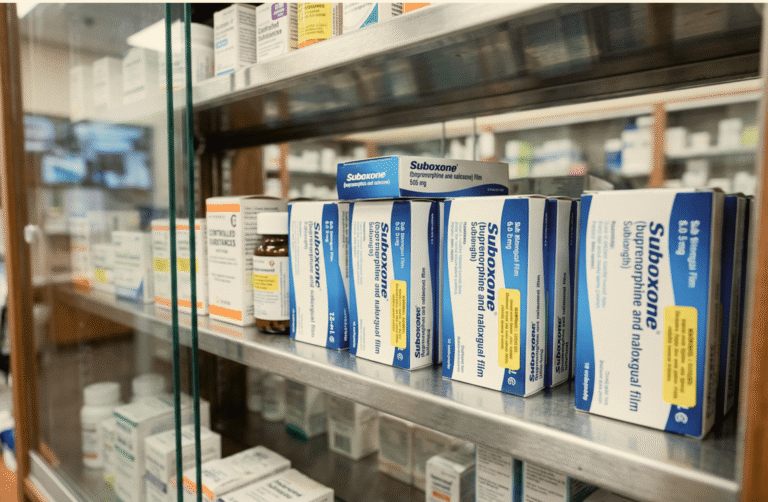
- Medication-Assisted Treatment (MAT) with Suboxone can help stabilize mood and reduce stress-related cravings.
If stress feels overwhelming, you don’t have to manage all of this on your own. Reaching out to your QuickMD provider, friend, sponsor, or support group can help you talk through what you’re experiencing and feel understood, even during the hardest parts of recovery. Remember, recovery isn’t a straight path, and you don’t have to walk it alone.
We’re here for you when you need us
No matter where you are in your recovery, stress can feel overwhelming. Your brain and body are healing, and you’re rebuilding healthier stress and reward pathways.
If you need support at any point in your recovery, our team of providers here at QuickMD can help. From Medication-Assisted Treatment (MAT) to therapy referrals and ongoing support, we’re here to meet you where you’re at in your recovery journey.
Final thoughts: You can take control of stress and cravings
The reality of recovery is that stress will show up from time to time. But it doesn’t have to mean relapse. When you understand why stress hits harder in recovery and have strategies ready, you have real options to help you take control of the situation.
The strategies covered in this article can give you the tools to recognize your stress patterns, use grounding techniques when cravings hit, delay action to let the intensity pass, and create new behavior patterns. Some of these will feel more natural to you than others, and that’s okay. Everyone is wired a little differently, so learn what works best for you and lean on those strategies.
Disclaimer
Articles on this website are meant for educational purposes only and are not intended to replace professional medical advice, diagnosis or treatment. Do not delay care because of the content on this site. If you think you are experiencing a medical emergency, please call your doctor immediately or call 911 (if within the United States). This blog and its content are the intellectual property of QuickMD LLC and may not be copied or used without permission.
References
Sinha, R. (2008). Chronic Stress, Drug Use, and Vulnerability to Addiction. Annals of the New York Academy of Sciences. 2008;1141(1):105-130. https://pmc.ncbi.nlm.nih.gov/articles/PMC2732004/
Sinha, R. (2024). Stress and substance use disorders: risk, relapse, and treatment outcomes. Journal of Clinical Investigation. 2024;134(16). https://www.jci.org/articles/view/172883
Sinha, R. (2001). How does stress increase risk of drug abuse and relapse? Psychopharmacology. 2001;158(4):343-359. https://www.researchgate.net/publication/11561903_Sinha_R_How_does_stress_increase_risk_of_drug_abuse_and_relapse_Psychopharmacology_Berl_158_343-359
Wand, G. (2024). The Influence of Stress on the Transition From Drug Use to Addiction. Alcohol Research & Health. 2024;31(2):119. https://pmc.ncbi.nlm.nih.gov/articles/PMC3860459/
Marceau, K., Abel, E. (2018). Mechanisms of cortisol – substance use development associations: Hypothesis generation through gene enrichment analysis. Neuroscience and biobehavioral reviews. 2018;92:128-139. https://www.ncbi.nlm.nih.gov/pmc/articles/PMC6310615/
Linney, S. (2021). What Is HALT? The Dangers of Being Hungry, Angry, Lonely or Tired. American Addiction Centers. https://americanaddictioncenters.org/blog/common-stressors-recovery
SAMHSA, (2023). EXHIBIT 3.11. Coping With Craving: A Structured Coping Skills Training Exercise. https://www.ncbi.nlm.nih.gov/books/NBK601490/box/ch3.b35
QuickMD has strict referencing policies and relies on reputable sources, including peer-reviewed research, clinical guidelines, medical organizations, and government and public health agencies, among others. Learn more about how we ensure accuracy in our content by reading our editorial guidelines.