What you’ll learn
We’ll explain why hobbies can play an important role in recovery. We’ll share hobby ideas that can support your sobriety and help you figure out what might work for you.
Recovery opens the door to a different kind of life, with more clarity, stability, and time to reconnect with what matters most to you. But even when you’re feeling strong in your sobriety, it’s normal to ask, “What now?” Finding meaningful ways to spend your time isn’t just about staying occupied. It’s about rediscovering who you are beyond substance use.
Hobbies can help fill that void, but they’re more than just a way to stay busy. The right hobbies support recovery by rebuilding routine, regulating stress, and helping you build an identity beyond substances. When an activity is meaningful to you, it’s easier to stick with it in the long run.
Why are hobbies important during recovery?
Hobbies are an important part of self-discovery that let you move beyond substance use to start building a life and identity that isn’t centered on using. When you regularly show up for something constructive, like a hobby, your brain starts collecting evidence that “this is who I am now.” This identity shift grows out of your daily habits that reinforce who you want to be.
In turn, hobbies also reduce stress by adding structure to your days and filling them with activities that bring satisfaction. Boredom and loneliness are common relapse triggers, and hobbies keep you engaged and moving forward.
Hobbies strengthen recovery in a number of ways, including boosting your sense of self, building or strengthening bonds with others, and so much more. Let’s get into the various ways hobbies can play a key role in your recovery journey.
Emotional and mental well-being
Finding an activity you can lose yourself in lowers stress hormones, lifts your mood, and helps you manage tough emotions. Whether you’re in the early stages of recovery or several years into your sobriety, these skills are all critical when you’re dealing with the emotional ups and downs of recovery.
Coping and relapse prevention
Hobbies give you a healthy way to handle cravings and negative thoughts without turning to old behaviors. They work as relapse prevention tools to:
- Shift attention from urges. When cravings hit, hobbies redirect your focus. Since cravings usually peak within 15 to 30 minutes, diving into something you’re interested in helps you ride out those intense moments.
- Keep busy. Unstructured time can make cravings feel louder. When you fill those hours with something meaningful, it’s easier to stay on track.
- Rebuild your reward system. Addiction hijacks your dopamine system, making it hard to feel good doing anything other than using. Hobbies help rebuild those pathways over time. Getting dopamine hits from activities you enjoy helps your brain relearn how to feel motivated without substances.
Structure and routine
Recovery can leave large gaps of time that used to be filled by substance use or feeling unwell. Hobbies give you a routine that’s both predictable and meaningful. A balanced schedule that includes work, sleep, taking care of yourself, and activities you enjoy can help make relapses less likely. This kind of stability matters most when you’re feeling vulnerable in recovery.
Confidence and identity
Addiction can chip away at your confidence. Learning and improving at a hobby builds real skills that give you a sense of achievement when you need it most. Discovering new interests and strengths builds an identity focused on forward progress. You are not defined by your past. You get to shape who you become.
Social connection and support
Hobbies give you something real to connect over and make it easy to start conversations with people who share your interests. It feels great to talk about something you care about with people on the same wavelength. Joining communities built around shared interests instead of substances creates room for deeper, more authentic connections. It’s a low-pressure way to find your people and feel like you belong.
What do sober people do for fun? Hobbies to try during recovery
Sometimes, figuring out how to fill your time can feel a little overwhelming. That’s normal. There often seems to be so many things to do that it’s tough to know just where to start. There’s a whole world of possibilities open to you, but the key is choosing hobbies that fit your life right now.
Whether you’re taking up new hobbies or rediscovering something you used to love, here are a few things to think about when deciding on new activities to try.
- Realistic and safe: Choose hobbies that fit your physical condition and stage of recovery. For example, you may want to avoid hobbies that put you around alcohol or are too physically demanding.
- Enjoyable for their own sake: Go for activities that feel good while you’re doing them, not just when they’re done. Think painting because you love putting a brush to canvas, not because you need a finished product to hang on the wall. When something’s enjoyable in the moment, it’s easier to stick with and improves your well-being.
- Aligned with your values and interests: Pick hobbies that have personal meaning and not just things that take up time. When something matters to you, you’ll be more engaged and get more out of it.
- Socially connected: Hobbies that involve other people help you rebuild social skills and create sober friend groups around shared interests.
The right hobby is whatever you’ll actually keep going back to. Mix it up based on what you need in the moment. You might turn to physical activities like running or joining a recreational league when you have energy to burn off. On the flipside, you might tune in to calmer hobbies (like crafting or video games) when you’re stressed or overwhelmed.
These categories are meant to give you options, not box you in. You don’t need one from each category. You don’t need to do any of them perfectly. Try things out, see what feels manageable, and build from there.
Here are some hobby ideas organized by what they offer:
Mindfulness and spirituality
These activities ground you in the present moment to help regulate your emotions and create healthy routines.
- Guided meditation
- Breathwork
- Gentle yoga
- Prayer and spiritual study
- Journaling
Creative expression
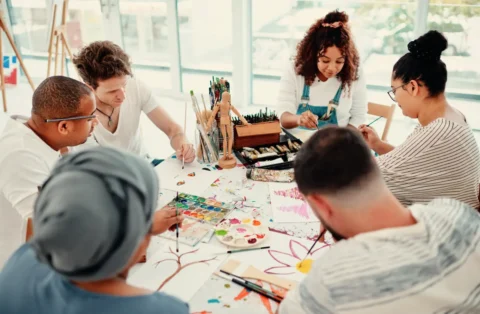
Creative hobbies give you a way to tap into your imagination and work through your emotions. Some are especially useful when dealing with feelings that are hard to put into words.
- Drawing or painting
- Knitting
- Playing an instrument or singing
- Expressive writing
- Model building
Physical activities
Physical and outdoor activities can be done solo or in groups. Exercise releases feel-good endorphins and neurotransmitters that improve mood, reduce stress, and help your brain relearn how to feel good naturally.
- Walking or running
- Cycling
- Joining casual sports teams
- Hiking
- Gardening
Social connection
Rebuilding sober friend groups reduces isolation and gives you that face-to-face contact we all need.
- Book clubs
- Board game nights
- Volunteer work, like community cleanups or food banks
- Language classes
- Hobby meet-ups
- Faith or spiritual groups
Cognitive and skill-building
Skill-based activities engage the problem-solving parts of your brain and build self-confidence as you develop competence and mastery.
- Crosswords and logic puzzles
- Online courses
- Cooking or baking
- DIY home projects
- Trivia nights or quiz leagues
Need extra support on your recovery journey? QuickMD is here when you need us.
Hobbies are a huge part of recovery, but they work best when you’ve also got professional support in your corner. If you ever need to check in, we make it easy. As a patient, you can book a same-day virtual visit to talk through what’s going on, adjust your treatment plan, or get help staying on track.
Need to talk to someone today? Our same-day virtual visits can help.