What you’ll learn
We’ll help you understand why menopause acne happens, what your treatment options are (from over-the-counter staples to hormone therapy), and what steps you can take starting today to get clearer skin.
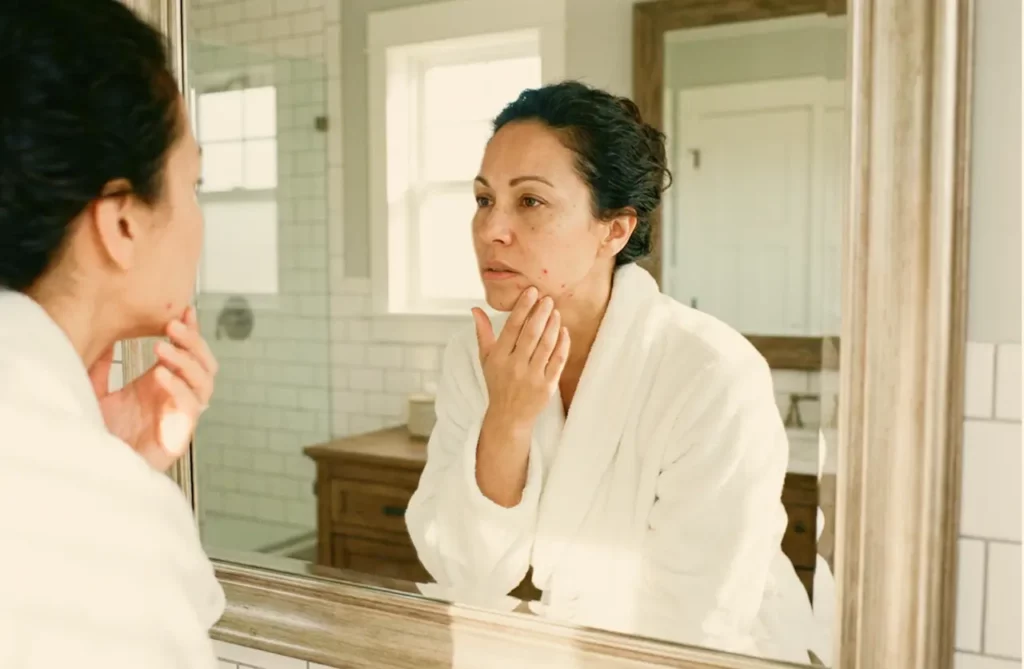
If you’ve recently looked in the mirror and thought, “Wait… Is that acne? At this age?”, you’re far from alone. Just when you thought you’d safely left the Clearasil and Stridex behind decades ago, angry red pimples can make a roaring comeback as your hormones shift yet again during menopause.
Breakouts during menopause and perimenopause are incredibly common, and they’re not a reflection of anything you’re doing wrong. They’re the result of real hormonal shifts happening inside your body. However, they’re also very treatable.
In this article, we’ll walk you through what’s causing your skin to act up, how long it typically lasts, and the full range of treatment options available to help you get back to feeling comfortable in your skin.
What is menopause acne?
Menopause acne is a breakout that occurs during the transition between perimenopause and menopause. It’s driven by the same culprit as almost everything else that changes during this time: hormones. But if you’re picturing the kind of acne you had as a teenager, this is a different beast.
Menopause can show up with a variety of changes to your skin. While teen acne tends to show up across the forehead and cheeks, menopause acne typically appears along the jawline and chin. It tends to be deeper and more cystic in nature, and is often more painful. It can also be more stubborn than the breakouts you remember from your youth.
What causes menopause acne?
As you move through perimenopause, your estrogen levels gradually decline. Estrogen has always been doing some behind-the-scenes work to keep androgens (like testosterone) balanced in your body. When estrogen drops, testosterone doesn’t necessarily go up on its own, but it becomes more influential. Doctors call this “relative androgen excess,” and it has a direct effect on your skin.
Androgens signal the sebaceous glands (your skin’s oil glands) to ramp up oil production. More oil means more clogged pores. At the same time, the skin’s natural cell turnover slows down, so dead skin cells stick around longer and contribute to blockages. The result: deeper, more inflamed breakouts, often right along the jaw.
A few additional factors can increase your likelihood of developing menopause acne:
- Previous acne history. If you dealt with hormonal acne in your teens or during pregnancy, your skin has already shown a sensitivity to hormonal fluctuations. That pattern often continues during the menopause transition.
- Family genetics. Acne tends to run in families. If your mother or sisters experienced breakouts during menopause, your chances of going through the same thing are higher.
- Stress sensitivity. Cortisol, the hormone your body releases in response to stress, also stimulates oil production. If you’re someone whose skin has historically flared during stressful periods, menopause (which is itself a significant life transition) can compound that effect.
How long does menopause acne last?
Menopause acne varies from woman to woman. But there’s a general pattern that can help set realistic expectations. Perimenopause, which is the transitional phase leading up to your final period, can begin anywhere from 4 to 10 years beforehand. Acne can start or worsen during this window. Breakouts often peak during the menopause transition itself, then gradually improve during postmenopause, though some people experience lingering acne for 1 to 3 years afterward.
With the right treatment approach, you don’t have to wait it out. Here’s a simplified look at how acne activity typically tracks across the three phases:
| Phase | Typical duration | Acne severity | Trend |
| Perimenopause | 4-10 years before final period | Mild to moderate | Increasing |
| Menopause | Around final menstrual period | Moderate to severe | Variable, often peaks |
| Postmenopause | 1-3+ years after final period | Mild to moderate | Decreasing |
Your own experience will depend on your hormone levels, your genetics, and how you approach treatment. But the condition generally improves over time, especially with a doctor-guided plan.
How do topical treatments work?
For many women, topical treatments are the first line of defense against menopause acne. There are several solid options depending on your skin type and the severity of your breakouts. Some work best for mild to moderate acne, others are better suited for more stubborn cases, and many work well in combination. Here’s a breakdown of what’s available.
Retinoids
Retinoids are forms of vitamin A and have been a cornerstone of acne treatment for decades. They work by tackling two of the key drivers of breakouts:
- Excess oil production
- Overproduction of keratinocytes (the skin cells that contribute to clogged pores when they build up)
Retinoids also calm inflammation, which is what makes those deep, painful breakouts so tender and red.
They come in a range of formulations and strengths:
- Retinol is the gentler, over-the-counter option found in many acne creams, gels, and anti-aging products. It converts to active retinoic acid in the skin, which means it works more gradually but tends to cause less irritation.
- Tretinoin is a prescription-strength topical retinoid and one of the most well-studied acne treatments available. It works faster and more effectively than OTC retinol, but it can cause dryness and peeling at first, especially on skin that’s already sensitive from menopause-related changes.
- Isotretinoin (Accutane) is an oral form of vitamin A reserved for severe or cystic acne. It’s highly effective, but it carries serious side effects and requires close medical supervision, including enrollment in the iPLEDGE monitoring program and monthly pregnancy tests. (We’ll cover this more in the oral treatments section below.)
Benzoyl peroxide and salicylic acid
These two are the workhorses of the over-the-counter (OTC) acne aisle, and both earn their reputation.
- Benzoyl peroxide works by killing the acne-causing bacteria (C. acnes) that thrive in clogged pores. It also helps reduce excess oil on the skin’s surface. It’s available in washes, spot treatments, and leave-on gels in concentrations that vary from 2% to 10%. It’s important to note that higher concentrations aren’t always more effective and can actually increase irritation, so starting lower is usually wise. Your doctor can help you find the right balance.
- Salicylic acid takes a different approach. It’s what’s called a beta hydroxy acid (BHA), meaning it’s oil-soluble and can penetrate into pores to dissolve the buildup of dead skin cells and sebum that causes blockages. It’s particularly good for blackheads and surface-level congestion. You’ll find it in cleansers, toners, serums, and spot treatments.
Both are available without a prescription and can be used alongside other treatments as part of a broader acne-management routine.
Topical antibiotics
Topical antibiotics, the most commonly prescribed being clindamycin, work by reducing the presence of acne-causing bacteria on the skin and lowering the inflammation that leads to those red, swollen breakouts. They’re typically applied directly to affected areas once or twice daily and are available in gel, lotion, and solution forms. Your provider can help you find the right combination.
One important note: topical antibiotics are generally more effective when paired with another treatment, like benzoyl peroxide, to reduce the risk of antibiotic resistance.
Oral and hormonal treatments for menopause acne
Topical treatments work great on the surface of the skin, but sometimes the breakouts run deeper than any cream or gel can reach. For persistent, cystic, or hormonally driven acne, oral and hormonal treatments can address the root cause from the inside out. Here’s what’s available.
Oral antibiotics
Oral antibiotics (most commonly doxycycline and azithromycin) work to reduce acne-causing bacteria throughout the body and decrease the inflammation that makes breakouts so visible and painful. They’re generally prescribed as a short-term bridge, typically 3 to 6 months, not as a long-term solution. Results often start showing up within 6 to 8 weeks.
Because antibiotic resistance is a real concern, providers often pair oral antibiotics with topical treatments like benzoyl peroxide. That combination tends to improve outcomes while reducing the risk of resistance developing over time.
Antiandrogens (spironolactone)
If your acne is hormonal in nature (and during menopause, it almost always is), prescription spironolactone is one of the most effective and widely prescribed tools available. Originally developed as a blood pressure medication, spironolactone is also prescribed off-label for menopausal acne. It blocks testosterone’s ability to bind to sebaceous gland receptors, which means it directly addresses the relative androgen excess driving your breakouts.
It’s taken as a once-daily oral pill, and most people start to see meaningful improvement within 3 to 6 months. If appropriate, your doctor can prescribe spironolactone. It’s generally well-tolerated, though your doctor will want to monitor your potassium levels periodically.
Isotretinoin (Accutane)
For severe, cystic acne that hasn’t responded to other treatments, isotretinoin is a heavy hitter. It works by drastically reducing sebum production and resetting the sebaceous glands back to a less overreactive level. Courses typically last 4 to 6 months, and many patients experience long-term remission afterward.
That said, this is not a casual prescription. Isotretinoin carries serious potential side effects and requires enrollment in the iPLEDGE monitoring program, which includes monthly pregnancy tests. This requirement applies to all patients, regardless of menopausal status or pregnancy likelihood, because of the risks of fetal exposure. Think of it as a last resort when other options haven’t delivered results, and one that requires close, ongoing provider supervision.
Menopause hormone therapy (MHT)
Because so much of menopause acne is caused by estrogen decline and relative androgen excess, addressing the hormonal imbalance head-on can be a winning strategy. Menopause hormone therapy (MHT, formerly called “hormone replacement therapy or “HRT”) rebalances estrogen and progesterone levels. In turn, this counteracts the excess that triggers your breakouts. Formulation makes a big difference, which is why it’s important to work with a knowledgeable doctor who can help you find the right fit.
The added benefit of MHT is that it doesn’t just help with acne. From hot flashes to sleep disruption to mood changes, MHT addresses the bigger picture of menopause symptoms all at once. If you’re navigating multiple menopause symptoms alongside your skin concerns, it’s worth asking whether MHT might be a good fit. QuickMD’s MHT program is a good place to start that conversation.
Lifestyle changes and prevention for menopause acne
Medical treatments are the backbone of managing menopause acne, but your everyday routines can help, too. The daily habits you build around your treatment plan can reduce how often you break out and how severe those breakouts are. These aren’t replacements for medical care, but they can be a big help in tandem with it.
Stress management
Cortisol, the hormone your body releases under stress, directly stimulates oil production in the sebaceous glands. And since menopause is already a big hormonal and emotional transition, stress has a way of compounding everything. It becomes a vicious cycle: stress worsens acne, acne increases stress, and round and round it goes.
Breaking that cycle with clinically supported stress-reduction strategies can help. Regular aerobic exercise, meditation or breathwork, working with a therapist, and journaling are all approaches with evidence behind them.
Sleep
Poor sleep elevates cortisol, which worsens acne. Targeting 7 to 9 hours of quality sleep per night is one of the most impactful things you can do for your skin. This is admittedly a tall order during menopause. Night sweats, insomnia, and disrupted sleep are among the most common complaints during this transition, and they can create a frustrating cycle where the thing that would help your skin is the thing that menopause is actively stealing from you. Addressing sleep disruption by changing your sleep routine or talking with your doctor about medical support can have added benefits that go well beyond your skin.
Diet
What you eat can influence your skin, though the science here is more nuanced than some corners of the internet would have you believe.
- High-glycemic foods (think: white bread, sugary drinks, processed snacks) are the clearest driver of acne. These foods spike insulin levels, which in turn stimulate sebum production and promote inflammation.
- Dairy is a bit more complicated. Some research suggests a link between dairy consumption and acne, but the evidence is mixed enough that it’s worth experimenting with rather than treating it as a firm rule.
- On the positive side, anti-inflammatory foods, including colorful fruits and vegetables, omega-3-rich fish like salmon and sardines, and whole grains, appear to support clearer skin.
Skincare routine
Your skincare routine may need some adjustments during menopause, both to manage acne and to account for the skin changes that come with this transition.
Start with a gentle, non-stripping cleanser. Harsh soaps can disrupt the skin barrier and actually signal your sebaceous glands to produce more oil in response. Pair that with a lightweight, non-comedogenic (non-pore-clogging) moisturizer. Many acne treatments, especially retinoids and benzoyl peroxide, are drying by nature, and keeping skin hydrated helps maintain tolerance.
Daily SPF is non-negotiable. Menopause skin becomes more sun-sensitive, and many acne treatments increase that sensitivity further. A broad-spectrum SPF 30 or higher should be a daily baseline.
Much like a throwback warning you might have heard with teenage acne, some sage advice still holds true: avoid picking or popping breakouts. This spreads bacteria, worsens inflammation, and significantly increases scarring risk. Also, steer clear of oil-based cosmetics or heavy foundations that can clog pores. Look for “non-comedogenic” on labels.
Hydration
When your body is dehydrated, your sebaceous glands can overcompensate by producing more oil, which is the opposite of what you want. Staying consistently hydrated, a baseline of 8 or more glasses of water daily, is a reasonable target that helps your skin maintain its natural balance. This isn’t a standalone treatment strategy, but it’s a simple, supportive habit worth keeping.
How much does menopause acne treatment cost?
Costs for menopause acne treatment vary quite a bit depending on whether you have insurance coverage, whether generics are available, and where you receive your care. However, most prescription options have generic versions available, insurance often covers at least a portion of the cost, and an online consultation with QuickMD can help you avoid the added expense of an in-office visit.
Here’s a general overview of what you can expect:
| Treatment | Type | Typical cost (without insurance) | Prescription required? |
| Benzoyl peroxide / Salicylic acid | Topical | $9 to $30/month | No |
| Tretinoin / Topical retinoids | Topical | $30 to $57+/month (generics typically cost less) | Yes |
| Oral antibiotics (doxycycline, azithromycin) | Oral | $9 to $45/month (generics widely available) | Yes |
| Spironolactone | Oral | $10 to $109/month (generic available) | Yes |
| Isotretinoin (Accutane) | Oral | $96 to $478+/month (generic from ~$30) | Yes |
| Menopause hormone therapy (MHT) | Oral/Topical/Patch | $10 to $500+/month (varies by formulation) | Yes |
It’s important to note that costs vary by pharmacy, location, insurance plan, and specific formulation. Generic options are available for most prescription treatments listed.
Get professional advice on menopause acne with QuickMD
Menopause and perimenopause can be a bumpy rollercoaster of physical and hormonal changes. But you don’t have to simply power through. Although menopause acne is a common part of the experience, there are many genuinely good solutions available to you. But finding the right one often comes down to the specific hormonal picture that’s unique to you. That’s where a knowledgeable doctor can help.
At QuickMD, you can connect with a licensed doctor online, no waiting room required. Whether you’re curious about MHT, wondering if spironolactone might be a fit, or just want a professional set of eyes on your situation, we can help you build a personalized treatment plan designed around your symptoms, your health history, and your goals.
Frequently asked questions about menopausal acne
Why am I getting acne now after years of clear skin?
Hormonal shifts during perimenopause and menopause change the balance between estrogen and androgens in your body, even if your skin has been well-behaved for decades. As estrogen declines, testosterone becomes comparatively more active and drives increased oil production. Your skin isn’t misbehaving. It’s responding to a real biological change.
Can menopause acne appear on my body, not just my face?
Yes. While the jawline and chin are the most common sites for hormonal acne, breakouts can also appear on the chest, back, and shoulders. If you’re noticing body acne alongside or instead of facial acne, it’s worth mentioning to your provider, as treatment approaches may vary slightly by location.
Does menopause acne cause scarring?
It can, particularly with deeper, cystic breakouts that are more common during menopause. Picking or squeezing breakouts significantly increases scarring risk. Getting treatment early, before acne becomes severe, is the best way to protect your skin from lasting marks.
Will my regular acne products still work during menopause?
They might, but they may not be enough on their own. OTC products with benzoyl peroxide and salicylic acid can still help, but menopause acne tends to have a stronger hormonal component than the acne those products were originally designed for. It’s worth talking to a provider to see if prescription-level or hormonal treatment can help.
Can certain medications make menopause acne worse?
Yes. Some hormonal medications can actually worsen acne as a side effect. If your acne seems to have started or worsened after beginning a new medication, let your doctor know so you can review whether it makes sense to make any adjustments.
Disclaimer
Articles on this website are meant for educational purposes only and are not intended to replace professional medical advice, diagnosis or treatment. Do not delay care because of the content on this site. If you think you are experiencing a medical emergency, please call your doctor immediately or call 911 (if within the United States). This blog and its content are the intellectual property of QuickMD LLC and may not be copied or used without permission.
References
Khunger, N., Mehrota, K. (2019). Menopausal Acne – Challenges And Solutions. Int J Womens Health. 2019 Oct 29;11:555–567. doi: 10.2147/IJWH.S174292 https://pmc.ncbi.nlm.nih.gov/articles/PMC6825478/
American Academy of Dermatology Association (AAD). (2020). Acne: Who Gets And Causes. https://www.aad.org/public/diseases/acne/causes/acne-causes
iPLEDGE. Safety Notice. https://ipledgeprogram.com/#Main
Bode, S. (2021). Skin Care Ingredient Focus: Benzoyl Peroxide. Westlake Dermatology. https://www.westlakedermatology.com/blog/benzoyl-peroxide-skin-care-ingredient/
Ghannoum, M., Gamal, A., et al. (2025). Criticality of Benzoyl Peroxide and Antibiotic Fixed Combinations in Combating Rising Resistance in Cutibacterium acnes. Clin Cosmet Investig Dermatol. 2025 Mar 31;18:755–766. doi: 10.2147/CCID.S506254 https://pmc.ncbi.nlm.nih.gov/articles/PMC11970427/
Santer, M., Burden-Teh, E., Ravenscroft, J. (2024). Managing acne vulgaris: an update. Drug Ther Bull. 2024 Jan 2;62(1):6–10. doi: 10.1136/dtb.2023.000051 . https://pmc.ncbi.nlm.nih.gov/articles/PMC10803966/
AAD. (2024). Acne: Diagnosis and Treatment. https://www.aad.org/public/diseases/acne/derm-treat/treat
Selvaraj, K., James, W., Fallah, H. (2025). Oral spironolactone for acne vulgaris in females: Evidence review and practical recommendations. AAD – JAAD reviews. https://www.jaadreviews.org/article/S2950-1989(25)00064-9/fulltext
Cleveland Clinic. (2026). Isotretinoin Capsules. https://my.clevelandclinic.org/health/drugs/19186-isotretinoin-capsules
GenM. (2026). Signs of Acne. https://gen-m.com/signs/acne/
Advanced Dermatology, PC – Center for Laser & Cosmetic Surgery. (2026). Does Stress Really Cause Acne? Dermatologists Explain. https://www.advanceddermatologypc.com/blog/does-stress-really-cause-acne/
Meixiong, J., Ricco, C., Vasavda, C., Ho, B. (2022). Diet and acne: A systematic review. JAAD Int. 2022 Mar 29;7:95–112. doi: 10.1016/j.jdin.2022.02.012 . https://pmc.ncbi.nlm.nih.gov/articles/PMC8971946/
Kubala, J. (2019). The Best diet and Supplements for Acne Vulgaris (Hormonal Acne). Healthline. https://www.healthline.com/nutrition/hormonal-acne-diet
GoodRx. (2026). Benzoyl Peroxide. https://www.goodrx.com/benzoyl-peroxide
GoodRx. (2026). Tretinoin. https://www.goodrx.com/tretinoin
GoodRx. (2026). Doxycycline Hyclate. https://www.goodrx.com/doxycycline-hyclate
GoodRx. (2026). Azithromycin. https://www.goodrx.com/azithromycin
Woodward, D., Rhinehart, C. (2026). How Much is Spironoclatone Without Insurance? GoodRx. https://www.goodrx.com/spironolactone/spironolactone-cost-without-insurance
GoodRx. (2026). Accutane. https://www.goodrx.com/accutane
George, C. (2023). HRT Cost: Hormone Replacement Therapy Pricing Explained. GoodRx. https://www.goodrx.com/conditions/estrogen-replacement/hrt-cost
QuickMD has strict referencing policies and relies on reputable sources, including peer-reviewed research, clinical guidelines, medical organizations, and government and public health agencies, among others. Learn more about how we ensure accuracy in our content by reading our editorial guidelines.