
What you’ll learn
We’ll explain why estrogen patches are in short supply, what to do if yours is out of stock, and the alternatives a licensed doctor can switch you to so you don’t have to go without treatment.
You finally found a hormone therapy routine that keeps you cool during the day and lets you sleep through the night. Now the pharmacy says your estrogen patch is on backorder. Is it a one-time thing, or is this happening everywhere?
“The conversation around menopause and perimenopause has exploded over the past couple of years, among physicians, educators, women, and yes, even men,” says Dr. Sheryl Ross (Dr. Sherry), Chief Medical Officer of Women’s Health at QuickMD. “Everyone is talking about this normal-but-disruptive hormonal change that affects about 50% of the population and, more importantly, how to treat it well.”
Estradiol patches have gotten harder to fill as more patients ask about menopause and perimenopause care, and also as more licensed clinicians prescribe menopause hormone therapy (MHT). More women getting treated is exactly what should be happening, but the problem is supply. Manufacturers just haven’t caught up yet, which is why some pharmacies are running short while others may still have patches on the shelf.
If your patch is out of stock, you don’t have to navigate this alone. Our doctors can help you explore alternative options, whether that means locating another pharmacy, switching to a different patch, or considering another form of estrogen based on your symptoms, medical history, and treatment goals. Let’s dig into some of your options and the deeper reasons behind the current shortage.
Is there really an estrogen patch shortage right now?
Many patients are having trouble filling estradiol patch prescriptions. Whether that officially counts as a shortage, though, is where it gets complicated.
As of this article’s publication, estradiol patches aren’t on the FDA’s drug shortage list. But the American Society of Health-System Pharmacists (ASHP) does list multiple estradiol transdermal patch products on its shortage bulletin. Its April 22, 2026 bulletin names several affected products, including Dotti™, Lyllana®, Noven, and Zydus estradiol patches. Some are on back order, and some have no estimated release date.
The FDA has said supply is keeping up, “but barely.” So, even if the shortage isn’t officially listed by the FDA, patients are still running into backorders.
If your patch is out of stock, call around to nearby pharmacies and ask whether a different manufacturer or patch schedule is available. If no success, then talk to a licensed doctor about a safe substitute. They can switch you to another patch, a gel, spray, cream, or oral option, depending on your symptoms and health history.
At QuickMD, we can help you explore alternative estrogen therapy options and determine which treatment may be the best fit for your symptoms, medical history, and preferences. If you’re having trouble filling your patch prescription, schedule a visit with one of our licensed doctors to discuss your options and avoid interruptions in treatment.
Why is there an estrogen patch shortage?
The estrogen patch shortage comes down to rising demand. More patients are asking about hormone therapy, more doctors and licensed clinicians are prescribing it, and manufacturers haven’t been able to increase patch supply fast enough to keep up.
“Menopause educators are dismantling decades of fear rooted in the flawed 2002 Women’s Health Initiative study, giving women the accurate information they were never offered, and women are responding, driving an unprecedented demand for hormone therapy that the current supply chain was never built to meet,” says Dr. Sherry.
A surge in demand after the FDA removed the boxed warning
The surge could be traced to one decision. “In November 2025, the FDA removed the black box warning on estrogen therapy for menopause, which was a big win for women,” says Dr. Sherry. “It validated what many of us have known for years: estrogen is safe. This sent demand for the estrogen patch skyrocketing almost overnight.”
And the numbers back that up. Prescriptions for estrogen-based therapy among women ages 45 to 54 rose 184% from 2018 to 2026, with a 20% jump from July 2025 to February 2026.
A lot of women were warned for years about hormone therapy after the Women’s Health Initiative study in 2002 linked it to breast cancer and heart risks. More recent studies showed that the 2002 study overstated these risks. Nevertheless, prescriptions fell off a cliff, and a generation of women was left to tough out their symptoms. Newer research shows that timing, age, and formulation are important factors. For many women who start near menopause, the benefits can outweigh the risks.
Supply is having trouble keeping up because estradiol patches are manufactured in batches planned months in advance. A sudden surge in prescriptions can empty shelves before the next batch arrives. “What followed was a nationwide shortage that left many women without access to one of the safest, most effective ways to take estrogen,” Dr. Sherry observes.
Patches are feeling the squeeze because many women choose them. They’re often more cost-effective than creams or vaginal rings, have years of safety data behind them, and insurance is more likely to cover them. More women starting and staying on longer means more monthly refills pulling from the same limited supply.
Manufacturing and supply-chain limits
The companies that make these patches have said they can’t quickly scale to meet the demand. The main pharmaceutical companies producing estradiol patches sold in the US include Amneal, Sandoz®, Noven, Viatris, and Zydus.
Sandoz has said it’s taking the current shortage “very seriously” and is shipping more product to meet demand. A representative for Amneal acknowledged how hard this has been for patients, noting that “there is finite industry capacity for producing them.” Amneal also makes other forms of estrogen, including gels, and says it’s working to keep those supplied.
A few other pressures may be feeding into it, including older supply-chain problems and tariffs on overseas manufacturing. Those are contributing factors, though, not the root cause. The simplest explanation still holds here. Demand outran supply faster than manufacturers could adjust.
Which estrogen patches are hardest to get
The shortage has hit twice-weekly estradiol patches the hardest. If you’re having trouble finding your patch, the table below is a starting point for what to ask about. Your doctor can match a substitute to your dose and health history. Just a heads-up, though, the once-weekly patch is a common fallback, and it’s running low in some places, too.
| If you can’t fill | Ask your doctor about |
| Twice-weekly estradiol patch | A once-weekly patch or another twice-weekly brand |
| A specific brand (Dotti, Lyllana, Noven, or Zydus) | The same dose from another manufacturer that has supply, like Sandoz or Viatris |
| Any estradiol patch | A different generic estradiol patch |
| Your usual dose | Switching brands, or wearing two lower-dose patches to add up to your dose |
| Any patch at all | Gel, spray, cream, oral estrogen, or a vaginal ring |
If you can’t find your usual patch, don’t try to stretch a low supply by cutting, rationing, or re-wearing patches. That can throw off your dose in unpredictable ways.
When will the estrogen patch shortage end?
There’s no firm end date for the shortage yet. As of ASHP’s April 2026 bulletin, the affected brands are still back-ordered, and in some cases, the manufacturers can’t estimate when they’ll restock.
- Amneal can’t give a release date for its back-ordered Dotti and Lyllana patches.
- Noven is releasing limited supply week to week.
- Zydus is reserving what it has for contracted customers.
Depending on your brand and dose, your usual patch could stay hard to find for a little while.
Other manufacturers still have estradiol patches available, so you don’t have to go without treatment while you wait. Whether it’s a patch from a maker that has stock, a different schedule, or one of the other forms covered above, your doctor can usually keep you on estrogen until your usual product is back.
What to do if you can’t get your estrogen patch
For most people, a short gap in hormone therapy is uncomfortable, but not dangerous. You can find an in-stock option quickly with your doctor’s help. “Major pharmacy chains, including CVS, have been unable to fill estrogen patch prescriptions consistently. This is frustrating, but there are options,” says Dr. Sherry. Here’s what she recommends if you’re affected:
- Call around. Supply varies by pharmacy and distributor, so a nearby location may have your patch when yours doesn’t.
- Try an independent or specialty pharmacy; they often have stock that the big chains don’t.
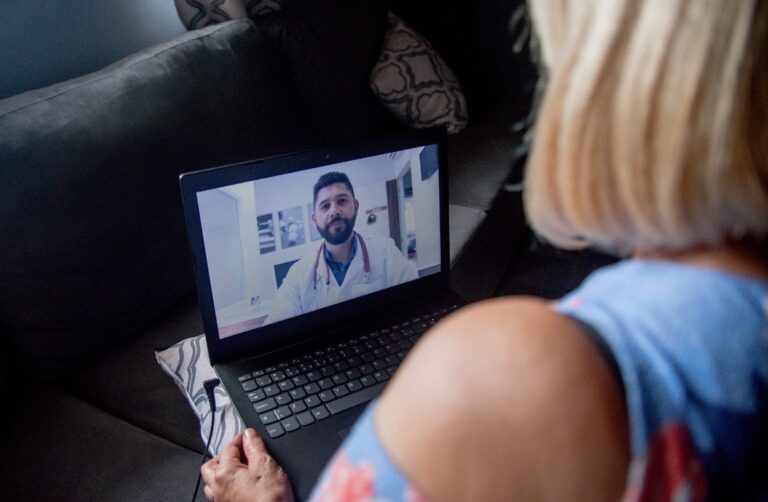
- Ask your doctor about telemedicine options that may have better access to supply. At QuickMD, you can meet with a licensed doctor, often the same day.
- Ask about a different version of the same patch. That might mean the same dose from another manufacturer, or switching between the twice-weekly and once-weekly patch.
- Ask your doctor about another form of estrogen. Gel, cream, spray, oral estrogen, or a vaginal ring may all be options.
Estrogen patch alternatives during the shortage
A patch isn’t your only option. Gels, creams, and sprays all use estradiol too, the same hormone in most estrogen patches, so switching forms doesn’t mean starting over with something unfamiliar. What changes is mostly how you take it, and your doctor can help you find the right fit. The table below gives you the quick version.
| Alternative | May fit patients who |
| A different brand, or the once- vs twice-weekly patch | Want to stay on a patch with minimal change |
| Gel, cream, or spray | Want to skip oral estrogen and don’t mind applying it daily |
| Oral estrogen | Don’t have a clot history and want a simple pill option |
| Vaginal ring or localized estrogen | Mainly have vaginal dryness, pain with sex, or recurrent UTIs |
A different brand or dose of the same patch
For many women, the easiest switch is still a patch. Your doctor may recommend the same dose from another manufacturer, a once-weekly patch instead of a twice-weekly patch, or another patch schedule that keeps your treatment as close as possible to what you’re already using.
Other transdermal estrogen (gels, creams, sprays)
Gels, face creams, vaginal creams, and sprays send estradiol through your skin, the same way a patch does. Because skin-based estrogen skips the liver, it avoids the added clot risk associated with oral estrogen. The tradeoff is that most of these need to go on every day, and these formulations are sometimes less likely to be covered by insurance.
Oral estrogen
Oral estrogen may be a straightforward option if you don’t have a history of blood clots. It’s often easier to find than patches and simple to take, and it may even help your cholesterol. Clot history matters because the pills are processed through the liver, which can raise the risk of blood clots, so a transdermal form is usually preferred for anyone with that risk.
If you still have a uterus, oral estrogen is usually paired with progesterone to protect against uterine thickening and certain cancers. Estrogen on its own can build up the uterine lining over time, and the progesterone keeps that in check.
Before prescribing a pill, a licensed doctor will look at your medical history, including clot risk, migraine history, blood pressure, and whether you smoke.
Localized vaginal estrogen
If your main problems are vaginal dryness, pain during sex, or UTIs that keep coming back, localized estrogen might fit better than the kind that affects the whole body (systemic estrogen). A vaginal estrogen pill, vaginal estrogen cream, or a vaginal ring treats those symptoms right where they happen. Some rings deliver whole-body estrogen, and some only work locally, so your provider can point you to the right type.
How QuickMD can help you stay on menopause hormone therapy (MHT)
If your estrogen patch is out of stock, you don’t have to wait out the shortage or grit your teeth through returning symptoms. The right substitute depends on your dose, symptoms, health history, and what your pharmacy can actually fill.
Here at QuickMD, our doctors can evaluate you in a same-day online visit, find an in-stock alternative that fits, and send the prescription straight to your pharmacy or, depending on availability, ship it to your home. That might be a different patch, a once-weekly option, or one of the other forms covered above.
No in-person visit is required, and you don’t need insurance to use QuickMD. We offer convenient, cash-pay telemedicine visits that get you seen by a knowledgeable doctor from the comfort of home. Book a visit today to talk about your options.
Frequently asked questions about the estrogen patch shortage
Is the estrogen patch shortage on the FDA shortage list?
No. Estradiol patches aren’t on the FDA’s official shortage list right now. But the American Society of Health-System Pharmacists (ASHP) does list several estradiol patch products as in short supply, which is why you may still hit backorders at the pharmacy.
Is it safe to stop hormone therapy during the shortage?
A short gap in treatment is usually uncomfortable, not dangerous. Hot flashes, night sweats, or sleep problems may come back, but they usually settle once you restart treatment. Don’t cut, ration, or re-wear patches to stretch your supply, since that changes your dose unpredictably.
Can I get an estrogen prescription or switch prescriptions online?
Yes. A licensed doctor can review your symptoms, health history, and current prescription in an online visit, then prescribe an in-stock alternative if it fits. You can book a visit with a QuickMD doctor to talk through your options.
Disclaimer
Articles on this website are meant for educational purposes only and are not intended to replace professional medical advice, diagnosis or treatment. Do not delay care because of the content on this site. If you think you are experiencing a medical emergency, please call your doctor immediately or call 911 (if within the United States). This blog and its content are the intellectual property of QuickMD LLC and may not be copied or used without permission.
References
Abou-Ismail, M. Y., Sridhar, D. C., Nayak, L. (2020). Estrogen and thrombosis: a bench to bedside review. Thrombosis Research, 192, 40–51. https://pmc.ncbi.nlm.nih.gov/articles/PMC7341440/
U.S. Food and Drug Administration. (FDA). (2026). FDA requests labeling changes related to HRT. https://www.fda.gov/drugs/drug-alerts-and-statements/fda-requests-labeling-changes-related-safety-information-clarify-benefitrisk-considerations
Lee, S.R., Cho, M., Cho, Y.J., et al. (2020). The 2020 Menopausal Hormone Therapy Guidelines. Journal of Menopausal Medicine, 26(2). https://www.ncbi.nlm.nih.gov/pmc/articles/PMC7475284/pdf/jmm-26-69.pdf
Cho, L., Kaunitz, A. M., Faubion, S. S., Hayes, et al. (2023). Rethinking menopausal hormone therapy: For whom, what, when, and how long? Circulation, 147(7), 597–610. https://pmc.ncbi.nlm.nih.gov/articles/PMC10708894/
Daly, M. (2026). Estrogen patch backordered? Don’t panic. Weightwatchers.com; WeightWatchers. https://www.weightwatchers.com/us/blog/health/estrogen-patch-shortage
Cleveland Clinic. (2024). Estring (estradiol) vaginal ring: Uses & side effects. https://my.clevelandclinic.org/health/drugs/19191-estradiol-vaginal-ring-vaginal-symptoms-of-menopause
Foschi, M., Groccia, G., Rusce, M. L., Medaglia, C., Aio, C., Sponzilli, A., Setti, V., Battipaglia, C., Genazzani, A. D. (2025). Estradiol and micronized progesterone: A narrative review about their use as hormone replacement therapy. Journal of Clinical Medicine, 14(20), 7328–7328. https://pmc.ncbi.nlm.nih.gov/articles/PMC12565450/
Guetta, V., Cannon, R. O. (1996). Cardiovascular effects of estrogen and lipid-lowering therapies in postmenopausal women. Circulation, 93(10), 1928–1937. https://www.ahajournals.org/doi/10.1161/01.cir.93.10.1928
Howard, J. (2026). Estrogen patches in short supply as demand for menopause hormone therapy grows. CNN. https://www.cnn.com/2026/02/23/health/estrogen-patch-shortage-menopause-hormone-therapy-wellness
Kopf, M. (2026). Why are some estrogen patches for menopause hard to find? NBC News. https://www.nbcnews.com/health/womens-health/estrogen-patches-menopause-hard-find-hormone-replacement-therapy-rcna257224
MedlinePlus. (2022). Estrogen Vaginal: MedlinePlus Drug Information. Medlineplus.gov. https://medlineplus.gov/druginfo/meds/a606005.html
Nania, R. (2026). Having trouble getting your estrogen patch? Here’s how to navigate shortages. AARP. https://www.aarp.org/health/drugs-supplements/estrogen-patch-shortage-tips/
U.S. Food and Drug Administration. (FDA). (2025). HHS advances women’s health, removes misleading FDA warnings on hormone replacement therapy. https://www.fda.gov/news-events/press-announcements/hhs-advances-womens-health-removes-misleading-fda-warnings-hormone-replacement-therapy
Song, S. (2026). There’s a shortage of estrogen patches. here’s what’s leading to the problem and what women can do. KTVU FOX 2 San Francisco; KTVU FOX 2. https://www.ktvu.com/news/theres-shortage-estrogen-patches-heres-whats-leading-problem-what-women-can-do
Sullivan, K. (2026). FDA claims there’s no estrogen patch shortage as women struggle to get prescriptions filled. NBC News. https://www.nbcnews.com/health/womens-health/fda-estrogen-patch-shortage-hormone-therapy-alternatives-rcna344233
Sy, S., Norris, C., Cuevas, K. (2026). Estrogen patches face shortage as more women seek hormone therapy. PBS News. https://www.pbs.org/newshour/show/estrogen-patches-face-shortage-as-more-women-seek-hormone-therapy
Vogel, L. (2017). Trial overstated HRT risk for younger women. Canadian Medical Association Journal, 189(17), E648–E649. https://doi.org/10.1503/cmaj.1095421. https://www.cmaj.ca/content/189/17/E648
Wheeler, M. (2026). Estradiol transdermal system. American Society of Health-System Pharmacists (ASHP). https://www.ashp.org/drug-shortages/current-shortages/drug-shortage-detail.aspx?id=1206
QuickMD has strict referencing policies and relies on reputable sources, including peer-reviewed research, clinical guidelines, medical organizations, and government and public health agencies, among others. Learn more about how we ensure accuracy in our content by reading our editorial guidelines.