
What you’ll learn
Wherever you’re starting from, you don’t have to figure out detoxing from kratom by yourself. We’ll walk you through the medically backed paths to quitting, why doing it entirely on your own can be risky, what withdrawal can feel like, how realistic a home detox is, and how to reach a QuickMD doctor for help.
Wanting to stop kratom or 7-OH is hard enough, and figuring out how to do it safely can feel like a second problem stacked on the first. Maybe you’ve tried before, and it didn’t stick, or maybe this is the first real attempt. Either way, this guide meets you where you are and lays out real, clinical paths forward.
What’s the safest way to detox from kratom and 7-OH?
The safest path for you may not be the safest path for someone else. It depends on how much you have used and for how long. It also depends on whether 7-OH products are part of your story, and whether an earlier try at quitting did not go the way you hoped.
Quitting cold turkey, on your own with no support, is usually the roughest and riskiest road. It is not the one we recommend. Medical care makes the process easier and safer, and for some people, that means staying in care longer than attempting a single taper.
Three paths carry that medical backing:
- Medically supervised detox: getting through withdrawal safely with a doctor by your side, which may include short-term medication.
- Tapering: gradually lowering your dose over weeks on a written schedule you and your doctor build together.
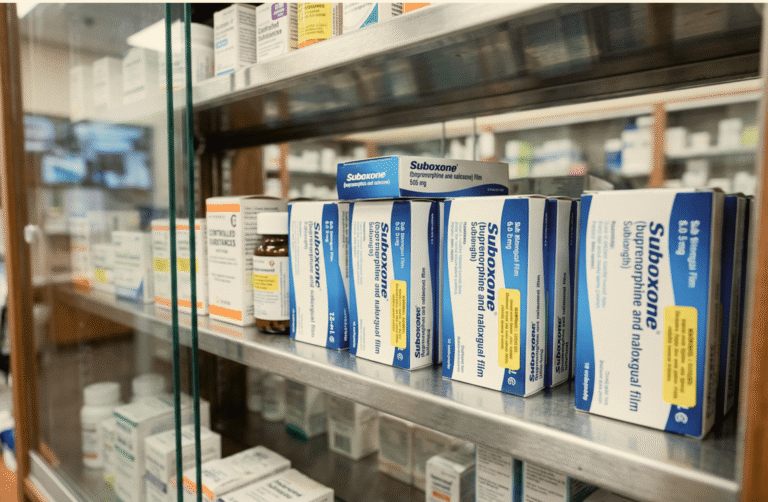
- MAT with Suboxone®: Medication-Assisted Treatment (MAT) that your doctor may suggest if you’ve used heavily or for a long time, use 7-OH regularly, or have had a past attempt that didn’t hold.
Here’s a closer look at what each option can feel like.
Option 1: medically supervised detox
Medically supervised detox means getting through the hardest days of withdrawal with a doctor supporting you, instead of facing it by yourself. Going cold turkey tends to carry the most risk, especially if your use has been heavy or daily, involves regular 7-OH, or you’re managing a heart or mental health condition alongside it.
Withdrawal has a peak. It’s the point where symptoms feel the worst, right before they start to fade. That’s also the moment when using again feels like the fastest way to feel better. This is why so many people trying to quit on their own tend to give up right at that point.
You don’t have to face that moment alone. A QuickMD doctor can support you through it. They can help ease your symptoms and suggest options that may bring you more immediate relief. Depending on your situation, short-term medication support might help too.
Option 2: tapering your kratom and 7-OH dose
Tapering means lowering your dose slowly, over several weeks, instead of stopping all at once. This gives your body time to adjust so you don’t hit full withdrawal. It works best when your doctor builds the plan with you and changes it as needed. Doing it alone, without a doctor or a written plan, makes it much easier to fall off track. The second you feel uncomfortable, the urge to use again could become strong pretty quickly.
Using a scale to measure your dose works better than guessing. Concentrated 7-OH products, like extracts, shots, or gummies, are harder to measure accurately than kratom leaf powder. That makes it easy to get the dose wrong. Talk to a QuickMD doctor before tapering off 7-OH, so you’re working from a real plan instead of a guess.
For a closer look at tapering off 7-OH specifically, see how to quit 7-OH.
Option 3: MAT with Suboxone
Buprenorphine, the medicine in Suboxone, is FDA-approved to treat opioid use disorder and can be used to treat kratom or 7-OH dependence or addiction. Kratom and 7-OH act on the same receptors in your brain as other opioids. Because of this, buprenorphine can ease cravings and withdrawal symptoms without the ups and downs that come with continued use.
The research behind this approach is still new. So far, we have a few case reports. In one case, a patient with a past opioid use disorder had become dependent on 7-OH and was going through withdrawal. His care team gave him a short course of buprenorphine in the hospital. He tapered off successfully, with only moderate withdrawal symptoms.
In another case, a man in his 30s with a 7-OH use disorder switched to buprenorphine during hospital treatment. He left with fewer cravings and a better mood than when he arrived.
A larger study is now underway, looking at buprenorphine and clonidine, both alone and together, for kratom use disorder. This study observes patients rather than randomly assigning them to groups, so the results are still early and not yet the strongest form of evidence.
How to quit kratom with MAT
MAT is different from the short, medically supervised detox. A detox helps you get through withdrawal itself. MAT is ongoing care, and your doctor adjusts your treatment plan over time to fit what you need.
MAT is recommended to quit kratom or 7-OH, especially if you’ve used a lot or for a long time, use 7-OH regularly, tried to quit before and it didn’t stick, or have withdrawal symptoms bad enough to get in the way of work or safety. If this fits your situation, it’s certainly something to talk through with a doctor.
A QuickMD doctor can help you quit kratom or 7-OH and will help you determine when to start treatment. Taking Suboxone too early, before withdrawal has really started, can trigger something called precipitated withdrawal. That’s when symptoms suddenly get much worse. So your doctor will have you start when you’re in mild to moderate withdrawal.
If you’d like a deeper look at how this treatment works, our article on Suboxone and kratom use disorder covers it in more detail. If you’d like to talk it through with a doctor, you can also start the process and ask about whether a Suboxone prescription is appropriate for you.
Can I detox from kratom and 7-OH at home?
Medical support is what makes a detox both safer and more effective. Doing it entirely alone at home carries real risk, especially with heavy or long-term use, regular 7-OH use, a past attempt that didn’t hold, or a heart or mental health condition to consider.
If you’re cutting back or stopping kratom or 7-OH, there are a few things you can do to help yourself feel more comfortable:
- Stay hydrated with electrolytes
- Eat what you can, even in small amounts, when your appetite is low
- Rest as much as the day allows
- Consider over-the-counter options for muscle aches and other symptoms when appropriate
You don’t have to manage withdrawal on your own. A QuickMD doctor can talk with you about what you’re experiencing and help you decide what kind of support makes sense. If appropriate, that may include treatment with Suboxone. Your doctor can also discuss over-the-counter options for symptoms such as nausea.
Having medical support is especially important if you use 7-OH regularly, have been using heavily or for a long time, have had difficulty stopping before, or have a medical or mental health condition that withdrawal could affect. Your doctor can help you determine the best treatment for you.
What kratom and 7-OH withdrawal feels like
Withdrawal from opioids in general, and kratom and 7-OH, commonly follows a pattern of symptoms starting within the first day or two, building over the next several days, and easing over one to two weeks. But feeling physically better doesn’t always mean the process is over. Cravings can continue for weeks or even months, which is why staying connected to care and getting ongoing support can be important even after withdrawal symptoms improve.
How quickly symptoms begin may also depend on what you’ve been using. Research suggests that 7-OH clears the body more quickly than kratom leaf. Because substances that leave the body more quickly can produce withdrawal sooner, this may help explain why some people experience 7-OH withdrawal sooner after their last use.
Common symptoms can include muscle aches, sweating, chills, nausea and vomiting, diarrhea, anxiety, irritability, and trouble sleeping. For a closer look at what you may experience over time, see our 7-OH withdrawal timeline.
After detox: staying off kratom and 7-OH
Your body usually feels better before your mood and motivation catch up. Low motivation, a flat mood, or occasional cravings for a stretch afterward are common, and none of that means something has gone wrong. Researchers see this same experience in recovery from opioid withdrawal generally, not just with kratom or 7-OH. There’s no set week or month when things are supposed to improve. That’s a normal part of recovery, not a sign you’re failing at it.
Sticking to a regular sleep schedule, staying active, eating well, and keeping close to people who get what you’re going through tend to help most. Peer support groups and mindfulness practices are worth adding in, and your doctor is there for the harder days, too.
Frequently asked questions about kratom and 7-OH detox
Is treatment for kratom and 7-OH detox confidential?
Yes. Your visit is treated with the same privacy as any other online medical visit through QuickMD, and is strictly confidential. No part of your medical care can be shared with others without written consent from you, or via a court order in extremely rare situations. Your care stays between you and your QuickMD doctor.
Can I start Suboxone if my kratom and 7-OH cold turkey or taper attempt isn’t working?
Yes. You can reach out at any point, even if you haven’t finished or gotten very far into a cold-turkey or taper attempt. It’s best to book an evaluation with a doctor instead of waiting out some set amount of time on your own.
Do I need to already be in kratom and 7-OH withdrawal to book an appointment?
Not at all. You can book before symptoms start, while you’re in the middle of them, or after a previous attempt. If you’d like to see what moving forward looks like, our kratom and 7-OH treatment page walks through it.
What does a kratom and 7-OH detox program with QuickMD cost?
Treatment for quitting 7-OH or kratom depends on your visit type and your QuickMD doctor’s recommendations for your care. You can also explore our current visit pricing to better understand treatment costs.
Can I get help online if I have already relapsed once during kratom and 7-OH detox?
Yes. Setbacks during detox can happen. If you have one, your doctor can help you understand what happened and adjust your treatment plan. You can book a QuickMD visit whenever you’re ready to continue your care.
Will my kratom and 7-OH use show up if I need other medical care during detox?
It may. If you see another doctor during detox, they may ask about your kratom or 7-OH use as part of your medical history, just as they would ask about medications, supplements, or alcohol use. It’s important to be open about what you’re taking so your care team can make informed treatment decisions and avoid potential interactions.
Disclaimer
Articles on this website are meant for educational purposes only and are not intended to replace professional medical advice, diagnosis or treatment. Do not delay care because of the content on this site. If you think you are experiencing a medical emergency, please call your doctor immediately or call 911 (if within the United States). This blog and its content are the intellectual property of QuickMD LLC and may not be copied or used without permission.
References
Huestis MA, Brett MA, Bothmer J, Atallah R. Human Mitragynine and 7-Hydroxymitragynine Pharmacokinetics after Single and Multiple Daily Doses of Oral Encapsulated Dried Kratom Leaf Powder. Molecules. 2024;29(5):984. https://www.mdpi.com/1420-3049/29/5/984
Wightman RS, Hu D. A Case of 7-Hydroxymitragynine Use Requiring Inpatient Medically Managed Withdrawal. J Addict Med. 2026;20(4):416-418. https://pubmed.ncbi.nlm.nih.gov/40758956/
Hendler R, Karavolis Z, Kim J, Gonzalez G. A Case of 7-Hydroxymitragynine Use Disorder Treated With Buprenorphine. J Addict Med. 2026. https://pubmed.ncbi.nlm.nih.gov/41875249/
ClinicalTrials.gov. Kratom Use Disorder Management Using Clonidine and/or Buprenorphine. NCT05883358. https://clinicaltrials.gov/study/NCT05883358
American Addiction Centers. Kratom Withdrawal Symptoms, Timeline & Detox Treatment. https://americanaddictioncenters.org/kratom/withdrawal
QuickMD has strict referencing policies and relies on reputable sources, including peer-reviewed research, clinical guidelines, medical organizations, and government and public health agencies, among others. Learn more about how we ensure accuracy in our content by reading our editorial guidelines.