What you’ll learn
We’ll walk you through everything you need to know about the prescription medication, trazodone. You’ll understand what it is, how it works, whether it’s a controlled substance, common side effects, and also any medications to avoid while taking it.
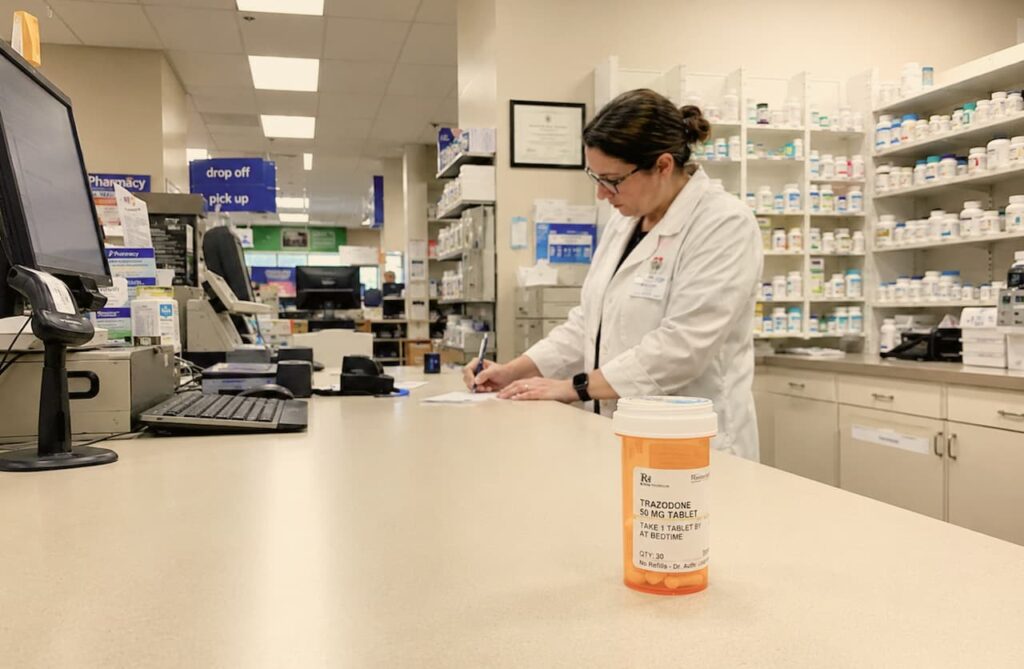
Trazodone is an antidepressant, mood stabilizer, and sleeping pill in one. Trazodone is a prescription medication that is used primarily to treat depression, but doctors also prescribe it for anxiety and sleep disorders like insomnia. You may recognize it by its brand names, Desyrel® (now discontinued) or Oleptro®.
If you’ve been prescribed trazodone or are looking into it as a possible treatment option, you might have a few questions. Is it a controlled substance? What are the side effects? These are all good questions to ask.
Because trazodone works to balance chemicals in the brain and is sometimes prescribed as a sleep aid, people often assume it might fall into the same category as other controlled or habit-forming medications. It doesn’t, but it’s still worth exploring how the medication works, when it might be prescribed, and any potential interactions with other medications you might take. In this guide, we’ll cover a range of topics to help you better understand more about trazodone.
What is trazodone?
Trazodone belongs to a class of medications called serotonin receptor antagonists and reuptake inhibitors, or SARIs. That’s a mouthful, but the concept is simpler than it sounds.
Trazodone can help regulate serotonin, a chemical in the brain that plays an important role in mood, sleep, and emotional well-being. When serotonin activity is better balanced, many people can experience improvements in mood, reduced anxiety, and more restful sleep. Trazodone is primarily prescribed for depression, but it’s also commonly prescribed for anxiety disorders and insomnia.
Trazodone is also used “off-label” for conditions such as post-traumatic stress disorder (PTSD), fibromyalgia, and certain sleep-related conditions. “Off-label” just means that a medication is being used for a purpose the FDA hasn’t formally approved, but that doesn’t automatically make it unsafe or ineffective. It typically just means that more research is still underway.
That said, off-label use is all the more reason to stay in regular contact with your prescribing provider and follow their instructions carefully. It’s even more important to have open, honest, and ongoing conversations about how the medication is making you feel so they can help you adjust your dose or switch medications, if needed.
Trazodone drug class
Trazodone is not a controlled substance. In the United States, controlled substances are drugs that the federal government has designated as having a high risk for misuse or physical dependence. These medications are assigned a “schedule” level based on that risk. Trazodone is not classified in any of those ways. It is not habit-forming in the way that opioids or benzodiazepines are, and it doesn’t produce euphoric effects.
That said, trazodone is still a prescription medication, and taking it exactly as directed matters. Stopping it suddenly without talking to your doctor first can cause discontinuation symptoms, making it important to keep your doctor up-to-date on how the medication is working for you.
Trazodone dosage
Trazodone is available in tablet form. Dosage typically starts at 50 mg per night and can go up to 400 mg. The dose your doctor might prescribe depends on a few things, including what condition is being treated and how you respond to the medication.
For depression, doses are typically higher and may be divided throughout the day, often ranging from 150 mg to 400 mg daily. When prescribed specifically for sleep, a much lower dose is generally used since the goal is different. Off-label uses may also call for their own dosing approach, which is yet another reason why having regular check-ins with your doctor is important. Dose adjustments are common, and your doctor will work with you to help find the amount that’s best for you. Dosing will vary from person to person, depending on their needs and treatment plan discussed with their doctor.
Common side effects of trazodone
Like most medications, trazodone can cause some side effects, especially in the early weeks of treatment as your body adjusts. Most of these are mild and manageable. That said, if a side effect is severe, unexpected, or just not going away, it’s always worth calling your doctor. Don’t hesitate to reach out. That’s what they’re there for.
Common side effects of trazodone may include:
- Constipation
- Dizziness
- Drowsiness
- Dry mouth
- Headache
- Stuffy nose
- Loss of energy
- Nausea
- Loss of sense of taste
- Vomiting
- Swelling in hands, feet, or legs
- Reduced sex drive or sexual problems
Potentially serious side effects
Serious side effects from trazodone are rare, but it’s important to be aware of them. Contact your doctor if you experience new or worsening mood changes, unusual bleeding or bruising, signs of low sodium levels such as confusion or severe weakness, or symptoms that concern you.
Seek immediate medical attention for symptoms of serotonin syndrome (such as a high fever, rapid heart rate, or severe muscle stiffness), an irregular heartbeat, seizures, or, for men, a painful erection lasting longer than four hours.
Your doctor can help you understand your individual risk and what symptoms to watch for while taking trazodone.
Drugs to avoid while taking trazodone
Trazodone can interact with a number of other medications, and some of those interactions can be serious. Before starting trazodone, it’s important to have an honest, thorough conversation with your doctor about everything you’re taking. That includes other prescription medications, over-the-counter drugs, vitamins, and herbal supplements. Your doctor needs that complete picture in order to prescribe safely and watch out for any potential issues.
Medications and substances to use with caution or avoid while taking trazodone include:
- MAO inhibitors (MAOIs): Including phenelzine (Nardil®), tranylcypromine (Parnate®), and selegiline (Emsam®). These medications are sometimes used to treat depression. Combining them with trazodone can cause a rapid, dangerous buildup of serotonin in the brain. A waiting period is typically required between stopping an MAOI and starting trazodone.
- CNS depressants: Alcohol, sleep aids, and benzodiazepines like alprazolam (Xanax®), diazepam (Valium®), and clonazepam (Klonopin®) can amplify trazodone’s sedating effects and increase the risk of over-sedation or respiratory issues.
- Certain antifungal and antibiotic medications: Drugs like ketoconazole (used for fungal infections) and clarithromycin (Biaxin®, used for bacterial infections) can slow the body’s ability to process trazodone, potentially increasing how much of the drug is circulating in the bloodstream.
- St. John’s Wort: This widely used herbal supplement is often taken for mood support, but it can interact with trazodone and raise the risk of serotonin-related side effects.
- Digoxin: Used for certain heart conditions, digoxin levels can be affected by trazodone and may require monitoring and dose adjustments.
Cost of trazodone
Trazodone starts at around $19 for a 30-day supply through QuickMD Home Delivery. Cost can vary depending on dose and amount prescribed, as well as location, pharmacy, and whether your insurance covers your prescription.
Because trazodone is available as a widely used generic medication, it tends to be significantly more affordable than many other prescription options. Most private insurance plans and Medicare Part D cover generic trazodone, though your actual out-of-pocket cost will depend on your specific plan and its formulary tier. If you’re paying out of pocket, prices can vary considerably between pharmacies. Discount programs can help reduce costs even further.
How to get a prescription for trazodone
Getting the mental health support you need should not come with added layers of stress. Trazodone is a prescription medication, which means you’ll need a licensed physician or prescriber to get started. The good news is that you don’t have to sit in a waiting room to get there.
QuickMD makes it easy to connect with a compassionate, knowledgeable doctor from the comfort and privacy of your own home. Through QuickMD’s telemedicine Mental Health service line, you can meet virtually with a doctor to talk through symptoms of mild to moderate depression, anxiety, or sleep-related issues as a result of depression or anxiety and get a treatment plan designed around your needs. If trazodone is an appropriate fit, your doctor can prescribe it online and send it to a pharmacy of your choosing or deliver it to your door. No insurance is needed. QuickMD offers a straightforward cash-pay option so that cost and coverage don’t stand between you and the care you deserve.
Frequently asked questions
Is trazodone a narcotic?
No, trazodone is not a narcotic. The term “narcotic” is often used interchangeably with “opioid,” referring to a class of drugs that work by binding to opioid receptors in the brain to reduce pain and, in some cases, produce feelings of euphoria. Trazodone works differently. It targets serotonin receptors (not opioid receptors), and it does not relieve pain or produce a euphoric effect. It also doesn’t carry the same addiction risk associated with narcotics and is not regulated as a controlled substance.
Is trazodone an opioid?
No, trazodone is not an opioid. Opioids include medications like oxycodone (OxyContin®, Percocet®), hydrocodone (Vicodin®), morphine, and codeine. They work by attaching to opioid receptors throughout the brain and nervous system to block pain signals, but they also carry a significant risk of dependence and addiction. Trazodone is a serotonin receptor antagonist and reuptake inhibitor (SARI) and has no connection to the opioid drug class whatsoever. It is not a controlled substance and is not associated with those same dependency risks.
Disclaimer
Articles on this website are meant for educational purposes only and are not intended to replace professional medical advice, diagnosis or treatment. Do not delay care because of the content on this site. If you think you are experiencing a medical emergency, please call your doctor immediately or call 911 (if within the United States). This blog and its content are the intellectual property of QuickMD LLC and may not be copied or used without permission.
References
Mayo Clinic. (2026). Trazodone (oral route). https://www.mayoclinic.org/drugs-supplements/trazodone-oral-route/description/drg-20061280
Danaher, V. (2024). Trazodone – Uses, Side Effects, and More. WebMD. https://www.webmd.com/drugs/trazodone
Shin, J., Saadabadi, A. (2024). Trazodone: StatPearls [Internet]. National Library of Medicine (NIH). https://www.ncbi.nlm.nih.gov/books/NBK470560/
Drugs.com (2024). Is trazodone a controlled substance or narcotic? https://www.drugs.com/medical-answers/trazodone-controlled-substance-3561217/
Bossini, L., Coluccia, A., Casolaro, I., et al. (2015). Off-Label Trazodone Prescription: Evidence, Benefits and Risks. Curr Pharm Des. 2015;21(23):3343-51. doi: 10.2174/1381612821666150619092236. https://pubmed.ncbi.nlm.nih.gov/26088119/
FDA. (2014). Trazodone hydrochloride label. Access Data FDA. https://www.accessdata.fda.gov/drugsatfda_docs/label/2015/071196s062lbl.pdf
MedlinePlus. (2025). Trazodone. https://medlineplus.gov/druginfo/meds/a681038.html
MedlinePlus. (2024). Serotonin syndrome. https://medlineplus.gov/ency/article/007272.htm
University of Illinois. (2023). Trazodone, Oral Tablet. Healthline. https://www.healthline.com/health/drugs/trazodone-oral-tablet
Foong, A-L., Grindrod, K., Patel, T., Kellar, J. (2018). Demystifying serotonin syndrome (or serotonin toxicity). Can Fam Physician. 2018 Oct;64(10):720–727. https://pmc.ncbi.nlm.nih.gov/articles/PMC6184959/
WebMD. (2025). What to Know About CNS Depressants. https://www.webmd.com/brain/what-to-know-about-cns-depressants
Cleveland Clinic. (2023). NSAIDs (Nonsteroidal Anti-Inflammatory Drugs). https://my.clevelandclinic.org/health/treatments/11086-non-steroidal-anti-inflammatory-medicines-nsaids
Mayo Clinic. (2026). Ketoconazole (topical route). https://www.mayoclinic.org/drugs-supplements/ketoconazole-topical-route/description/drg-20067739
Cleveland Clinic. (2026). Clarithromycin Tablets. https://my.clevelandclinic.org/health/drugs/18242-clarithromycin-tablets
Mayo Clinic. (2026). Digoxin (oral route). https://www.mayoclinic.org/drugs-supplements/digoxin-oral-route/description/drg-20072646
GoodRX. (2026). Trazodone. https://www.goodrx.com/trazodone
Rhinehart, C. (2024). How Much is Trazodone Without Insurance? GoodRX. https://www.goodrx.com/trazodone/cost-without-insurance
U.S. Department of Justice/Drug Enforcement Administration (DEA). (2025). Oxycodone. https://www.deadiversion.usdoj.gov/drug_chem_info/oxycodone.pdf
U.S. Department of Justice/Drug Enforcement Administration (DEA). (2025). Hydrocodone. https://www.deadiversion.usdoj.gov/drug_chem_info/hydrocodone.pdf
QuickMD has strict referencing policies and relies on reputable sources, including peer-reviewed research, clinical guidelines, medical organizations, and government and public health agencies, among others. Learn more about how we ensure accuracy in our content by reading our editorial guidelines.