What you’ll learn
You’ll learn what sertraline is, how it works, and what conditions it treats. You’ll also find typical dosing ranges, how long the medication usually takes to work, and where to get a prescription.
If a doctor just mentioned sertraline (Zoloft), or you’re weighing whether to bring it up yourself, it’s normal to want answers before deciding anything. Taking time to learn more can help you feel informed and prepared for a conversation about whether it may be right for you.
What is sertraline (Zoloft)?
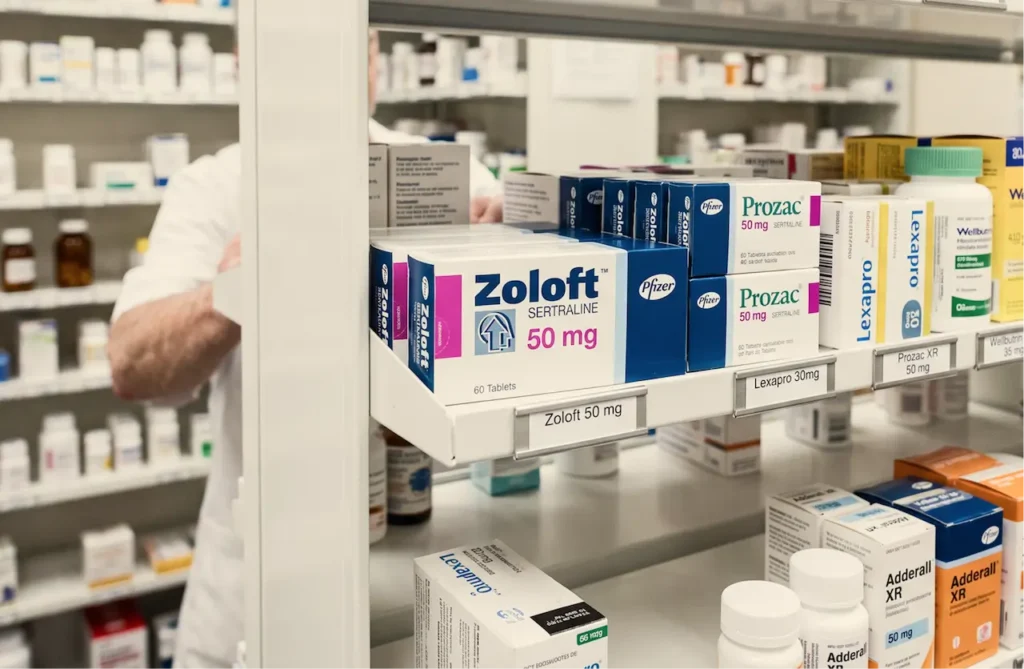
Sertraline (Zoloft) is a prescription antidepressant. It belongs to a group of medications called SSRIs, or selective serotonin reuptake inhibitors, and doctors prescribe it for depression and for anxiety-related conditions. You may know it by its brand name, Zoloft. They contain the same active ingredient and are available in the same standard tablet strengths.
A few things worth knowing right away:
- How you take it. You take it by mouth as a tablet or liquid, usually once a day, and a low-cost generic version is widely available at most pharmacies.
- Not habit-forming. It’s not a controlled substance, and it’s not considered addictive.
- Don’t stop abruptly. You shouldn’t stop it suddenly once you’re on it. More on that below.
If a doctor has suggested this medication or you’re reading up before an appointment, sertraline (Zoloft) has decades of use behind it and a well-documented safety profile. It first became available in 1991, and it remains one of the most commonly prescribed antidepressants in the United States today. Because sertraline (Zoloft) has been used for decades, doctors know a great deal about what to expect and what side effects to watch for. Most people tolerate it reasonably well.
What is sertraline used for?
The FDA has approved sertraline (Zoloft) to treat major depressive disorder (depression), obsessive-compulsive disorder (OCD), panic disorder, post-traumatic stress disorder (PTSD), social anxiety disorder, and premenstrual dysphoric disorder (PMDD). While sertraline (Zoloft) is approved for all of these conditions, QuickMD does not treat PTSD or OCD.
Doctors also prescribe sertraline (Zoloft) off-label for generalized anxiety disorder. It’s often a first choice for that condition, even without formal FDA approval, because the evidence supporting it is strong.
Which antidepressant a doctor recommends depends on your diagnosis and your history. What works well for one person might not work for someone else, and that’s why a visit comes before a prescription.
Sertraline (Zoloft) treats more conditions than most antidepressants, which is why it comes up often for both anxiety and depression. Even so, your doctor may take a different approach depending on which one you need support with.
How does sertraline work?
Sertraline (Zoloft) slows the rate at which your brain reabsorbs serotonin, so more of it stays active in your brain’s signaling pathways. Serotonin is one of the chemical messengers your brain uses to send signals between nerve cells, and it plays a part in mood and anxiety. Normally, the cell that releases serotonin takes it back up shortly afterward. Sertraline slows that down.
Over time, that shift can help ease symptoms of depression and anxiety by supporting the brain signals tied to your mood. This is why sertraline (Zoloft) isn’t an instant fix. It takes a few weeks of steady use before your brain adjusts and you notice the full effect.
You may have heard depression described as a “chemical imbalance.” The real picture is bigger than that. Serotonin is one piece of a larger system that shapes mood, stress, and sleep, and sertraline (Zoloft) works on that one piece, steadily, day after day. A single day of taking sertraline (Zoloft) tells you very little. A month gives you a bigger picture.
Sertraline dosage: typical ranges
The dose your doctor prescribes depends on what’s being treated. The ranges below are what doctors commonly work from. Your own dose is something your doctor sets with you, not something to work out from a table.
| Condition | Typical starting dose | Typical maintenance range |
| Depression, panic disorder, OCD, PTSD, social anxiety | 25 to 50 mg once daily | 50 to 200 mg daily |
| PMDD | 50 mg daily (continuous or limited to the two weeks before your period) | Set by your doctor based on response |
| Children age 6 and older with OCD | 25 to 50 mg | 50 to 200 mg daily |
Sertraline (Zoloft) is taken once daily, with or without food. Your doctor usually starts you on a lower dose and raises it gradually over several weeks, watching for side effects and for signs it’s working. A common maximum is around 200 mg daily. Where you land depends on your body, your symptoms, and how you respond once you start.
How long does sertraline take to work?
Sertraline (Zoloft) doesn’t work overnight, and that’s normal. Here’s roughly what to expect:
- Early changes. Some early changes, like improved sleep, appetite, or energy, can show up within the first one to two weeks.
- Full benefit. The full benefit for mood and anxiety symptoms usually takes about four to eight weeks to become clear.
- Early side effects. Certain side effects, like nausea, can appear before the benefits do, and they often ease within the first couple of weeks as your body adjusts.
Everyone’s timeline looks a little different. Some people feel better closer to the two-week mark, and others need the full eight weeks before symptoms lift in a way they can feel day to day. Your doctor may check in during this stretch to see how you’re doing and adjust your dose if needed. That check-in is a normal part of starting sertraline (Zoloft), not a sign that something has gone off track.
Give the medication time before deciding it isn’t working for you. If several weeks pass with no improvement, tell your doctor. That’s useful information for planning the next step, a higher dose or a different medication, not a sign anything is wrong.
What to know before you start
A few safety points are worth understanding before your first dose.
Talk to your doctor before you stop taking your medication. Stopping sertraline (Zoloft) abruptly can cause discontinuation symptoms like dizziness, nausea, or flu-like feelings. If you and your doctor decide it’s time to stop, they’ll taper your dose down gradually instead.
Sertraline (Zoloft), like other antidepressants, carries an FDA boxed warning about an increased risk of suicidal thoughts and behavior risks in some younger patients. This risk was seen in short-term studies of children, teens, and young adults, particularly those under 25. Your doctor will monitor how you’re feeling, especially when you first start treatment or after your dose changes.
If you notice new or worsening mood, agitation, or behavior changes early in treatment, contact your doctor right away.
If you or someone you’re caring for has thoughts of suicide or self-harm, call or text the 988 Suicide and Crisis Lifeline, or chat at 988lifeline.org. In an emergency, call 911.
Tell your doctor about everything else you take, and about your family history. That means other medications that affect serotonin, blood thinners, and MAOIs (an older class of antidepressant) in particular, plus any personal or family history of bipolar disorder. An antidepressant on its own can trigger a manic episode in someone with underlying bipolar disorder, which is why your doctor needs the full picture.
How to get a sertraline prescription online
Sertraline (Zoloft) requires a prescription, and you can get one through an online visit as well as an in-person one. Either way, a licensed doctor decides whether sertraline (Zoloft) is a fit for your depression or anxiety, and if it is, the prescription goes straight to your pharmacy.
The visit itself is straightforward. You describe what you’ve been experiencing, and your doctor asks about your health history and any other medications you take. Together, you decide on a starting point. Follow-up counts just as much as that first conversation. Your dose is often adjusted over the first several weeks based on how you respond, so a doctor who can check back in with you is part of getting the dose right.
Whether sertraline (Zoloft) is the right medication is something you and your doctor decide together. A QuickMD doctor can talk through your options and, if appropriate, provide a prescription. You can then fill it at your preferred pharmacy or have your medication delivered directly to your home through QuickMD Home Delivery.
If you’re weighing sertraline (Zoloft) against other options, our guide to sertraline vs. escitalopram walks through how the two compare.
Frequently asked questions about sertraline
Can I drink alcohol while taking sertraline?
Doctors generally advise against it. Alcohol can worsen sertraline’s side effects, including drowsiness and dizziness, and it can interfere with the depression or anxiety symptoms the medication is treating. Talk to your doctor about your specific situation before drinking.
Will sertraline affect my sleep?
It can, in either direction. Some people notice trouble falling asleep or vivid dreams, especially in the first weeks, while others find their sleep improves as anxiety or depression symptoms ease. If sleep problems continue past the first few weeks, mention them to your doctor. Taking your dose in the morning instead of at night sometimes helps.
Can I take sertraline during pregnancy or while breastfeeding?
Sometimes, yes. It depends on your history and how severe your symptoms are, so this is a conversation to have directly with your doctor. Untreated depression or anxiety during pregnancy carries its own risks, so your doctor will weigh the full picture with you rather than rule sertraline (Zoloft) out automatically.
What happens if I miss a dose of sertraline?
Take it as soon as you remember, unless it’s almost time for your next dose. In that case, skip the missed dose and continue your regular schedule. Don’t take two doses at once to make up for a missed one. If you often miss doses, mention it to your doctor, since consistency affects how well the medication works.
Disclaimer
Articles on this website are meant for educational purposes only and are not intended to replace professional medical advice, diagnosis or treatment. Do not delay care because of the content on this site. If you think you are experiencing a medical emergency, please call your doctor immediately or call 911 (if within the United States). This blog and its content are the intellectual property of QuickMD LLC and may not be copied or used without permission.
References
U.S. Food and Drug Administration. (2016). Zoloft (sertraline hydrochloride) prescribing information. https://www.accessdata.fda.gov/drugsatfda_docs/label/2016/019839s74s86s87_20990s35s44s45lbl.pdf
U.S. National Library of Medicine. (n.d.). Sertraline. MedlinePlus. https://medlineplus.gov/druginfo/meds/a697048.html
National Institute of Mental Health. (n.d.). Mental health medications. https://www.nimh.nih.gov/health/topics/mental-health-medications
988 Suicide and Crisis Lifeline. (n.d.). https://988lifeline.org/
QuickMD has strict referencing policies and relies on reputable sources, including peer-reviewed research, clinical guidelines, medical organizations, and government and public health agencies, among others. Learn more about how we ensure accuracy in our content by reading our editorial guidelines.