Online addiction treatment in Utah
QuickMD offers private, judgment-free addiction treatment online in Utah for substance use disorders, including treatment with Suboxone®.
- Get support as soon as today
- Same-day prescriptions
- Over 2 million visits completed
Medications require a consultation with a licensed clinician via QuickMD. If eligible, the clinician will recommend the best option for you. Satisfaction rating from patient experience survey results collected May 2025.
How online doctor visits work
Book an online doctor visit in minutes. No insurance required.
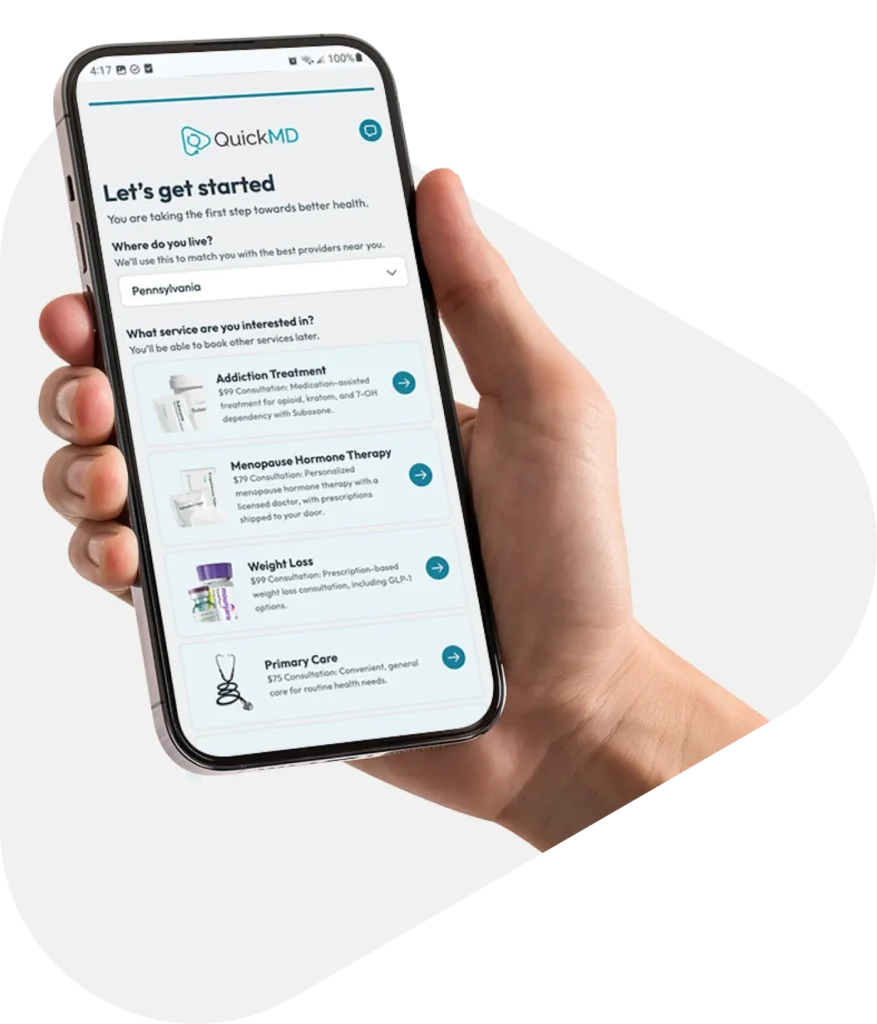
Answer a few questions
Tell us what you need. We'll match you with licensed doctors who treat your condition in your state.
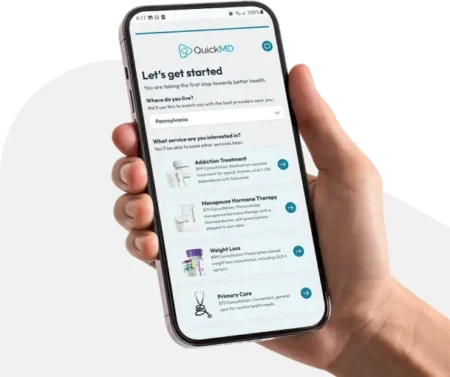
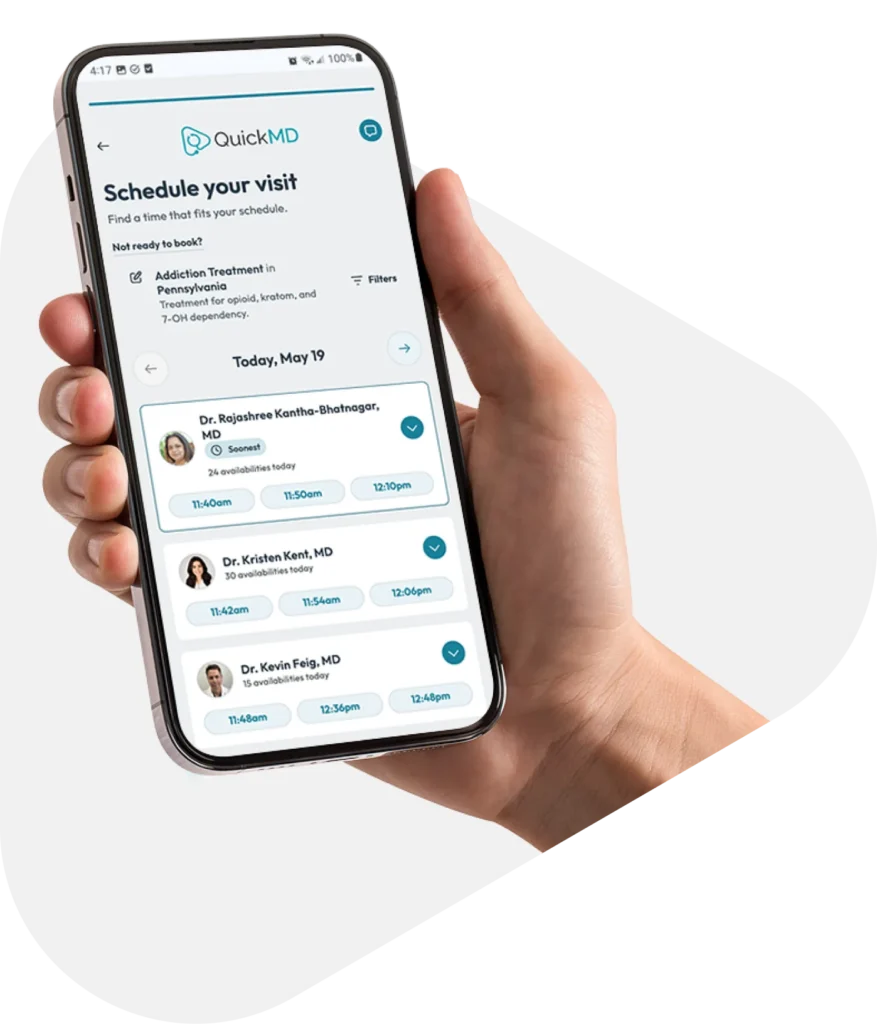
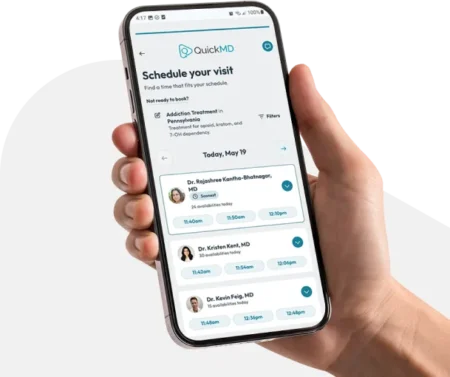
Choose your doctor
Pick your doctor, create your account, and book a time that works for you. Same-day visits are often available.
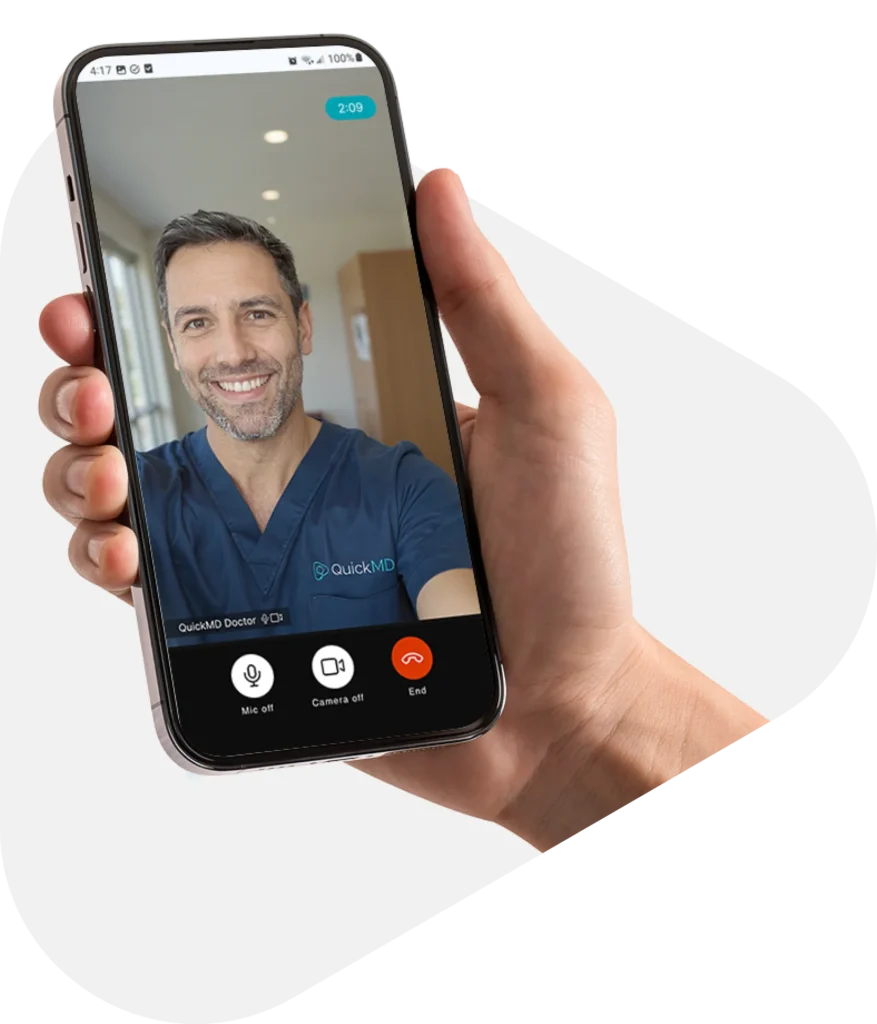
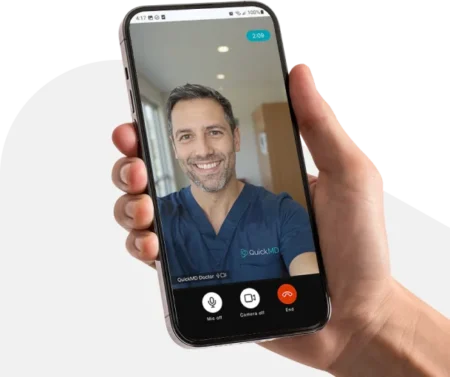
Meet by phone or video
Talk with a doctor by private phone or video and get your prescription the same day if appropriate.
Manage opioid cravings and withdrawal with Suboxone® treatment
Private and judgment-free video visits now available.
What our patients are saying

Appointments
7 days/week

Same-day
prescriptions

100% online
and secure
Stop opioid cravings and withdrawal
Same-day visits. No insurance required.
Start treatment with Suboxone today
At QuickMD, getting your Suboxone prescription is simple. Schedule a quick phone or video appointment with a licensed clinician and we’ll send your prescription directly to your pharmacy.
Meet our licensed clinicians in Utah
We make it easy to find licensed clinicians in Utah. Meet trusted experts, available seven days a week for virtual care.
-
Dr. Abdullah Almehbash
Licensed clinician
UtahNow accepting new patients -

Dr. Adnan Khan
Licensed clinician
UtahNow accepting new patients -
Dr. Azhar Ahmed
Licensed clinician
UtahNow accepting new patients -

Dr. Brandi Gary
Licensed clinician
UtahNow accepting new patients -
Dr. Brittney Cabral
Licensed clinician
UtahNow accepting new patients -

Dr. Dorcas Lomo
Licensed clinician
UtahNow accepting new patients -
Dr. Fred Gardezy
Licensed clinician
UtahNow accepting new patients -

Dr. Julie Marmon
Licensed clinician
UtahNow accepting new patients -

Dr. Megan Feighny
Licensed clinician
UtahNow accepting new patients -
Dr. Michael Torres
Licensed clinician
UtahNow accepting new patients -

Dr. Muhammad Imran
Licensed clinician
UtahNow accepting new patients -

Dr. Myriam Kane
Licensed clinician
UtahNow accepting new patients -

Dr. Sean Bandzar
Licensed clinician
UtahNow accepting new patients -
Dr. Shahzad Chaudhary
Licensed clinician
UtahNow accepting new patients -

Dr. Sumera Amin
Licensed clinician
UtahNow accepting new patients -
Dr. Todd Kruse
Licensed clinician
UtahNow accepting new patients
Why virtual addiction treatment matters in Utah
In Utah, addiction continues to be an intensely personal and deeply stigmatized struggle, one that many face in silence. The shame surrounding addiction can be paralyzing, leaving many to suffer alone rather than risk judgment from neighbors, coworkers, or even healthcare providers.
In 2023, Utah experienced 606 drug overdose deaths, as reported by the Utah Department of Health & Human Services, marking the highest number ever recorded in the state. Fentanyl has emerged as the leading cause of these fatalities, often in combination with methamphetamine and other substances.
For many individuals, especially those in rural areas or tight-knit communities, walking into a treatment center can feel like exposing their most vulnerable truth to the world. On top of that, the lack of nearby providers, long wait times, and complicated insurance processes make seeking help not only emotionally difficult but also logistically overwhelming.
This is where virtual addiction treatment becomes not just helpful, but essential. It allows people to access care discreetly in a way that’s more comfortable for them.
How access to addiction treatment is improving in Utah
Utah lawmakers and advocacy groups have taken meaningful steps in recent years to expand access and reduce stigma.
In 2025, Utah passed House Bill 199, which allows mobile opioid treatment programs to operate legally and under state guidelines. These mobile units now travel into underserved neighborhoods and encampments, delivering Medication-Assisted Treatment (MAT) directly to individuals who might otherwise go without care. It’s a practical response to a real-world problem, bringing treatment to people who can’t or won’t come to a clinic.
Senate Bill 212 is another sign of progress. It enables Utah’s Department of Corrections to work with healthcare providers to deliver MAT inside correctional facilities. For years, incarcerated individuals with opioid use disorder were cut off from the medications they needed to stay stable, leading to painful withdrawal or deadly overdoses after release. This bill ensures that addiction is treated as the chronic health condition it is by creating continuity of care during and after incarceration.
Outside the legislature, organizations like Utah Support Advocates for Recovery Awareness (USARA) are working to change hearts and minds. USARA offers peer-led recovery coaching and family support, all while pushing to reduce the stigma that keeps so many people from reaching out. Their work is rooted in lived experience and serves as a bridge between the formal healthcare system and the messy, human realities of recovery.
At the same time, virtual addiction treatment is emerging as a revolution in access. Platforms like ours provide private, online appointments with licensed providers, eliminating the need to set foot in a clinic.
How QuickMD helps people in Utah with substance use disorders
We’re changing the way people in Utah receive addiction treatment by centering care around patients’ lives, not the clinic’s schedule. For individuals facing opioid use disorder, our platform offers compassionate, judgment-free access to licensed providers through secure online appointments. There’s no need to travel, miss work, or explain your absence.
Care comes directly to you, whether you’re at home, in a parked car, or wherever you feel most at ease. By removing logistical and emotional barriers, we aim to make Medication-Assisted Treatment more accessible, more humane, and more sustainable for people across Utah.
Tips for managing addiction treatment
1. Set personal goals beyond sobriety
Recovery is not just about avoiding substances. It’s about building a fulfilling life. Set short-term and long-term goals related to education, career, hobbies, or relationships. Utah offers job training, adult education, and community college programs that can help support these goals during recovery.
2. Focus on mental health
Substance use and mental health challenges often overlap. Prioritize therapy, support groups, or psychiatric care to address underlying issues like anxiety, depression, or trauma. Often, treating both together leads to a stronger, more sustainable recovery.
3. Leverage peer support programs
Utah has an active network of peer recovery coaches and certified peer support specialists. These individuals have lived experience with addiction and recovery and can offer guidance, accountability, and hope. Ask your provider or local health department about peer support programs in your area.
4. Participate in local volunteer work
Giving back can build self-esteem, a sense of purpose, and community connection. Utah has a strong culture of service, and volunteering at food banks, shelters, or community events can help individuals in recovery stay engaged and focused on positive contributions.
5. Get involved in creative expression
Art, music, journaling, or creative writing can help you process emotions and build confidence. Utah has community art centers, writing workshops, and music therapy programs, many of which are free or low-cost, that offer expressive outlets.
We also offer these services in Utah
At QuickMD, we're committed to bringing convenient, affordable, and compassionate virtual care to patients across Utah. In addition to addiction treatment, we proudly offer:

Medical weight loss
Our online weight loss treatment helps you explore options like Ozempic® and Mounjaro® with licensed clinicians, offering support tailored to your health goals.

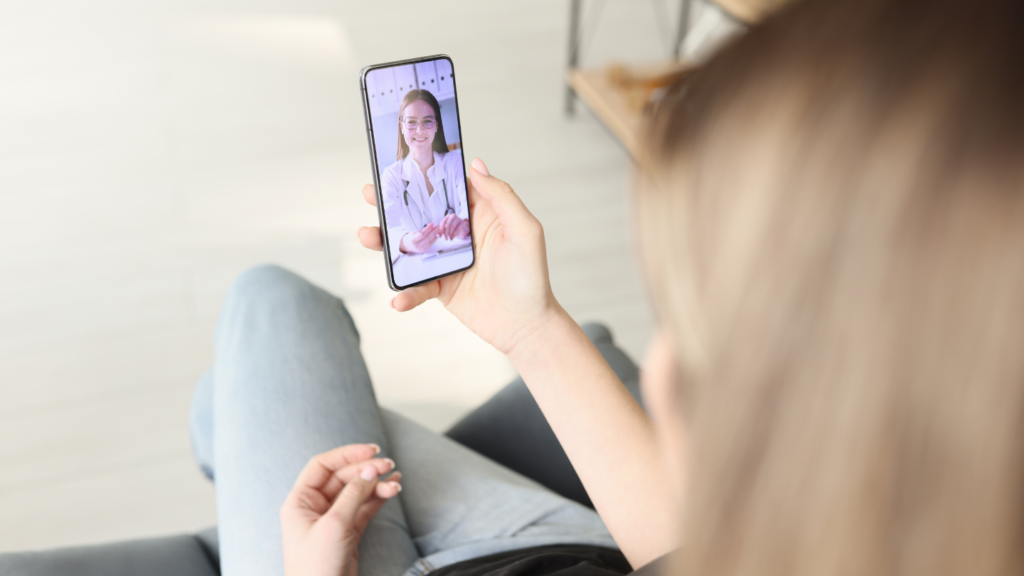
Start treatment with Suboxone today
At QuickMD, getting your Suboxone prescription is simple. Schedule a quick phone or video appointment with a licensed clinician and we’ll send your prescription directly to your pharmacy.
Frequently asked questions about MAT in
Utah
Utah has numerous rehabilitation facilities offering various levels of care, including inpatient, outpatient, and virtual programs. According to FindTreatment.gov, there are over 297 substance use treatment facilities in the state. These centers are distributed throughout Utah, with a concentration near major cities like Salt Lake City, Provo, and St. George.
Yes, many healthcare providers in Utah, including doctors, nurse practitioners, and physician assistants, can prescribe Suboxone® if they’re registered to treat opioid addiction. Many primary care physicians now offer MAT, especially in clinics participating in state-funded treatment programs.
Rehab costs in Utah can vary widely depending on the type of treatment and length of stay. According to the National Center for Drug Abuse Statistics, intensive outpatient programs typically range from $1,400 to $10,000 for 30 days, with an average cost of around $5,700 per month. Inpatient or residential rehab tends to be more expensive, with 30-day programs costing between $6,000 and $20,000. Long-term residential treatment can average around $42,500, though some public rehab centers may start as low as $8,000.