Key takeaways
Facial volume loss is a cosmetic change, not a sign that Ozempic® is harming you.
The research is still early, since only three of the 23 studies in the main review followed patients over time.
Talk with your doctor about the pace of your weight loss instead of changing your dose on your own.
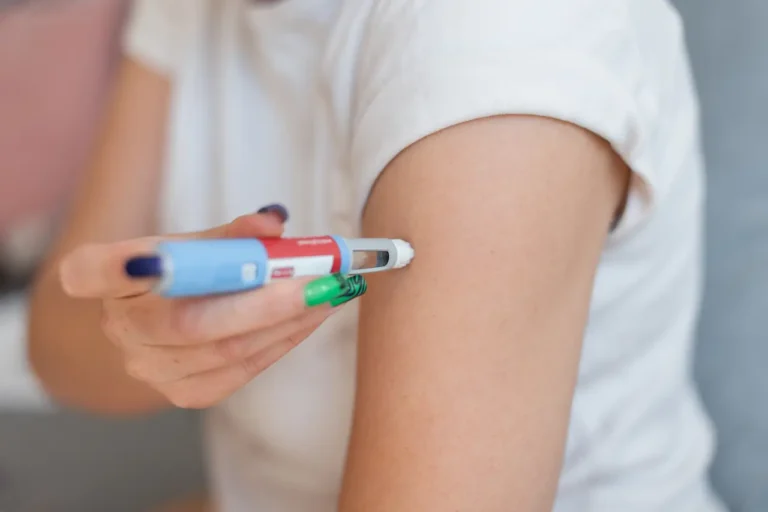
You might have heard of “Ozempic® face,” which is the name people use for the hollow, drawn look your face can take on after you lose weight quickly. If you’re taking semaglutide (Ozempic®) or another GLP-1 medication, you may be wondering whether it will happen to you. A GLP-1 medication mimics a natural hormone your body makes when you eat.
This change in appearance for some follows the weight loss itself, not something the medication does to your face. It can happen to anyone who loses a lot of weight quickly, whatever the cause, and not everyone notices it.
What is “Ozempic face?”
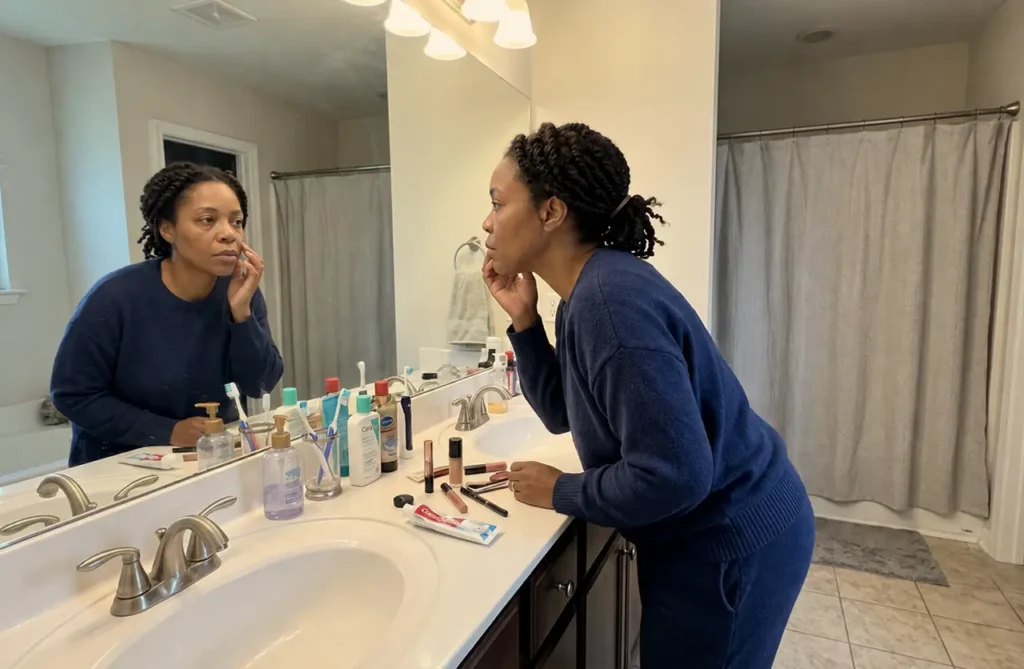
“Ozempic face” is facial volume loss that some people notice after losing weight quickly. It can show up as hollowness, sagging, and a more drawn look.
It isn’t a medical term. News outlets created and popularized the phrase, according to a 2025 research review. The same review notes that plastic surgeons have talked about it widely on social media, podcasts, and blogs. The review’s authors see it as likely a passing trend, not a new medical term or a new side effect of this type of medication.
This isn’t unique to Ozempic, either. Losing weight quickly for any reason can cause the same look, and researchers think the change stems from the rapid weight loss itself. The FDA has approved Ozempic for blood sugar control in adults with type 2 diabetes, and for lowering heart and kidney risks in adults with type 2 diabetes who also have heart disease or chronic kidney disease. It isn’t FDA-approved for weight loss, but is often prescribed off-label. For the full list of approved uses and what to know before taking it, see our Ozempic safety information.
What “Ozempic face” looks like
When facial volume loss does happen, it tends to show in specific areas rather than evenly across the face:
- Temples, which can look more hollow
- Cheeks, which can lose some fullness
- Under-eye hollows, which can look deeper or more shadowed
- Jawline, which can look less defined
- Lines from the nose to the corners of the mouth, which can deepen
- Lines from the corners of the mouth to the chin, which can become more visible
- Lips, which can look thinner
- Chin, which can look less full
The review reports an observation, not a measured result, that people with significant weight loss can look up to five years older than peers who haven’t lost that weight.
Why rapid weight loss changes your face
Losing weight quickly can leave your skin with less support underneath. One theory, described in the research review, is that these medications may add to the slowdown your skin already goes through with age. As you get older, your body renews less elastin, the protein that helps skin snap back into shape.
When fat under the skin shrinks quickly, the skin can end up sitting loosely over a thinner layer. Some researchers also think that rapid weight loss reduces nutrients like fatty acids that help keep the skin’s outer barrier strong.
This is still an early area of research. The main review on this topic examined 23 papers, and only three of them followed patient groups over time. The rest of the papers are mostly reviews, letters, commentaries, and write-ups of single patients. That makes this the best explanation available right now, not a settled one.
If the idea of “Ozempic face” worries you, it may help to know that facial volume loss is a known, expected effect of losing weight quickly. It isn’t an unexplained reaction to your medication, and it isn’t a sign that something has gone wrong.
Does the medication itself target your face?
There’s no good evidence that it does. The research review found that evidence is lacking for these medications singling out fat in the face over fat elsewhere in the body. Facial volume loss also isn’t listed as a side effect on Ozempic’s prescribing label. That doesn’t mean the change isn’t real, though, as the review concludes it’s likely a direct result of rapid weight loss, with fat leaving the face faster than the skin’s supporting structure can adjust.
Who is more likely to notice facial changes?
Facial changes during weight loss can look different from one person to the next.
The research review notes that the effect may be more noticeable in older adults, who naturally have lower levels of collagen, a protein that gives skin its firmness and structure.
This is about likelihood, not certainty, and it isn’t a reason to avoid GLP-1 treatment.
Does “Ozempic face” go away?
The sources cited in this article don’t answer whether facial volume comes back on its own while you keep the weight off.
The research review does note that when people regain weight, fat rarely returns to the same places it was before.
If you want to address facial volume loss, cosmetic options exist, such as injectable fillers or surgery. A dermatologist or a plastic surgeon handles these.
What may lower your chances of “Ozempic face”
There’s no proven way to prevent “Ozempic face,” but a few general habits can support your body during weight loss.
- Ask your doctor about the pace of your weight loss. Bring it up at your next visit rather than changing your dose on your own.
- Eat enough protein and add strength training. Both can help you hold on to muscle while you lose weight.
- Protect your skin from the sun, keep it moisturized, and drink enough water. These are general skin care habits.
Protein and strength training can help you maintain muscle as you lose weight. That’s important because weight loss can involve losing both fat and lean tissue. In a small analysis of 95 people taking semaglutide (Wegovy®), fat decreased by 19.3%, while lean tissue decreased by 9.7%. Even so, lean tissue made up a greater percentage of body weight after treatment. The findings were presented at a conference and involved a higher dose of semaglutide than the dose typically used for Ozempic.
Maintaining muscle won’t necessarily prevent facial volume loss, and these strategies haven’t been studied specifically for that purpose. But getting enough protein and staying active can support your overall health during weight loss. For practical meal ideas, see our guide to eating enough protein while taking a GLP-1.
When to talk to a doctor
Bring up any changes in your face that concern you at your next visit, along with questions about how your weight loss is going or how your medication feels overall. Asking doesn’t mean anything is off track. It’s a normal part of care. If you’re also wondering what else to expect on this medication, our guide to the side effects of Ozempic walks through the most common ones and how to manage them.
Frequently asked questions about “Ozempic face”
Does this happen to people taking Ozempic for type 2 diabetes?
You can notice it, whatever the reason you were prescribed Ozempic, because the change follows rapid weight loss, not the condition being treated. None of our sources compare how often it happens across different reasons for treatment.
Is facial volume loss a reason to stop the medication?
Facial volume loss is a cosmetic change, not a sign that Ozempic is harming you. Whether to continue taking Ozempic or not is a conversation to have with your doctor, who can weigh it against what the medication is doing for your health.
How soon after starting treatment would facial changes usually show up?
You won’t find a reliable timeline because rapid weight loss or weight loss in general looks different from person to person. If you notice changes that concern you, bring them to your doctor, who can look at your situation directly.
Disclaimer
Articles on this website are meant for educational purposes only and are not intended to replace professional medical advice, diagnosis or treatment. Do not delay care because of the content on this site. If you think you are experiencing a medical emergency, please call your doctor immediately or call 911 (if within the United States). This blog and its content are the intellectual property of QuickMD LLC and may not be copied or used without permission.
References
Daneshgaran G, Shauly O, Gould DJ. “Ozempic face” in plastic surgery: a systematic review of the literature on GLP-1 receptor agonist-mediated weight loss and analysis of public perceptions. Aesthet Surg J Open Forum. 2025;7:ojaf056. doi:10.1093/asjof/ojaf056
Ozempic (semaglutide) injection. Package insert. Novo Nordisk; 2026. https://dailymed.nlm.nih.gov/dailymed/drugInfo.cfm?setid=adec4fd2-6858-4c99-91d4-531f5f2a2d79
Wilding JPH, Batterham RL, Calanna S, et al. Impact of semaglutide on body composition in adults with overweight or obesity: exploratory analysis of the STEP 1 study. J Endocr Soc. 2021;5(suppl 1):A16-A17. https://academic.oup.com/jes/article/5/Supplement_1/A16/6240360
QuickMD has strict referencing policies and relies on reputable sources, including peer-reviewed research, clinical guidelines, medical organizations, and government and public health agencies, among others. Learn more about how we ensure accuracy in our content by reading our editorial guidelines.