What you’ll learn
We’ll cover how kratom and cannabis differ, whether kratom contains THC, and how each affects the body. We’ll also explain why stopping kratom can be a different experience from stopping cannabis and what those differences can mean for withdrawal.
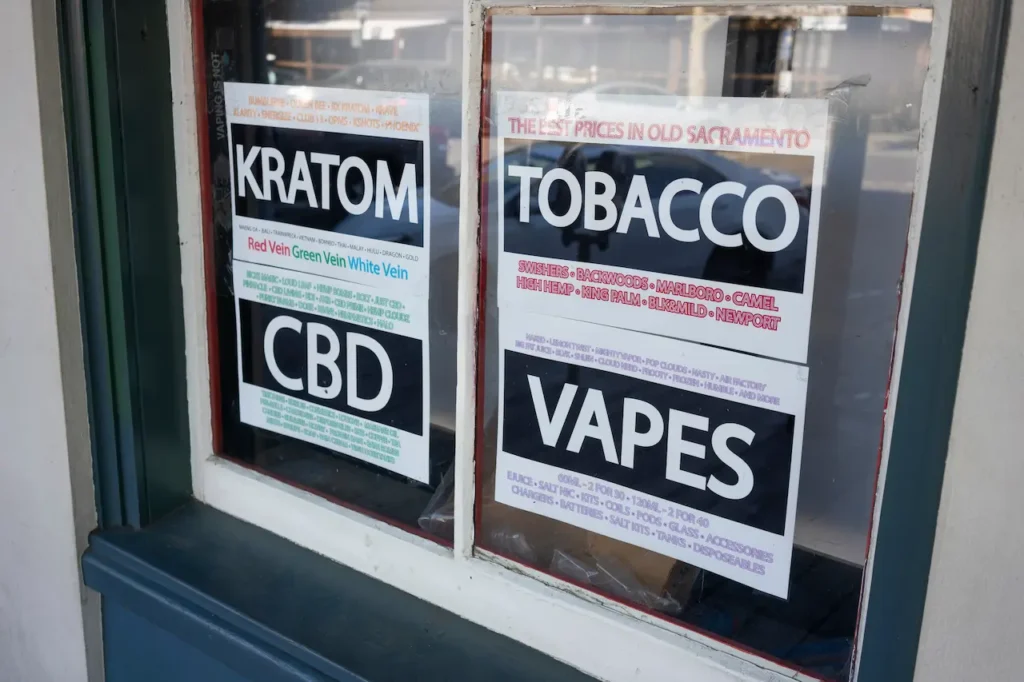
Kratom and weed often end up in the same conversation. They’re both plant-based, commonly sold in smoke shops and online, and surrounded by a lot of the same “natural” messaging. That overlap can make it difficult to know what you’re actually taking or what risks come with it.
What a substance does in your body affects everything from how it makes you feel to what you might experience when you quit. That makes it important to understand where the similarities end and the meaningful differences begin.
Is kratom the same thing as weed?
No. Kratom and weed are two unrelated plants. Kratom comes from the leaves of a tree native to Southeast Asia, and weed comes from the cannabis plant. It’s an easy mix-up to make, but not a foolish one. The two are often sold in the same shops, sometimes side by side, and both get marketed as “natural.” But sharing a shelf doesn’t mean sharing a plant, a chemical class, or an effect.
Kratom and weed act on completely different receptor systems in your body, and that difference is exactly why stopping one feels nothing like stopping the other.
Does kratom have THC in it?
No, kratom doesn’t contain THC. THC is a cannabinoid, a compound that comes from cannabis.
Kratom, on the other hand, has active compounds called, mitragynine and 7-hydroxymitragynine. These compounds are alkaloids that interact with opioid receptors in the brain, which can produce effects such as pain relief, relaxation, and sedation. At lower amounts, kratom can also produce stimulant-like effects.
So, while kratom doesn’t contain THC or act like cannabis, its alkaloids still affect the brain in ways that can change how you feel and, with regular use, can lead to dependence or addiction.
Kratom vs. weed at a glance
Here’s how weed and kratom actually compare, side by side.
| Kratom | Weed (THC) | |
| Plant it comes from | Leaves of a tree native to Southeast Asia | The cannabis plant |
| Active compounds | Alkaloids, mainly mitragynine and 7-OH | Cannabinoids, mainly delta-9-THC |
| Where it acts in the body | Mu-opioid receptors, the same receptor family morphine acts on | CB1 and CB2 cannabinoid receptors, part of the endocannabinoid system |
| Contains THC | No | Yes, THC is its main psychoactive compound |
| On the federal workplace drug panel | Not listed; detecting it takes a test that targets its alkaloids specifically. Learn more about kratom and drug testing. | Listed; marijuana is on the standard panel |
| Type of withdrawal after regular use | Opioid-type withdrawal | A separate, recognized pattern with different symptoms |
| Federal legal status | Not a federally scheduled controlled substance; concentrated 7-OH products are the target of federal action | Federally controlled; most of it sits in Schedule I |
| Reported fatal overdoses | Deaths have been reported; the large majority involved other substances as well | The DEA states no deaths from marijuana overdose have been reported |
| What treatment looks like if you become dependent | Kratom and 7-OH withdrawal is similar to opioid withdrawal; buprenorphine-naloxone is what clinicians commonly prescribe for treatment | National Institute on Drug Abuse (NIDA) reports that behavioral treatments like cognitive behavioral therapy, motivational enhancement therapy, and contingency management can help; no medication is FDA-approved for cannabis use disorder |
If you want even more details beyond this comparison, read our article that further explains what kratom is.
What kratom is and how it works in your body
Kratom comes from the leaves of Mitragyna speciosa, a tree native to Southeast Asia. Those leaves carry more than 40 related alkaloids, but two matter most: mitragynine and 7-OH. Both compounds act on mu-opioid receptors, the same receptor family that morphine and oxycodone act on.
Put plainly, kratom works on your body’s opioid system.
That doesn’t mean kratom feels like a prescription opioid, though. Mitragynine and 7-OH work on the same switch in your brain that opioids do, but they only flip it partway, not all the way like a full opioid does. Still, 7-OH can slow your breathing to a dangerous level. That’s the same danger you’d worry about with a stronger opioid.
Naloxone, the medicine used to reverse an opioid overdose, can reverse this too. Mitragynine on its own carries much less of that risk. Side effects of kratom vary depending on the product, amount used, and the specific compounds it contains.
People who use kratom heavily describe a common pattern:
- Smaller amounts, described as more stimulant-like
- Larger amounts, described as more sedating and opioid-like
What THC is and how it works in your body
THC (delta-9-tetrahydrocannabinol) is the main compound in cannabis that makes you feel euphoric, or a sense of pleasure or well-being. THC belongs to a group of compounds called cannabinoids. It works on CB1 and CB2 receptors, part of your body’s endocannabinoid system (a network of receptors that helps regulate functions like mood, sleep, appetite, and pain). That’s different from the opioid receptors kratom acts on. CB1 receptors sit mostly in your brain and nervous system. CB2 receptors sit mostly on immune cells.
Together, these receptors help control pain, mood, swelling, memory, movement, and appetite. Cannabis can be habit-forming, but a fatal overdose from cannabis alone has not been documented.
However, today’s cannabis is much stronger than it used to be. THC levels in seized cannabis have gone up roughly four times since the mid-1990s.
7-OH products are not kratom leaf, and they are not weed either
7-OH occurs naturally in kratom leaves, but only in trace amounts. Many of the tablets, gummies, shots, and drink mixes sold at gas stations and smoke shops today contain far more than that. 7-OH products differ from kratom leaf because they contain much higher concentrations of 7-OH, either extracted from kratom or produced from mitragynine.
At those higher concentrations, the product behaves much more like a conventional opioid, and dependence tends to develop faster.
- Kratom leaf: 7-OH is present only in trace, naturally occurring amounts.
- Concentrated 7-OH products (tablets, shots, gummies): 7-OH is isolated or synthesized to a much higher potency.
The FDA describes concentrated 7-OH as a potent opioid and an emerging public health threat. This is why someone who takes a tablet bought at a counter can end up having a very different experience than someone drinking plain leaf tea. Regulators have moved specifically against these concentrated and synthetic products, not against natural kratom leaf itself. If you’re unsure what the rules are where you live, our guide on kratom and 7-OH laws has the latest information.
What stopping kratom or 7-OH is like, compared with stopping weed
Both substances can lead to real dependence. Roughly a quarter of people who currently use kratom meet the criteria for kratom use disorder (KUD), based on a survey of more than 2,000 current users. And National Institute on Drug Abuse (NIDA) reports that 22% to 30% of people who use cannabis have cannabis use disorder. Both figures describe people who already use the substance, not the general population.
The real difference is what happens when you stop.
- Stopping kratom or 7-OH after regular use produces opioid withdrawal.
- Stopping cannabis produces a separate, recognized pattern: irritability, anxiety, restlessness, trouble sleeping, appetite change, sweating, headaches, stomach pain, and tremors.
Roughly two weeks of consistent kratom or 7-OH use is enough to put someone at risk for withdrawal and dependence.
Because kratom and 7-OH withdrawal can resemble opioid withdrawal, buprenorphine-naloxone may be considered as a treatment option to help manage withdrawal and support recovery. If you’re wondering what withdrawal may look like, our guide to what 7-OH withdrawal looks like day by day walks through what to expect.
How the law treats kratom, 7-OH, and weed differently
Kratom leaf isn’t scheduled or controlled at the federal level at all. Concentrated 7-OH products are what regulators have moved against. Marijuana is federally controlled, and most of it still sits in Schedule I.
In April 2026, the DEA made two narrow exceptions for marijuana: FDA-approved marijuana products and marijuana products regulated under a state medical program. Both moved to Schedule III, though a broader rescheduling review is still open.
- The DEA has proposed temporarily placing concentrated 7-OH products in Schedule I.
- State law adds its own layer: Several states ban kratom outright, and many more regulate it.
- Cannabis is more widely permitted: 41 states, three territories, and the District of Columbia allowed medical use as of mid-2025.
The above information eflects regulatory history. Kratom may be legal where you live, but that doesn’t mean it won’t cause dependence or addiction.
Can you take kratom or 7-OH and weed at the same time?
It’s best to avoid combining kratom or 7-OH with weed. We don’t have enough research in people to know exactly how these substances interact, and using them together may make effects like sedation, dizziness, impaired coordination, and slowed reaction time harder to predict.
The concern may be greater with concentrated 7-OH products than with traditional kratom leaf. 7-OH has stronger opioid-like activity, so adding another substance that can impair alertness may increase the overall risk of impairment. Avoid driving or operating machinery if you’ve used either substance, especially if you’ve combined them.
Research on the interaction itself is still limited. One animal study looked at CBD rather than THC and found that giving CBD with kratom increased exposure to mitragynine, kratom’s main alkaloid, by about 2.8 times in male rats. Researchers cautioned that we don’t yet know whether the same interaction occurs—or what it would mean clinically in people.
Does weed help with kratom or 7-OH withdrawal?
Cannabis may help some people feel temporary relief from symptoms like nausea, anxiety, or trouble sleeping, but it doesn’t treat kratom or 7-OH withdrawal itself.
Medical treatment focuses on managing withdrawal symptoms and helping you stop safely. Buprenorphine-naloxone (Suboxone®) may be one option a doctor considers based on your symptoms and kratom or 7-OH use.
QuickMD doctors treat kratom and 7-OH withdrawal every day, with same-day visits available. If you’re looking to quit 7-OH or kratom, connect with a QuickMD doctor today.
Signs kratom or 7-OH use has become dependence
It’s easy to miss, since there’s usually no smell and nothing obvious for anyone else to notice, so the change tends to show up in your routine before anywhere else. Here are a few signs worth knowing:
- Taking it to avoid feeling sick, rather than to feel an effect
- Needing more to get the same result (tolerance)
- A first dose in the morning before anything else
- Feeling uneasy about running low
- Use that crept from occasional to daily
- Trying to stop and experiencing muscle aches, restlessness, nausea, or trouble sleeping (withdrawal)
Recognizing any of these doesn’t mean something’s wrong. It’s a reason to talk to a QuickMD doctor, not a reason to wait. Online treatment for kratom and 7-OH is available when you are.
Frequently asked questions about kratom and weed
Should I tell my doctor I use kratom or 7-OH?
Yes. Your doctor needs to know because kratom and 7-OH act on opioid receptors, and that changes what’s safe to prescribe and how any treatment gets started.
Can I take kratom or 7-OH while I’m on a prescription medication?
Talk with your doctor before combining kratom or 7-OH with any prescription medication. See our guide to kratom and your other medications for more on specific interactions.
Can a doctor help with kratom or 7-OH if I also use weed?
Yes. You don’t have to stop using anything before you talk to a doctor. Be open about everything you’re using so your doctor can understand your situation and help you find a safe path toward stopping kratom or 7-OH.
Does kratom help with quitting weed?
No, kratom isn’t a treatment for cannabis dependence, and it isn’t something a doctor would offer for it.
Disclaimer
Articles on this website are meant for educational purposes only and are not intended to replace professional medical advice, diagnosis or treatment. Do not delay care because of the content on this site. If you think you are experiencing a medical emergency, please call your doctor immediately or call 911 (if within the United States). This blog and its content are the intellectual property of QuickMD LLC and may not be copied or used without permission.
References
National Institute on Drug Abuse (NIDA). Kratom. nida.nih.gov/research-topics/kratom
National Institute on Drug Abuse (NIDA). Cannabis (Marijuana). nida.nih.gov/research-topics/cannabis-marijuana
National Cancer Institute. Cannabis and Cannabinoids (PDQ), Health Professional Version. cancer.gov
U.S. Drug Enforcement Administration. Drug Fact Sheet: Marijuana / Cannabis. dea.gov/factsheets/marijuana
Todd DA, Kellogg JJ, Wallace ED, et al. Chemical composition and biological effects of kratom (Mitragyna speciosa): In vitro studies with implications for efficacy and drug interactions. Scientific Reports, 2020, 10, 19158. nature.com
Hill K, Grundmann O, Smith KE, Stanciu CN. Prevalence of Kratom Use Disorder Among Kratom Consumers. Journal of Addiction Medicine, 2024, 18(3), 306-312. pure.johnshopkins.edu
Yale Medicine. Kratom: What Is It and Is It Safe? yalemedicine.org
U.S. Food and Drug Administration. Hiding in Plain Sight: 7-OH Products. fda.gov
Weiss ST, Douglas HE. Treatment of Kratom Withdrawal and Dependence With Buprenorphine/Naloxone: A Case Series and Systematic Literature Review. Journal of Addiction Medicine, 2021, 15(2), 167-172. doi.org/10.1097/ADM.0000000000000721
U.S. Department of Health and Human Services / SAMHSA. Mandatory Guidelines for Federal Workplace Drug Testing Programs, Authorized Testing Panels. federalregister.gov
Pierre C, Gineste C, Bazydlo L. A Kratom Metabolite Causes False Positive Urine Drug Screening Results for Methadone. American Journal of Clinical Pathology, 2020, 154(Suppl 1), S19-S20. academic.oup.com
Olsen EO, O’Donnell J, Mattson CL, Schier JG, Wilson N. Notes from the Field: Unintentional Drug Overdose Deaths with Kratom Detected, 27 States, July 2016 to December 2017. MMWR, 2019, 68(14), 326-327. cdc.gov
U.S. Drug Enforcement Administration. Drug Scheduling. dea.gov/drug-information/drug-scheduling
U.S. Drug Enforcement Administration. Marijuana Rescheduling Regulatory Actions. dea.gov/marijuana-rescheduling-regulatory-actions
U.S. Drug Enforcement Administration. Schedules of Controlled Substance: Temporary Placement of 7-Hydroxymitragynine Above a Specified Threshold in Schedule I. Federal Register notice, July 2026. federalregister.gov
National Conference of State Legislatures. State Medical Cannabis Laws. ncsl.org/health/state-medical-cannabis-laws
Berthold EC, Kamble SH, Kanumuri SRR, et al. Pharmacokinetic Interaction of Kratom and Cannabidiol in Male Rats. Pharmaceutics, 2024, 16(3), 318. mdpi.com
QuickMD has strict referencing policies and relies on reputable sources, including peer-reviewed research, clinical guidelines, medical organizations, and government and public health agencies, among others. Learn more about how we ensure accuracy in our content by reading our editorial guidelines.