What you’ll learn
We’ll discuss what kratom actually is, how people use it, and whether it counts as an opioid. You’ll also see what else it’s called, plus where to go for the full picture on its legal status and why it’s not safe to use for opioid withdrawal.
You can find kratom in a lot of places these days. It’s in displays by the register at gas stations, on shelves in vape shops, on ads online, and in headlines about products pulled for safety concerns. Whether you’re asking because you’ve seen the word or because someone you know is using it, here’s what you need to know about what kratom is and what its use can lead to.
What is kratom?
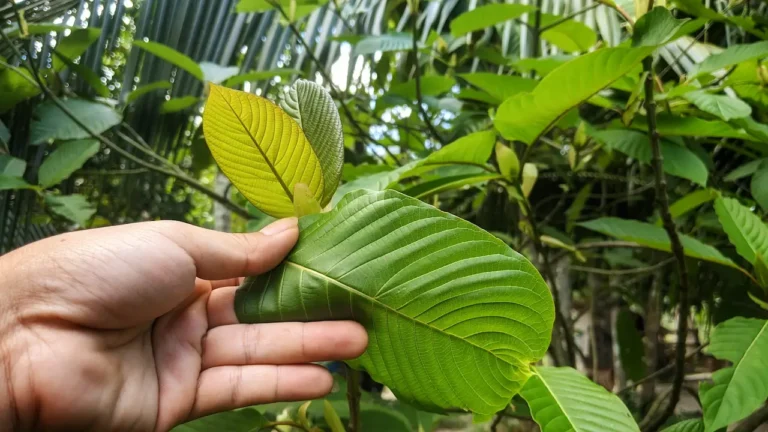
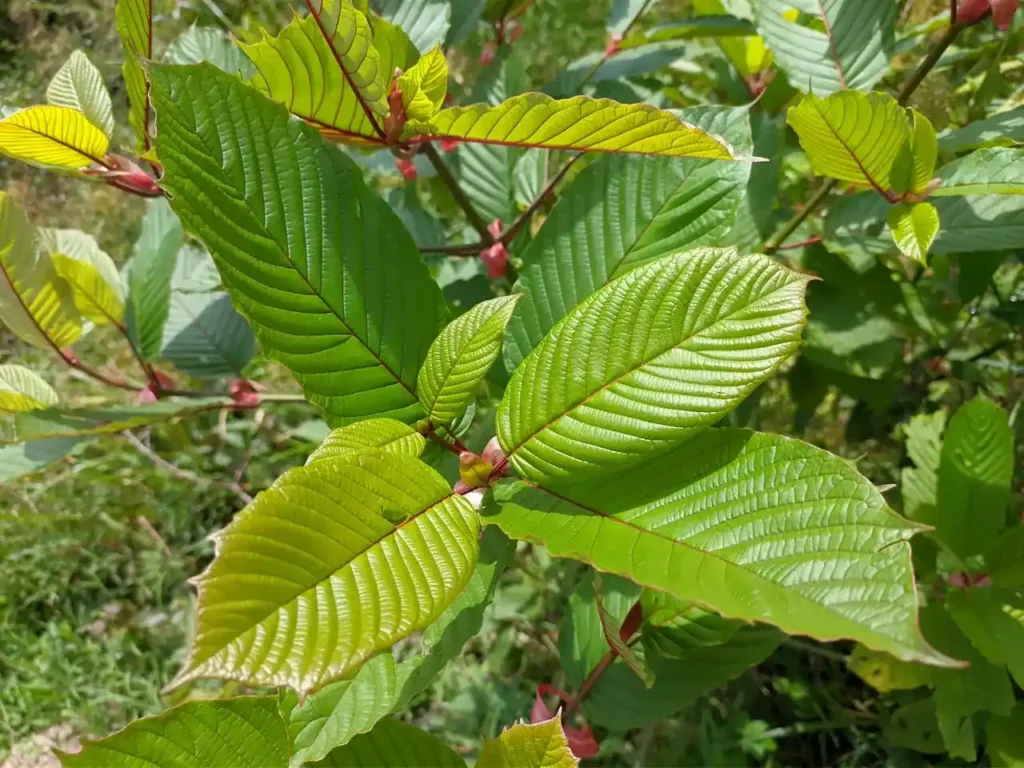
Kratom refers to both Mitragyna speciosa (a tree native to Southeast Asia) and to the products made from its leaves that are sold as herbal supplements. People have traditionally chewed the leaves or brewed them as tea for generations to fight fatigue during labor or ease minor aches.
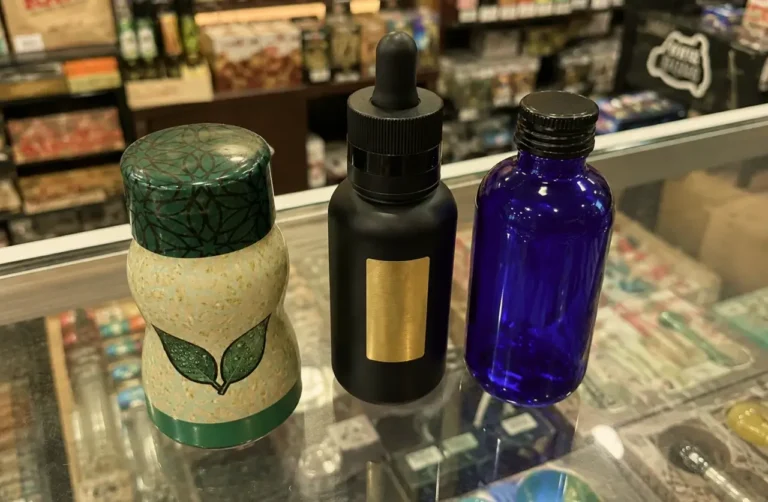
Today, kratom is sold in a variety of forms found on retail shelves, including smoke shops and gas stations. It isn’t a federally controlled substance, but it’s also not FDA-approved or lawfully marketed in the US as a drug, dietary supplement, or food additive.
- The two most-studied active compounds are mitragynine and 7-hydroxymitragynine. Both act on the same opioid receptors as prescription medications, plus other systems tied to mood and alertness.
- 7-hydroxymitragynine makes up less than 2% of the plant’s total alkaloid content. The concentrated or synthetic 7-OH products you see sold today isolate and concentrate the compound to a much higher potency.
- Many users report that smaller amounts feel stimulant-like and larger amounts feel sedative or opioid-like, though clinical research is limited.
How is kratom used? Powder, capsules, extract, and tea
You can find kratom sold and used in a few different forms. Because kratom products aren’t FDA-regulated, potency and purity aren’t standardized between brands, even within the same form, which is a real safety concern.
You’ll typically find kratom sold as:
- Raw leaf powder, often mixed into food or drinks
- Capsules or pressed tablets
- Liquid extract or tincture
- Brewed tea
Is kratom an opioid?
Kratom isn’t classified as an opioid, but its two main compounds act on opioid receptors in the brain. That’s why it can produce opioid-like effects and carries a real risk of dependence or addiction.
Unlike morphine or oxycodone, kratom’s compounds only partially activate the receptor pathway most tied to breathing suppression, which is why a kratom overdose won’t look or feel identical to an opioid overdose. That doesn’t mean kratom is safe.
Serious harm has been documented, especially when combined with other substances, and regular use can lead to significant dependence and withdrawal.
What else is kratom called?
In Southeast Asia, you’d traditionally see names like thang, kakuam, thom, ketum, and biak, though those terms aren’t common among buyers or sellers in the U.S. today. Here, kratom is usually sold under its own name, or under a specific product or brand name.
Is kratom legal?
Kratom isn’t scheduled or controlled at the federal level, but the DEA lists it as a “Drug of Concern,” a watch-list designation, not a criminal prohibition. Legality varies a lot by state: several states ban kratom outright, while others, like Rhode Island, are actively changing their regulatory approach. If you’re unsure about the laws where you live, take a look at our guide that covers current kratom laws by state.
Can kratom or 7-OH help with opioid withdrawal?
Kratom or concentrated 7-OH products are not a reliable or safe way to manage opioid withdrawal.
A self-managed attempt to get through withdrawal can turn into its own dependence, and in some cases, lead someone toward other, riskier substances. For a better understanding of how this happens, read our article on kratom for opioid withdrawal.
If you’re looking for support managing withdrawal, our kratom and 7-OH treatment program can help you take the next step.
Frequently asked questions about kratom
Is kratom the same as CBD?
No, they’re different substances from different plants with different effects. Kratom acts on opioid receptors, while CBD doesn’t.
Will kratom show up on a drug test?
Usually not. Standard drug tests don’t typically screen for kratom’s specific compounds, though some specialty tests can detect it. Read our drug test guide for a more in-depth look.
What do the different kratom colors or strains mean?
The colors (red, green, white) refer to differences in the leaf and how it’s dried, not a different plant. Maeng Da is a strain name, not a color, and comes in red, green, and white varieties like the others. Our kratom strains and risks guide covers the full breakdown.
Where is kratom sold?
Kratom is commonly sold at gas stations, vape shops, and smoke shops, as well as online, which is often how people first encounter it. That kind of retail availability doesn’t mean it’s regulated for safety or potency the way an FDA-approved product would be.
Disclaimer
Articles on this website are meant for educational purposes only and are not intended to replace professional medical advice, diagnosis or treatment. Do not delay care because of the content on this site. If you think you are experiencing a medical emergency, please call your doctor immediately or call 911 (if within the United States). This blog and its content are the intellectual property of QuickMD LLC and may not be copied or used without permission.
References
DEA. Drug Fact Sheet: Kratom. dea.gov/factsheets/kratom
NIDA. Kratom (Research Topics). nida.nih.gov/research-topics/kratom
FDA. FDA and Kratom. fda.gov/news-events/public-health-focus/fda-and-kratom
FDA. Hiding in Plain Sight: 7-OH Products. fda.gov/news-events/public-health-focus/hiding-plain-sight-7-oh-products
DEA. Drugs of Concern (Kratom listing). dea.gov/taxonomy/term/311
QuickMD has strict referencing policies and relies on reputable sources, including peer-reviewed research, clinical guidelines, medical organizations, and government and public health agencies, among others. Learn more about how we ensure accuracy in our content by reading our editorial guidelines.