What you’ll learn
We’ll walk through the behavioral, physical, and psychological signs of kratom and 7-OH dependence, plus what withdrawal can feel like. We’ll also explain how QuickMD doctors treat kratom and 7-OH dependence, including using Suboxone® (buprenorphine-naloxone) when it’s the right fit.
If your relationship with kratom or 7-OH has changed, you may be wondering whether your use has become a concern. Recognizing these changes and understanding what they mean can help you decide when it’s time to seek support. The same is true if you’re concerned about someone you care about.
Why kratom and 7-OH dependence can sneak up on you
You can find kratom at some convenience stores and gas stations, usually listed as a supplement or as a natural product. You might even see it sitting on the same shelf as protein powder, with nothing on the packaging to suggest that regular use could be risky or that your body might become dependent on it. Tolerance and dependence don’t announce themselves, though. They build slowly.
7-OH is even more concerning. A shot, gummy, or tablet marketed as 7-OH isn’t the same thing as kratom leaf. It’s concentrated, and it can act on your body more like a strong opioid than a plant-based supplement. Someone can end up using a far stronger “kratom” product than they realize, simply because nothing on the label indicates the higher concentration 7-OH dose.
The National Institute on Drug Abuse notes that kratom has never been approved by the FDA for any medical use.
If you’re just now learning how kratom and 7-OH affect the brain or the body, you may be discovering risks you weren’t previously aware of. Understanding these effects can help you make more informed decisions about your health.
Behavioral signs you might notice in yourself or someone else
These are the everyday signs that tend to show up first.
- You’ve used more than you meant to, more than once
- You’ve struggled to cut back
- Getting kratom or 7-OH, using it, or recovering from it eats up a real part of your day
- You catch yourself timing your day around your next dose
- Things at work, school, or home have started slipping
- You’ve dropped hobbies or plans you used to look forward to
- Buying kratom or 7-OH is straining your budget
- You’ve downplayed how much you use, even to people who’d probably understand
If several of these feel familiar and you’re not ready to book a visit yet, our guide to kratom and 7-OH support resources lays out other places to start.
Physical signs of kratom and 7-OH dependence
Physical signs are usually the ones your body makes hardest to ignore.
- It takes more now to feel what a smaller amount used to give you
- A few hours after your usual window passes, you feel off: achy, foggy, just not right
- Nausea, sweating, or stomach trouble show up around using, or around skipping a dose
- You reach for it first thing in the morning, or specifically so you don’t feel sick, not for the effect you originally wanted
- Sleep gets harder, or restlessness kicks in, right on schedule with your usual dose
A 2024 survey of people who use kratom found tolerance and withdrawal (not any disruption to work or relationships) were the two most common reasons someone met clinical criteria for kratom use disorder. In other words, your body can be adapting to regular use even if nothing else in your life looks different.
Psychological and emotional signs of kratom and 7-OH addiction
These signs are harder to notice than the physical ones. They live in your head, so it’s easy to explain them away in the moment.
- Your mind keeps drifting to when you can use again
- You feel irritable, anxious, or low between doses, and it lifts once you use
- You use it to cope with stress or hard emotions, not for what it originally did for you
- It’s hard to relax, focus, or feel like yourself without it
- When someone brings up your use, you get defensive, vague, or start covering for it
Getting defensive or careful about what you say, even with people who care about you, is often the hardest part of this to admit. It doesn’t make you dishonest. It just means kratom or 7-OH has started asking for more of your attention than it used to.
What kratom and 7-OH withdrawal can feel like
Experiencing withdrawal (feeling physically or emotionally off after missing a dose or cutting back) counts as one of the clearest signs of dependence there is. Even if you don’t notice any of the other signs listed, withdrawal means your body has come to rely on kratom or 7-OH. Throughout studies on kratom and 7-OH withdrawal, most people describe some combination of body aches, nausea, sweating, and disrupted sleep, layered with anxiety, irritability, and a drop in energy.
It can be different for everyone, so our full breakdown of kratom and 7-OH withdrawal symptoms covers what to expect in more detail, and when.
How many of these signs mean it’s time for treatment
No checklist or scorecard tells you you’ve crossed a line. But if two or three of the signs above have been true for weeks or longer, you already have enough reason to talk to a doctor.
Doctors generally look for two or more signs like these within the same year before calling it a substance use disorder. That’s the standard set by the DSM-5-TR, the manual doctors use for diagnoses like this one.
That’s a bar for a diagnosis, though, not something you need to meet before you ask for help. One research team’s findings suggest that kratom use disorder can sometimes lead toward a broader opioid use disorder, which is one more reason not to wait and see.
If it’s someone else’s use you’re worried about, most of this still applies. You can’t make an appointment or a decision for another adult, but naming what you’re seeing, without ultimatums or accusations, is often what opens the door. The signs above are also useful as a way to describe what you’ve noticed in specific terms, rather than a general sense that something feels off.
If you want to explore other options before booking, our guide to kratom and 7-OH support resources covers where else to turn in the meantime.
What treatment for kratom and 7-OH dependence actually looks like
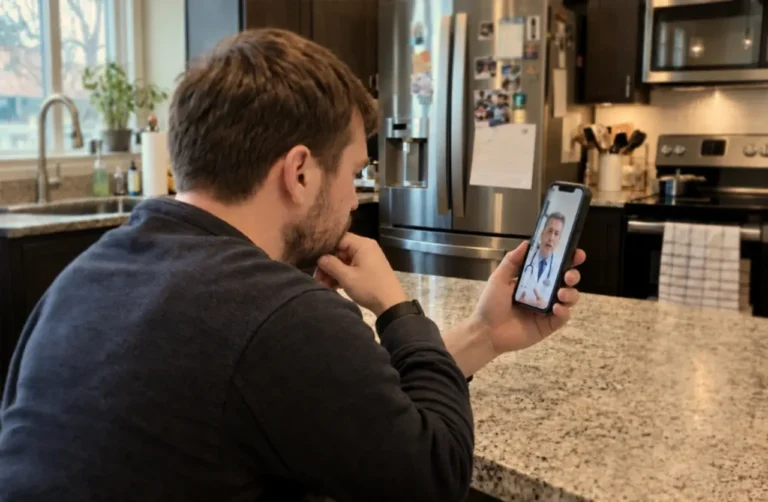
Suboxone (buprenorphine-naloxone) is a medication that can ease withdrawal and cravings enough to make stopping kratom or 7-OH possible. A QuickMD doctor evaluates your situation over video or phone and, when it’s appropriate, can send a prescription for buprenorphine-naloxone (Suboxone) to a pharmacy the same day, no insurance required. QuickMD doctors do not judge. We are here to help you.
We are licensed in 40-plus states. QuickMD doctors regularly see patients dealing with kratom and 7-OH use, and they know how to use that experience to give you the best possible care. Our guide to how online treatment works lays out the process from booking through follow-up.
Buprenorphine-naloxone (Suboxone) isn’t specifically approved for kratom or 7-OH, but case reports and a literature review have shown it works well. Kratom and 7-OH addiction looks and acts just like opioid use disorder.
Our article on Suboxone for kratom use disorder goes further into how and why doctors use it this way.
Frequently asked questions about kratom and 7-OH addiction
Is kratom addiction actually common, or is that overstated?
Research we have isn’t a population-wide statistic, but in a 2024 study of just over 2,000 people who currently use kratom, a little more than 1 in 4 met clinical criteria for kratom use disorder, most often because of tolerance and withdrawal. An earlier, smaller 2022 study found a similar range, just under a third. Both studies looked specifically at people who already use kratom regularly, so these numbers describe risk within that group rather than how common kratom addiction is overall.
Can you be dependent on kratom without using it every day?
Yes. What matters for dependence is the pattern of your use and what it’s doing to your life, not whether a day goes by without it. Cravings, or a hard time cutting back, can still show up even if you’re not using daily.
Does kratom show up on a standard drug test?
Usually not. Kratom isn’t part of the standard panel most workplaces or courts screen for, though what gets tested can differ by employer, court, or situation. Our full guide on whether kratom shows up on a drug test breaks down what different tests actually check for.
Is 7-OH more addictive than regular kratom?
7-OH is the more concentrated of the two, and concentration is what changes the picture. It acts on the same opioid receptors kratom leaf does, just more strongly, which is why dependence and withdrawal from 7-OH tend to come on faster and hit harder. There’s no exact multiplier we can give you for how much stronger it is, only that the difference is real and worth taking seriously. Several laboratory and animal studies show that 7-OH is more potent than morphine.
Do I have to stop using kratom or 7-OH before I can talk to a doctor?
No. Whatever’s true for you right now- still using, cutting back, or already stopped- a QuickMD doctor can start from there. We encourage you to reach out to QuickMD as soon as possible so that you can discuss your situation with a clinician who has experience with kratom and 7-OH.
What’s the difference between being “addicted” to kratom and just dependent on it?
Dependence means your body has adjusted to kratom or 7-OH, so you need more for the same effect or feel bad without it. Addiction adds a layer on top: using compulsively, or continuing even as it causes real problems. Which “term” fits you matters less than whether the pattern is actually affecting your life. A doctor doesn’t need to wait for you to pick the right label before helping.
Disclaimer
Articles on this website are meant for educational purposes only and are not intended to replace professional medical advice, diagnosis or treatment. Do not delay care because of the content on this site. If you think you are experiencing a medical emergency, please call your doctor immediately or call 911 (if within the United States). This blog and its content are the intellectual property of QuickMD LLC and may not be copied or used without permission.
References
American Psychiatric Association. (2022). Diagnostic and statistical manual of mental disorders (5th ed., text rev.). https://doi.org/10.1176/appi.books.9780890425787
Henningfield, J. E., et al. (2023). Kratom withdrawal: Discussions and conclusions of a scientific expert forum. Drug and Alcohol Dependence Reports, 7, 100142. https://www.sciencedirect.com/science/article/pii/S2772724623000124
Hill, K., Grundmann, O., Smith, K. E., & Stanciu, C. N. (2024). Prevalence of kratom use disorder among kratom consumers. Journal of Addiction Medicine, 18(3), 306–312. https://doi.org/10.1097/ADM.0000000000001290
National Institute on Drug Abuse. (2026, March 11). Kratom. National Institutes of Health. https://nida.nih.gov/research-topics/kratom
Smith, K. E., Dunn, K. E., Rogers, J. M., Garcia-Romeu, A., Strickland, J. C., & Epstein, D. H. (2022). Assessment of kratom use disorder and withdrawal among an online convenience sample of US adults. Journal of Addiction Medicine, 16(6), 666–670. https://doi.org/10.1097/ADM.0000000000000986
Weiss, S. T., & Douglas, H. E. (2021). Treatment of kratom withdrawal and dependence with buprenorphine/naloxone: A case series and systematic literature review. Journal of Addiction Medicine, 15(2), 167–172. https://doi.org/10.1097/ADM.0000000000000721
QuickMD has strict referencing policies and relies on reputable sources, including peer-reviewed research, clinical guidelines, medical organizations, and government and public health agencies, among others. Learn more about how we ensure accuracy in our content by reading our editorial guidelines.