What you’ll learn
We’ll cover how anxiety and poor sleep end up making each other worse, and what that cycle looks like in your body. We’ll also walk through the treatment options, including medications that can address both at once, that QuickMD doctors can evaluate you for.
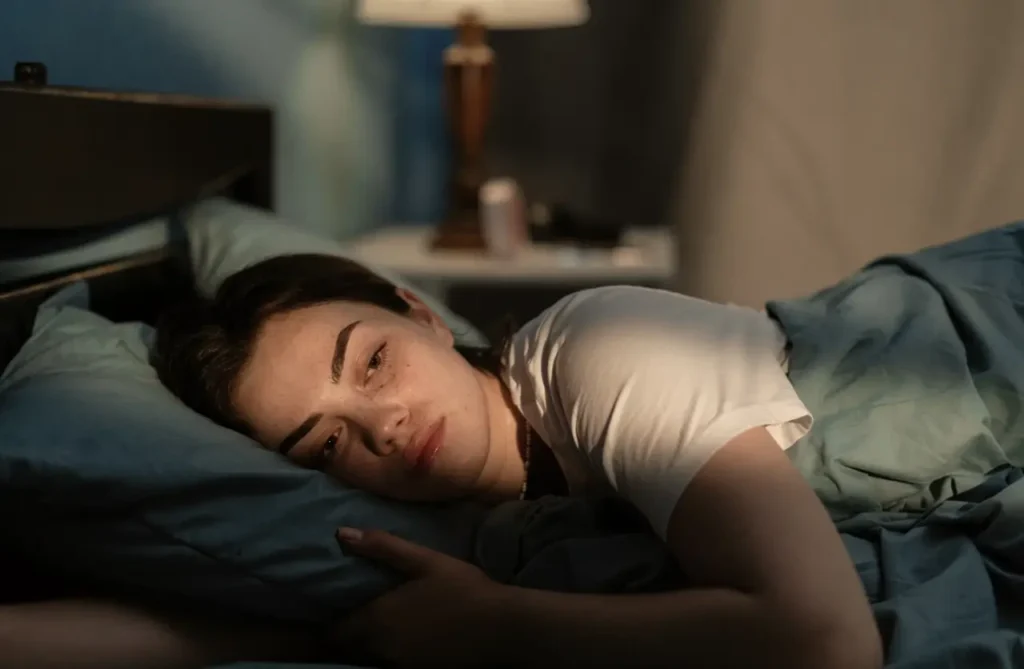
If you’re lying awake with your mind racing about tomorrow, or you wake up anxious after a rough night, you may be dealing with two things that feed each other. That connection is real, and it’s treatable.
Can anxiety cause sleep problems?
Yes, anxiety can cause sleep problems, and trouble sleeping can lead to anxiety.
What’s happening in your body is called hyperarousal: your stress response (cortisol and adrenaline) stays switched on instead of powering down at night. It’s what usually causes racing thoughts, a mind that won’t settle, or feeling tense the moment you get into bed. A rough night’s sleep then feeds the next day’s anxiety symptoms and keeps the cycle going.
That doesn’t mean something is wrong with you. It’s just a physiological loop, and it responds well to treatment.
What does the anxiety-sleep cycle look like?
Here’s how the cycle usually goes: A bad night of sleep leaves you feeling more anxious the next day. Then, that extra anxiety makes it harder to wind down the following night. After that, the harder night feeds even more anxiety the day after.
For some people, this turns into anxiety about sleep itself, which can include dreading bedtime, watching the clock, and running through how rough tomorrow will be if sleep doesn’t come soon.
This isn’t just a side effect of anxiety. Sleep disturbance is one of the specific symptoms doctors look for when diagnosing generalized anxiety disorder, along with restlessness, fatigue, trouble concentrating, irritability, and muscle tension. Anxiety disorders also show up in roughly 24 to 36 percent of people with ongoing sleep trouble. It’s common enough that clinicians expect to see both together. Other studies have shown that roughly half of people with depression also have a current anxiety disorder.
But the cycle is treatable.
Treatment options for anxiety-related sleep problems
Getting real relief usually means treating the anxiety and the sleep disruption together, not just one or the other. What that looks like in practice depends on how severe things have gotten and how long you’ve been dealing with it. Here’s what those options may look like.
Cognitive behavioral therapy for insomnia (CBT-I)
Cognitive behavioral therapy for insomnia, or CBT-I, is the first-line treatment for ongoing sleep trouble, and the evidence behind it is strong. It usually runs six to eight sessions and works by changing the thoughts and habits that keep sleep trouble going, rather than just managing symptoms night to night.
Common strategies include keeping a consistent wake time, spending less time lying awake in bed, moving worry to a scheduled time during the day instead of at night, and challenging unhelpful expectations about what a night of sleep is supposed to be like.
CBT-I still works even when anxiety is the main driver behind the sleep trouble, and it pairs well with medication rather than ruling it out.
SSRIs and SNRIs
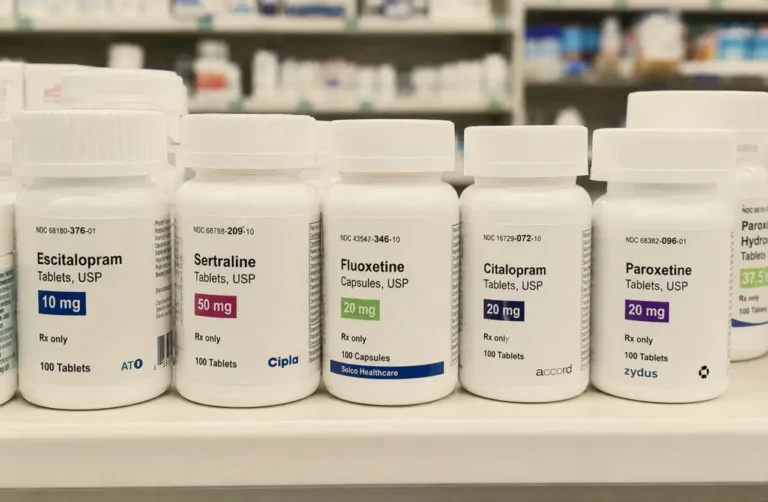
SSRIs (selective serotonin reuptake inhibitors) and SNRIs (serotonin-norepinephrine reuptake inhibitors) are first-line medications for anxiety disorders. Sleep usually improves as the anxiety itself improves, since the medication treats the underlying anxiety rather than sedating you into sleep.
Sertraline (Zoloft®) and venlafaxine ER (Effexor XR®) are two examples a QuickMD doctor might evaluate you for. Paroxetine (Paxil®) is another option some patients use.
In the first week or two, some people notice headaches, trouble sleeping, or even a temporary increase in anxiety as the medication starts working. SNRIs can also bring on sweating, tremor, or a rise in blood pressure. It’s typically not a sign that something has gone wrong.
The FDA also flags an increased risk of suicidal thoughts in children, teens, and young adults under 25, especially early in treatment or after a dose change, so a doctor will watch for this closely in that age group. If a medication feels activating or is getting in the way of sleep, a doctor can safely adjust your dose accordingly.
The full benefit for both the anxiety and the sleep trouble typically can take four to eight weeks. It’s a longer-term fix rather than something that works overnight.
Trazodone
Trazodone is an atypical antidepressant, a SARI (serotonin antagonist and reuptake inhibitor), that’s FDA-approved for major depressive disorder and widely prescribed off-label, at low doses, as a sleep aid. We may prescribe trazodone for sleep trouble itself related to depression or anxiety, not for anxiety or depression itself. When sleep is the biggest part of what’s going on, it’s often paired with a separate medication that treats the anxiety or depression underneath it.
For sleep, doctors usually start at around 25 mg, and may increase it up to 100 mg if needed. You’d take it about 30 minutes before bed. At that low dose, it works through a combination of receptor effects that help you fall asleep. It’s different from benzodiazepines or sleep medications like Ambien, and it doesn’t carry the same dependence risk.
Most ongoing sleep trouble has an underlying cause, usually anxiety, depression, or withdrawal. Trazodone is meant for exactly those situations: sleep trouble that’s a symptom of something else. It isn’t a controlled substance and doesn’t carry dependency risk.
Drowsiness the next morning and dizziness are both possible, which a doctor will go over before prescribing. Male patients should know that trazodone carries a rare risk of priapism; stop taking it and seek emergency care if an erection lasts longer than four hours.
Trazodone is available through QuickMD for $19 a month via QuickMD Home Delivery after a $99 visit.
Mirtazapine
Mirtazapine (Remeron®) is an antidepressant that’s FDA-approved for depression and used off-label, like trazodone, where anxiety and sleep trouble overlap. While trazodone is used specifically for sleep and often paired with a separate medication for anxiety, mirtazapine (Remeron®) can cover both at once.
At low doses, it’s described as “uniquely more sedating” than at higher ones. That makes it a practical option when sleep is the most disruptive part of what you’re dealing with, since one medication can do the work of two.
Doctors typically start it at a low bedtime dose and increase gradually only if needed, with the starting point and pace based on your history. Increased appetite and weight gain are common side effects, and a doctor will talk you through them before prescribing.
Your QuickMD doctor can evaluate whether mirtazapine, trazodone, or an SSRI or SNRI fits what you’re dealing with. Book a visit today.
What about sleep medications and benzodiazepines?
Sedative-hypnotic sleep medications like Ambien® and Lunesta® can work for short-term relief, and so can benzodiazepines like Xanax®, Valium®, Ativan®, and Klonopin®. But neither is meant for long-term use. Both carry a real risk of dependence, and neither treats what’s actually driving the anxiety.
QuickMD doctors take a different approach on purpose: we treat the sleep trouble in the context of what’s causing it (whether that’s anxiety, depression, or withdrawal), rather than sedating the symptom by itself. We do not prescribe benzodiazepines or sedative sleep medications.
When to talk to a doctor
Here’s a good guideline: sleep trouble that happens at least three nights a week for more than a month is worth getting evaluated. So is anxiety that’s getting in the way of work, relationships, or daily life.
If you’ve ever gone through a stretch of sleeping much less than usual but felt energized instead of exhausted, as though you barely needed sleep, mention that to a doctor specifically. It can point toward something different and change which treatments make sense.
The combination of anxiety and sleep trouble is common and treatable. A QuickMD doctor can evaluate everything as part of our online mental health treatment.
Frequently asked questions about anxiety and sleep
What’s the difference between sleep anxiety and ongoing sleep problems?
Sleep anxiety specifically means anxiety about the act of sleeping itself, like dreading bedtime or lying there worried you won’t fall asleep. Ongoing sleep trouble is broader: it can happen with that specific worry, or without it, and can come from anxiety, depression, pain, or plenty of other causes. Telling a doctor which one fits you helps them decide whether to focus more on the anxiety itself or on the sleep pattern directly.
Can I take trazodone if I have a history of alcohol use?
This is something to bring up directly with your doctor, since combining trazodone with alcohol can increase drowsiness and impair coordination more than either one alone. Trazodone itself isn’t addictive and doesn’t carry the same dependence risk as benzodiazepines, which can actually make it a reasonable option for some people with a history of alcohol use, but your doctor needs your full history to make that call safely.
Do I need to see a doctor in person to get a prescription for anxiety-related sleep problems?
No. A QuickMD doctor can evaluate you online and, if appropriate, send a prescription to a pharmacy near you or have it delivered to your door in as little as two days through home delivery, all without an in-person visit.
How long will I need to stay on medication for anxiety-related sleep problems?
It depends on what’s prescribed and how you respond. Medications like SSRIs and SNRIs are often continued for months once they’re working, since stopping early can bring symptoms back, while something like trazodone, used specifically for sleep, might be short-term or ongoing depending on what’s driving the sleep trouble. Your doctor will reassess with you along the way rather than set a fixed end date up front.
Can I take trazodone if I already take an SSRI?
Often, yes. Trazodone is commonly added at a low dose alongside an SSRI specifically to help with sleep, and that combination is a standard approach. There is a real interaction to be aware of: an increased risk of a rare condition called serotonin syndrome when serotonin-affecting medications are combined, so your doctor will factor in your specific medications and doses before adding it.
What’s the difference between trazodone and mirtazapine for sleep?
Both can help with sleep when anxiety or depression is part of what you’re dealing with, but they work differently and fit different situations. Trazodone is prescribed specifically for sleep and is often paired with a separate medication for the anxiety itself, while mirtazapine (Remeron) can cover both the anxiety and sleep in a single medication. Which one makes more sense depends on your full situation, including other side effects, such as appetite changes, which matter more with mirtazapine (Remeron).
Disclaimer
Articles on this website are meant for educational purposes only and are not intended to replace professional medical advice, diagnosis or treatment. Do not delay care because of the content on this site. If you think you are experiencing a medical emergency, please call your doctor immediately or call 911 (if within the United States). This blog and its content are the intellectual property of QuickMD LLC and may not be copied or used without permission.
References
Hirschfeld, R. M. A. (2001). The comorbidity of major depression and anxiety disorders: Recognition and management in primary care. Primary Care Companion to the Journal of Clinical Psychiatry, 3(6), 244–254. https://pmc.ncbi.nlm.nih.gov/articles/PMC181193/
Jilani, T. N., Gibbons, J. R., Faizy, R. M., & Saadabadi, A. (2024). Mirtazapine. In StatPearls. StatPearls Publishing. https://www.ncbi.nlm.nih.gov/books/NBK519059/
Malleza, S. (2026). Trazodone guide: Pharmacology, indications, dosing guidelines and adverse effects. Psychopharmacology Institute. psychopharmacologyinstitute.com
MedlinePlus. (n.d.). Sertraline. U.S. National Library of Medicine. https://medlineplus.gov/druginfo/meds/a697048.html
National Institute of Mental Health. (n.d.). Generalized anxiety disorder: When worry gets out of control. U.S. Department of Health and Human Services. https://www.nimh.nih.gov/health/publications/generalized-anxiety-disorder-gad
Shin, J. J., & Saadabadi, A. (2024). Trazodone. In StatPearls. StatPearls Publishing. https://www.ncbi.nlm.nih.gov/books/NBK470560/
Staner, L. (2003). Sleep and anxiety disorders. Dialogues in Clinical Neuroscience, 5(3), 249–258. https://pmc.ncbi.nlm.nih.gov/articles/PMC3181635
QuickMD has strict referencing policies and relies on reputable sources, including peer-reviewed research, clinical guidelines, medical organizations, and government and public health agencies, among others. Learn more about how we ensure accuracy in our content by reading our editorial guidelines.