What you’ll learn
We explain what’s really in 7-OH gummies, capsules, tablets, or extracts, and why these products carry far more risk than raw kratom leaf. We also cover what the real-world data on overdoses and hospitalizations show, and what to do if you or someone you know has become dependent on one of these products.
7-OH gummies, shots, extracts, and tablets might look like just another way to take kratom, but they usually aren’t. What’s actually inside can be a very different, much stronger product than regular kratom leaf, and that’s worth understanding before you take another dose.
If you’re here because something about your own use feels off, that instinct is worth listening to, and it doesn’t mean you’ve done anything wrong. A lot of people don’t realize how much stronger these products are until dependence has already set in, and there’s a safe, judgment-free way through it whenever you’re ready.
What are 7-OH gummies, capsules, tablets, and extracts?
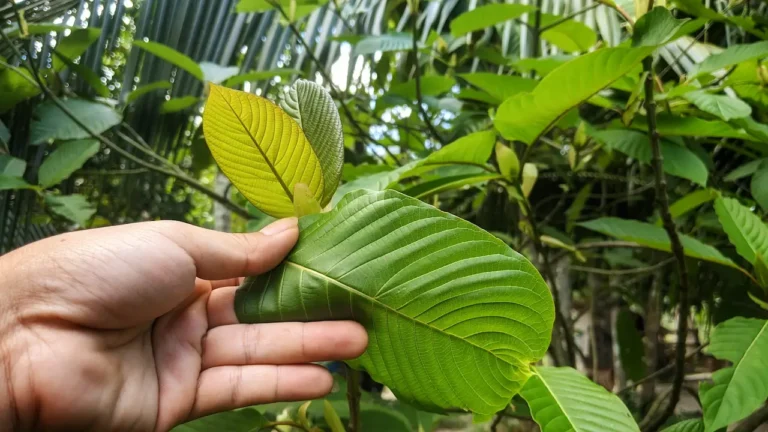
7-hydroxymitragynine, or 7-OH, is a compound that occurs naturally in kratom leaf, but only in trace amounts. Manufacturers can pull that compound and concentrate it or synthesize it in a lab. Either way, what ends up in a gummy, capsule, or tablet is not the same as raw kratom leaf.
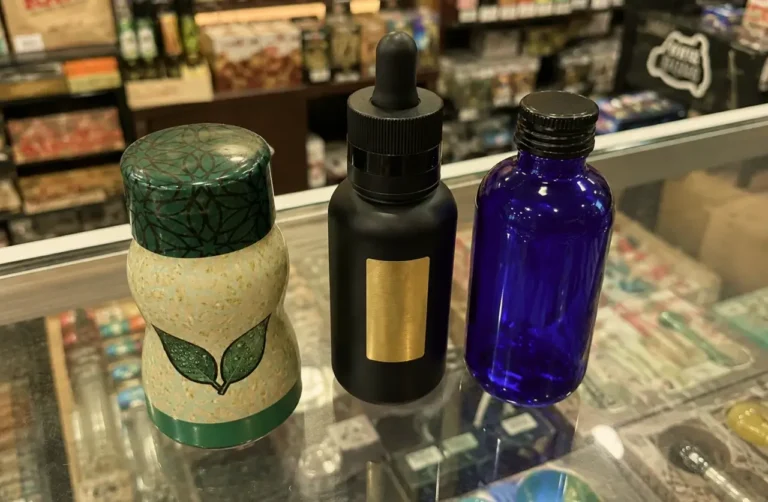
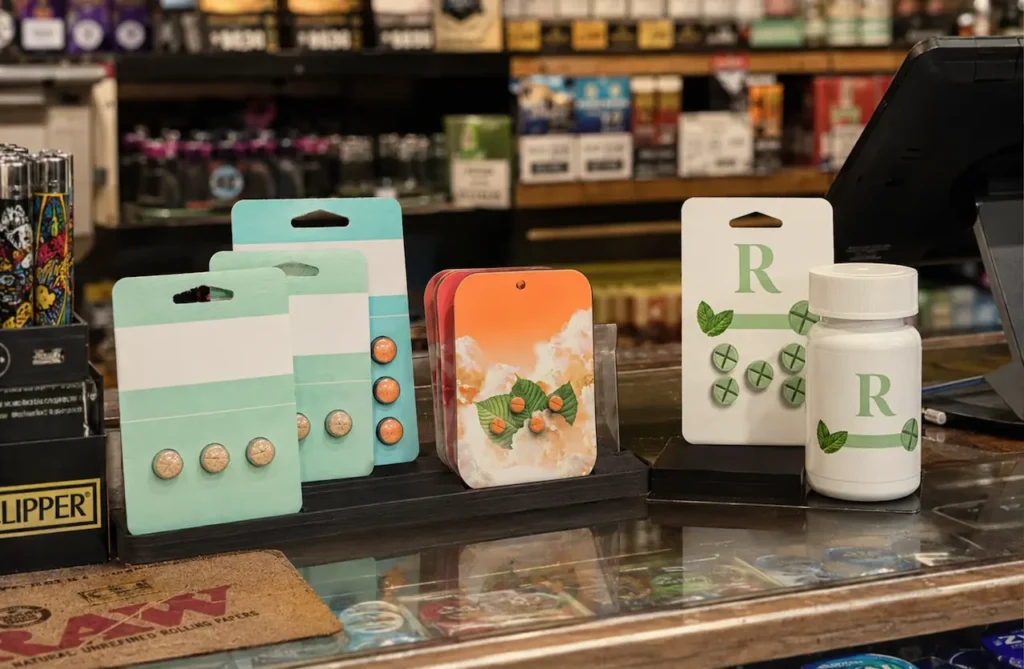
These concentrated products come in forms such as gummies, capsules, tablets, shots, and liquid extracts, and are often sold at gas stations, vape shops, and smoke shops, as well as online. There’s no standard requirement for dosing or labeling, so strength can vary widely, even between batches of the same product.
7-OH products on shelves right now include things like 10 mg gummies, flavored gummies, chewable tablets, and multi-serving packs, and the actual amount of 7-OH in each can differ sharply (even when the packaging looks similar). If you’ve used products like these, it’s worth understanding how much 7-OH you’re actually taking, since the number on the label may not tell you.
For the bigger picture on how 7-OH differs from kratom overall, read our companion guide on the differences between kratom and 7-OH.
The problem with concentrated products: Natural leaf vs. synthetic and semi-synthetic products
Natural kratom leaf typically contains less than 2% 7-OH, while semi-synthetic and fully synthetic products have been measured at concentrations up to 98%. In an isolated lab tissue test (not a measure of how strong the drug actually feels to a person), 7-OH showed potency up to 13 times that of morphine. That number appeared in lab and animal tests, not human trials, but it points to just how different a concentrated product is from the plant it started as.
The Texas Poison Center Network logged 192 kratom or 7-OH exposure reports through August 27, 2025, compared with 107 for all of 2024. Of the 2025 reports, 19 involved concentrated 7-OH specifically, and 11 of those needed treatment at a healthcare facility.
The rise in exposure reports highlights growing concerns about how concentrated 7-OH products can be.
Why concentration makes these products more dangerous
A few things happen once 7-OH is concentrated:
- Tolerance builds faster: Higher potency means your body attunes to it more quickly than it would to raw leaf, so it takes more to get the same effect, and dependence can follow sooner.
- You can’t reliably judge your own dose: With no manufacturing standard, strength varies sharply between products, and even between batches of the same product. What worked yesterday might feel very differently today.
- Breathing risk goes up: At these concentrations, 7-OH affects the body much more strongly, like an opioid does, which raises the risk of dangerous breathing suppression, especially at higher doses or combined with other substances.
- The dependence is real, not just a habit: Regular use of a concentrated, opioid-like compound builds genuine physical dependence or addiction. That’s why stopping suddenly can trigger real opioid-type withdrawal, not just mild discomfort.
What people actually experience
A common pattern shows up again and again in research looking at how people describe their own kratom and 7-OH use: someone starts with kratom leaf or a milder product, then moves to a concentrated extract, capsule, or gummy because it feels stronger or more reliable.
Once someone switches to a concentrated product, use can escalate quickly, sometimes going from occasional use to several times a day within months.
Many people are caught off guard by how much harder withdrawal is coming off a concentrated product compared with leaf, simply because they hadn’t realized how much stronger it actually was.
That’s echoed in what we hear directly from patients. Coming off concentrated 7-OH, people often describe withdrawal that rivals, or beats, what they remember from stronger prescription opioids. Severe insomnia, restlessness, heavy sweating, nausea, diarrhea, body aches, intense cravings, and anxiety are the symptoms that come up again and again.
A lot of people tell us that a cold-turkey attempt was what finally pushed them to reach out for help because they couldn’t get through it alone.
What to do if you think you’re dependent on a 7-OH product
Stopping a concentrated 7-OH product suddenly can trigger a real opioid-type withdrawal. Medication-Assisted Treatment (MAT) is often the safer way through it.
We offer same-day telemedicine visits with a licensed doctor. If Suboxone® (buprenorphine-naloxone) is appropriate for you, it can often be prescribed that same day, no insurance required. Your prescription can typically be filled at your local pharmacy, or we can arrange home delivery instead.
If you ever need it, naloxone (Narcan) is available at most pharmacies without a prescription and can reverse an opioid overdose, including one involving 7-OH.
Ready to talk to someone? Our doctors can talk with you about Suboxone for kratom and 7-OH dependence or help you explore whether Suboxone treatment may be right for you.
What the data shows: overdoses, hospitalizations, and deaths
Here’s some of the real-world data on how concentrated 7-OH has shown up in emergency rooms, poison control centers, and federal enforcement action over the past two years:
- California’s Department of Public Health reported six overdose deaths in Los Angeles County linked to kratom or 7-OH, announced in January 2026.
- Pennsylvania’s Department of Health documented 167 kratom or 7-OH poison-center cases from January 2022 through June 2025, with 25 people given naloxone and 14 requiring mechanical ventilation. No deaths were recorded in that window.
- In December 2025, the FDA and Department of Justice seized about 73,000 units of 7-OH product, worth roughly $1 million, from distributors near Kansas City, Missouri.
- A 2026 case report described a person who developed psychosis and delirium after using 7-OH pills at 300 to 400-plus milligrams a day for several months, the first documented case of its kind. It’s one severe example, not a typical outcome, but it shows how serious a reaction can get.
What the FDA and DEA are doing
Federal regulators have been moving against concentrated 7-OH, and FDA Commissioner Marty Makary has publicly warned that these products risk fueling another wave of opioid-related harm. On July 29, 2025, the FDA recommended that the DEA take a scheduling action on concentrated 7-OH.
In July 2026, the DEA released notice of intent to place concentrated 7-OH in Schedule I of the Controlled Substances Act. The HHS has reportedly told the DEA that it had no objection to that placement.
As of this writing, the scheduling action is proposed, not finalized.
With enforcement increasing and several states already banning concentrated 7-OH outright, we’ve also seen more people reach out for help as their usual supply gets harder to find. You can read our article on the current legal status of 7-OH by state if you’re unsure about your state’s laws.
Frequently asked questions about 7-hydroxymitragynine gummies, capsules, tablets, and extracts
How much 7-OH is in a typical gummy, capsule, or tablet?
It depends on the product, and the label isn’t always a reliable guide. No regulator independently checks the milligram figure printed on a 7-OH product, so two products claiming the same number aren’t guaranteed to actually match.
Will a 7-OH product show up on a standard drug test?
Usually not. Standard 5-panel and 10-panel employment drug tests don’t typically screen for kratom or 7-OH, though specialized panels used in some addiction-treatment and probation settings can detect it. See our full answer on kratom and drug testing for more details.
Can naloxone (Narcan) reverse a 7-OH overdose
It can help, but it won’t reverse every symptom of a bad reaction, since it specifically targets the opioid-like effect. That’s why calling 911 still matters even after naloxone is given.
Does insurance cover treatment for 7-OH dependence?
You don’t need insurance to get started. A QuickMD visit for kratom and 7-OH dependence costs a flat $99, so coverage isn’t a barrier.
Is it safer to switch back to raw kratom instead of quitting completely?
Not really. Going back to leaf doesn’t resolve a dependence that built up on a concentrated product. Medication-Assisted Treatment, not a lower-strength product, is the medically supported way to quit.
Disclaimer
Articles on this website are meant for educational purposes only and are not intended to replace professional medical advice, diagnosis or treatment. Do not delay care because of the content on this site. If you think you are experiencing a medical emergency, please call your doctor immediately or call 911 (if within the United States). This blog and its content are the intellectual property of QuickMD LLC and may not be copied or used without permission.
References
California Department of Public Health. (2026). Press release NR26-005. https://www.cdph.ca.gov/Programs/OPA/Pages/NR26-005.aspx
Elrokhsi, N. S., Lam, C. K., & Balasanova, A. A. (2026). 7-OH-mitragynine-induced psychosis and delirium. Primary Care Companion for CNS Disorders, 28(2), 25cr04145. https://doi.org/10.4088/PCC.25cr04145
Pennsylvania Department of Health. (2025). Health Advisory PA-HAN-810. https://www.pa.gov/content/dam/copapwp-pagov/en/health/documents/topics/documents/2025%20HAN/2025-810-10-03-%20Kratom.pdf
Rogers, J. M., Colvin, K., Epstein, D. H., Grundmann, O., McCurdy, C. R., & Smith, K. E. (2024). Growing pains with kratom: Experiences discussed in subreddits contrast with satisfaction expressed in surveys. Frontiers in Pharmacology, 15. https://pmc.ncbi.nlm.nih.gov/articles/PMC11211595/
Texas Department of State Health Services. (2025). Serious illnesses associated with 7-OH use. https://www.dshs.texas.gov/news-alerts/serious-illnesses-associated-7-oh-use
U.S. Department of Health and Human Services. (2025). FDA 7-OH scheduling recommendation. https://www.hhs.gov/press-room/fda-7-oh-scheduling-recommendation.html
U.S. Department of Justice. (2025). Justice Department seizes unlawful 7-OH products from three warehouses. https://www.justice.gov/opa/pr/justice-department-seizes-unlawful-7-oh-products-three-warehouses
U.S. Drug Enforcement Administration. (2026). Notice of intent to temporarily schedule 7-hydroxymitragynine. Federal Register, Document 2026-13580. https://www.federalregister.gov/documents/2026/07/06/2026-13580/schedules-of-controlled-substance-temporary-placement-of-7-hydroxymitragynine-above-a-specified
U.S. Food and Drug Administration. Products containing 7-OH can cause serious harm. Consumer Update. https://www.fda.gov/consumers/consumer-updates/products-containing-7-oh-can-cause-serious-harm
QuickMD has strict referencing policies and relies on reputable sources, including peer-reviewed research, clinical guidelines, medical organizations, and government and public health agencies, among others. Learn more about how we ensure accuracy in our content by reading our editorial guidelines.