
What you’ll learn
We’ll cover how long kratom withdrawal usually lasts, when it’s hardest, and how treatment can make it shorter and easier. If you’ve used strong 7-OH products, we’ll cover that too.
Maybe it’s been a few hours since your last dose. Maybe you’re still deciding when to stop. Either way, it helps to know what’s ahead. Kratom withdrawal is real. It’s physical, and you don’t have to just push through it alone.
Doctors haven’t studied kratom withdrawal as much as withdrawal from other, more familiar substances. So we’re using the best evidence we have. Below, we walk through what withdrawal tends to look like, step by step, and how a QuickMD doctor can help make it easier.
How long does kratom withdrawal last?
For most people, the physical symptoms fade within a week, usually hardest in the first one to three days. A few effects, like low mood, poor sleep, and cravings, can hang on for several more weeks.
How long it takes for you depends on a few things:
- How much kratom you usually take
- How long you’ve been using it
- How often you take it each day
- Whether you use leaf kratom or a stronger 7-OH product
It’s okay if you’re not sure which type you’ve been using. Many people buy kratom at a gas station or smoke shop without realizing there are different types or that those differences can matter when withdrawal starts. The timeline below can help you understand what to expect, but think of it as a general guide rather than a set schedule. If you want a clearer picture of what kratom actually is, our article breaks down its compounds, including mitragynine and 7-OH, and why it isn’t a safe alternative to opioid treatment.
Is there a studied kratom withdrawal timeline?
Not exactly. Kratom withdrawal doesn’t have its own published hour-by-hour or day-by-day timeline. What we do know is that it’s a well-documented, opioid-like withdrawal syndrome: muscle aches, trouble sleeping, anxiety, and an upset stomach are common, and for people who use kratom often, these symptoms can be serious enough to meet the clinical criteria for substance use disorder, which is more than mild discomfort.
The timeline below comes from everything we know: kratom itself, patient stories, withdrawal from other short-acting opioids, and published case reports. Want the full list of what withdrawal can feel like? Read our article on kratom withdrawal symptoms.
Everyone’s experience is different. It depends on your dose, how long you’ve used, and your own body. Think of the phases ahead as typical, not a guarantee of how yours will go.
Kratom withdrawal timeline, phase by phase
Withdrawal usually moves through four phases: it starts, it peaks, it winds down, then recovery continues longer term. Here’s what tends to happen in each phase, and about when.
| Phase | Timing | What tends to happen |
| Early symptoms | About 8 to 24 hours | Anxiety, restlessness, sweating, and stomach upset can begin |
| Acute phase | Days 1 to 7, usually peaking days 1 to 3 | Symptoms are typically most intense, then start easing |
| Sub-acute phase | Weeks 2 to 4 | Physical symptoms are mostly gone. Sleep, mood, and cravings can still linger |
| Post-acute recovery | Weeks to months | Occasional waves of low mood, poor sleep, or cravings |
Early symptoms (about 8 to 24 hours)
Kratom is short-acting, so early signs can start fast. Anxiety, restlessness, sweating, and an upset stomach can begin within about a day of your last dose, especially if you use kratom regularly or in high amounts. If you use strong 7-OH products, symptoms may start even sooner.
Acute phase (days 1 to 7, usually peaks days 1 to 3)
This is usually the hardest part. Symptoms can include muscle aches, chills, nausea, diarrhea, trouble sleeping, anxiety, and strong cravings. For most people, they start letting up by around day 7.
Sub-acute phase (weeks 2 to 4)
By now, most physical symptoms are gone. But sleep trouble, low mood, low energy, and cravings can still hang around while your brain and body adjust to life without kratom.
This stretch can feel discouraging, especially if you expected to feel normal once the worst symptoms passed. Know that it will get better, and this is a normal part of recovery, not a sign that something’s wrong.
Post-acute recovery (weeks to months)
Withdrawal symptoms typically improve and resolve over a period of days to weeks, but cravings can continue well beyond the withdrawal period and may increase the risk of relapse. Stress, familiar places, certain smells, or even a difficult day can trigger cravings after other symptoms have passed.
Because of this, treatment for substance use disorder may need to continue longer than the withdrawal timeline itself. Many people recovering from kratom or 7-OH use benefit from ongoing treatment and support to help manage cravings, reduce the risk of relapse, and support long-term recovery. A doctor can explain treatment for kratom addiction with medication and ongoing support to help keep cravings manageable through recovery.
What makes kratom withdrawal last longer or feel worse?
A few things can make withdrawal last longer or feel worse:
- Taking more, for longer, more often. The more your body has adjusted to kratom, the more it has to readjust once you stop.
- Using strong 7-OH products (gummies, shots, tablets). The FDA treats these as a distinct, higher-risk category from leaf kratom, and they act more like a strong opioid.
- Mixing kratom with other substances, like alcohol, benzodiazepines, or opioids.
- Stopping suddenly and alone, instead of tapering down or getting medical support.
If you’ve been using 7-OH, your timeline may look different. Read our 7-OH withdrawal timeline to see what to expect.
When kratom withdrawal needs medical attention
Most kratom withdrawal is uncomfortable, but you don’t have to go through it alone. It’s worth talking to a QuickMD doctor even if none of this applies to you yet. Some symptoms need medical care right away:
- Severe or ongoing vomiting or diarrhea, with signs of dehydration
- Chest pain, a racing or irregular heartbeat, or trouble breathing
- Confusion, hallucinations, or severe agitation
- Any thoughts of self-harm
- Using kratom or 7-OH with other substances that raise the risk of a serious problem
If you notice any of these, please seek medical care right away.
How treatment can ease and shorten kratom withdrawal
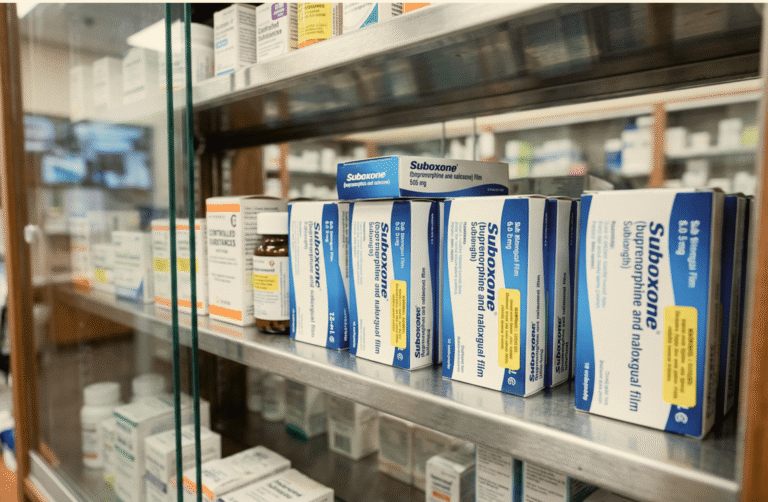
You don’t have to get through withdrawal alone. And you don’t have to wait until things get unbearable to reach out. Suboxone® (buprenorphine-naloxone) is the same medicine doctors use for opioid use disorder. It can ease kratom and 7-OH withdrawal and ease cravings. Read more about how Suboxone works for kratom and 7-OH treatment.
When Suboxone is started matters. Taking it too soon can trigger precipitated withdrawal, which can make withdrawal symptoms suddenly feel worse. That’s why doctors don’t go by a fixed number of hours since your last dose. Instead, they consider how your body is responding and have you start Suboxone once you’re already in mild to moderate withdrawal.
QuickMD’s licensed doctors treat kratom and 7-OH dependence online in 40+ states. Many patients get help the same day they reach out. When you’re ready, a Suboxone prescription can help you quit kratom or 7-OH. Or if you want to learn more, you can read about what kratom and 7-OH treatment looks like first.
Frequently asked questions about kratom withdrawal
Can I get help for kratom withdrawal without going to a hospital or detox center?
For most people, yes. A QuickMD doctor can support you through it from home. If you need a higher level of care, your doctor will recommend what’s best for you.
How long do kratom cravings last?
Cravings can last longer than the physical symptoms, sometimes for weeks or months, and they can show up out of nowhere, even after the rest of withdrawal has passed. This is a normal part of the healing process and does get better with time.
Is 7-OH withdrawal longer or worse than leaf kratom withdrawal?
No study has compared the two directly. But 7-OH is much stronger and acts more like a strong opioid, so withdrawal from it may feel harder. QuickMD doctors can support you through withdrawal and cravings and help you take the next steps toward quitting.
Can you speed up kratom withdrawal?
There’s no way to end withdrawal instantly. But treatment, including Suboxone when it’s the right fit, can ease symptoms and help shorten the hardest part.
Disclaimer
Articles on this website are meant for educational purposes only and are not intended to replace professional medical advice, diagnosis or treatment. Do not delay care because of the content on this site. If you think you are experiencing a medical emergency, please call your doctor immediately or call 911 (if within the United States). This blog and its content are the intellectual property of QuickMD LLC and may not be copied or used without permission.
References
Henningfield, J. E., Chawarski, M. C., Garcia-Romeu, A., Grundmann, O., Harun, N., Hassan, Z., McCurdy, C. R., McMahon, L. R., Sharma, A., Shoaib, M., Singh, D., Smith, K. E., Swogger, M. T., Vicknasingam, B., Walsh, Z., Wang, D. W., & Huestis, M. A. (2023). Kratom withdrawal: Discussions and conclusions of a scientific expert forum. Drug and Alcohol Dependence Reports, 7, 100142. https://pmc.ncbi.nlm.nih.gov/articles/PMC10311168/
Smith, K. E., Dunn, K. E., Rogers, J. M., Garcia-Romeu, A., Strickland, J. C., & Epstein, D. H. (2022). Assessment of kratom use disorder and withdrawal among an online convenience sample of US adults. Journal of Addiction Medicine, 16(6), 666–670. https://pubmed.ncbi.nlm.nih.gov/35220331/
New York State Department of Health. (n.d.). Buprenorphine for opioid use disorder, Module 3: Clinical use of buprenorphine. Via SAMHSA TIP 63 and ASAM guidance. https://www.health.ny.gov/publications/0112.pdf
U.S. Food and Drug Administration. (n.d.). FDA and kratom. https://www.fda.gov/news-events/public-health-focus/fda-and-kratom
QuickMD has strict referencing policies and relies on reputable sources, including peer-reviewed research, clinical guidelines, medical organizations, and government and public health agencies, among others. Learn more about how we ensure accuracy in our content by reading our editorial guidelines.