What you’ll learn
You’ll get a straight answer: using kratom or 7-OH to manage opioid withdrawal isn’t considered a safe treatment approach. We’ll cover what the research supports, what withdrawal feels like, the risk of becoming dependent on kratom or 7-OH yourself, and safer ways to move to supervised, evidence-based treatment.
Kratom and stronger 7-OH products can become difficult to stop, regardless of why or how someone started using them. Over time, you may find yourself needing more to get the same effect or experiencing withdrawal when you go without it.
If that sounds familiar, you don’t have to figure out what comes next on your own. Treatment and support are available to help you move forward.
Does kratom work for opioid withdrawal?
No. There’s no reliable evidence that kratom, or concentrated 7-OH products, safely get you through opioid withdrawal on their own. Using either one to self-treat withdrawal can leave you dependent on kratom or 7-OH instead, with a withdrawal of its own to go through later.
Here’s the evidence:
- Close to 3 in 10 regular kratom users end up meeting the criteria for kratom use disorder, according to a 2022 survey, with withdrawal symptoms of their own: stomach upset, restlessness, anxiety, irritability, and cravings. (This survey is not a measure of how common this is for everyone who tries kratom.)
- For some people, kratom use disorder becomes a path toward opioid use rather than a way to quit use, according to a 2023 review of the research.
- Going through withdrawal alone carries real risk. In one documented case, a person self-treated opioid withdrawal with kratom and later had a seizure after combining it with another substance. It’s a single case, not a typical outcome, but it’s a reminder that managing withdrawal without a doctor involved isn’t risk-free.
None of this means you’re stuck. It means the safer route is with a QuickMD doctor, not more kratom or 7-OH. Our kratom and 7-OH treatment page lays out exactly what that path looks like.
Why people turn to kratom and 7-OH during opioid withdrawal
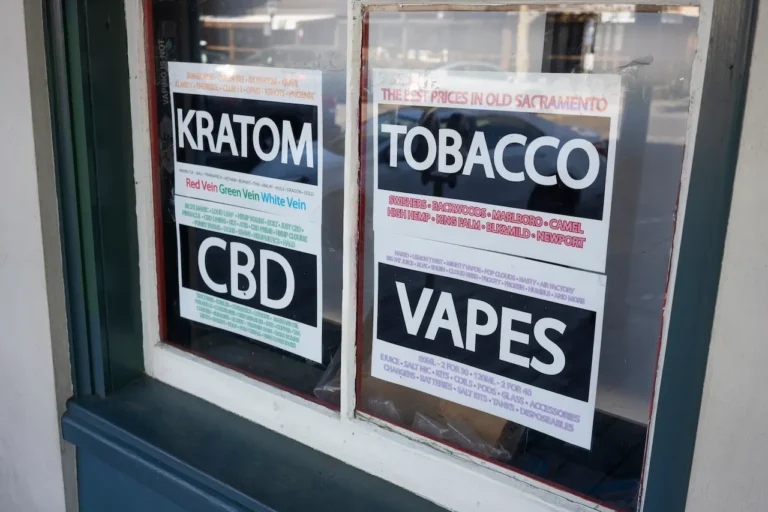
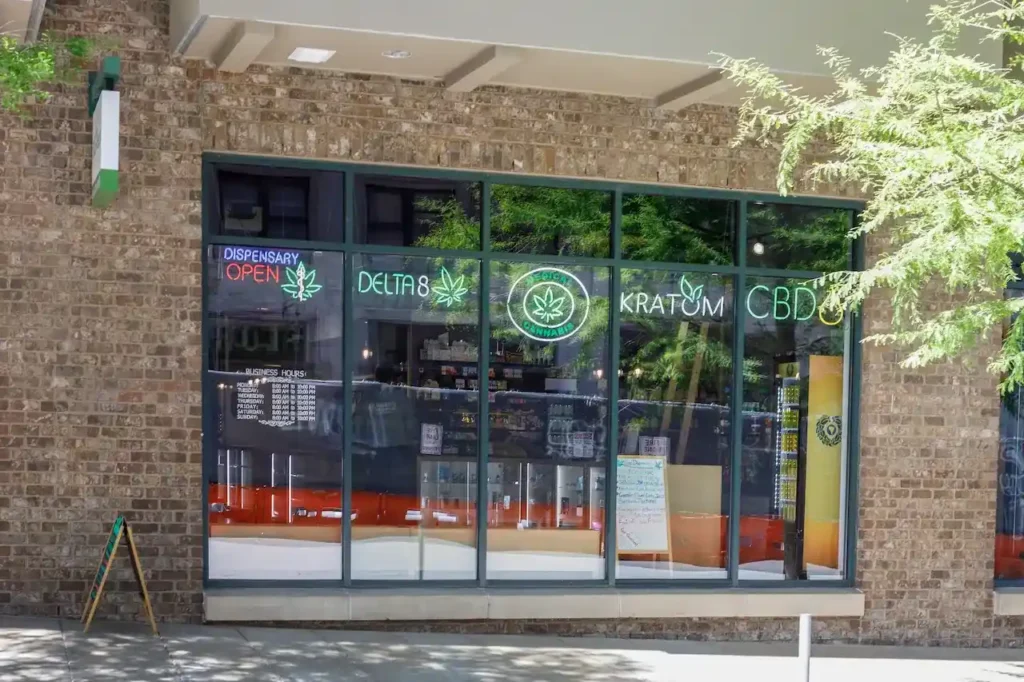
Kratom or 7-OH products are widely available at gas stations or online without anyone asking questions, which can make them seem like an accessible option for managing opioid withdrawal. They also don’t carry the stigma that calling a doctor about opioid withdrawal can carry. And, because they act on some of the same opioid receptors in the brain, they may temporarily reduce some withdrawal symptoms.
But not all products sold as kratom are the same. Some kratom products on the market now are also concentrated with 7-hydroxymitragynine, or 7-OH, a compound found naturally in kratom leaf at very low levels but added in much higher amounts to certain extracts, shots, and gummies.
These are often marketed as stronger or faster-acting. In your body, they act much closer to a full opioid than the leaf does, which increases the risks of dependence, addiction, withdrawal, and other adverse effects. Our article on the differences between kratom and 7-OH explains this in more detail.
What the research says about kratom and 7-OH for opioid withdrawal
Research on kratom and 7-OH is still limited. There aren’t large clinical studies establishing their safety or effectiveness for managing withdrawal, and even less is known about concentrated 7-OH products.
That uncertainty matters because kratom and 7-OH can themselves lead to dependence, addiction, and withdrawal. If you’re experiencing opioid withdrawal, a doctor can help you explore established treatment options backed by strong clinical evidence.
Doctors have used buprenorphine-naloxone, the same medication prescribed for opioid use disorder, to successfully treat a person’s kratom use disorder.
Research specifically tracking kratom and 7-OH withdrawal is also limited, which means there isn’t one established timeline for how symptoms will unfold.
What withdrawal from opioids and kratom actually feels like
Withdrawal can affect both your body and your mood. Because kratom acts on some of the same receptors as opioids, withdrawal can include similar symptoms.
Physically, people commonly notice:
- Muscle aches
- Sweating and chills
- Nausea, vomiting, diarrhea, or other stomach upset
- Trouble sleeping
- Restlessness
Emotionally, it’s common to feel:
- Anxious
- Irritable or on edge
- Strong cravings
While experiences vary, withdrawal can sometimes become serious. One published case described a patient hospitalized with kratom withdrawal whose condition worsened over about 20 hours, including confusion and difficulty breathing, before he experienced cardiac arrest and required emergency treatment.
Is it safe to start Suboxone® after using kratom or 7-OH?
It can be, and it’s one of the most effective paths off kratom or 7-OH, but only with the right timing.
Buprenorphine, the medicine in Suboxone®, needs to be started once you’re already feeling moderate withdrawal, and definitely not before experiencing moderate withdrawal. Starting Suboxone too soon after your last use of kratom or 7-OH can trigger a sudden, more intense withdrawal reaction called precipitated withdrawal.
That’s not a reason to avoid Suboxone. It’s the reason your first dose is timed by a licensed doctor, based on how you’re feeling at the moment, not a fixed number of hours since you last used.
What actually helps you quit kratom, 7-OH, and opioids
Medication-Assisted Treatment (MAT) with buprenorphine-naloxone, commonly known by the brand name Suboxone, is an evidence-based treatment for opioid use disorder. Your doctor works with you to determine whether medication is appropriate and builds a treatment plan around your individual needs.
We’ve walked this path with a lot of people. QuickMD doctors have completed more than 30,000 visits for kratom and 7-OH dependence and addiction treatment, and helped over 20,000 people work toward quitting.
Here’s what a visit with a QuickMD doctor looks like:
- A $99 online visit with a licensed doctor is where treatment starts.
- If Suboxone is appropriate, your prescription can often be filled at your local pharmacy the same day or delivered to your door in as little as two days through QuickMD Home Delivery.
- If you’re still using opioids, kratom, or 7-OH right now, a standalone naloxone prescription (used to reverse an overdose) is available through the same kind of visit.
- QuickMD sees patients in 40+ states, so there’s a good chance we cover yours.
Frequently asked questions about kratom, 7-OH, and opioid withdrawal
Are kratom and 7-OH legal?
It depends on where you live. Kratom is legal at the federal level but banned or restricted in a number of states and cities. 7-OH is under even more scrutiny: as of August 2026, the DEA is working to temporarily schedule 7-OH above specified thresholds as a Schedule I substance. This means concentrated 7-OH products may become federally controlled. You can check our current kratom and 7-OH laws breakdown, or browse the 7-OH and kratom resource center for the latest.
Does kratom show up on a drug test?
Possibly, but not usually. Standard drug tests don’t typically screen for kratom by name, but specialized tests can detect it, and some workplace or clinical panels do include it. If you’re being tested for another reason, don’t assume kratom won’t show up. Our drug test guide walks through the details.
Can you overdose on kratom or 7-OH?
Yes. Overdose risk goes up when kratom or 7-OH is combined with alcohol, benzodiazepines, or other opioids, and concentrated 7-OH products carry more risk than kratom leaf because they act more like a full opioid. If any of that describes your situation, it’s worth having a naloxone prescription on hand in case of an overdose, yours or someone else’s.
Will my insurance cover treatment for kratom or opioid dependence?
QuickMD visits are $99, and we do not currently accept insurance for visits. If you have insurance, you may be able to submit your medication costs to your insurance for reimbursement, depending on your plan and coverage.
What if I’m not ready to stop using kratom completely?
That’s okay, and it doesn’t disqualify you from talking to a doctor. A lot of people start with smaller steps: a doctor can check in on your dose and how often you’re using, and help you understand what the best option is for moving forward. A standalone naloxone prescription is also worth having in case of an overdose, whether or not you’re ready to quit yet. You don’t have to be fully ready to start the conversation.
Disclaimer
Articles on this website are meant for educational purposes only and are not intended to replace professional medical advice, diagnosis or treatment. Do not delay care because of the content on this site. If you think you are experiencing a medical emergency, please call your doctor immediately or call 911 (if within the United States). This blog and its content are the intellectual property of QuickMD LLC and may not be copied or used without permission.
References
Boyer, E. W., Babu, K. M., & Macalino, G. E. (2008). Self-treatment of opioid withdrawal using kratom (Mitragynia speciosa korth). Addiction, 103(6), 1048–1050. https://pubmed.ncbi.nlm.nih.gov/18482427/
Borges, J. G., & Machado, T. (2023). Kratom use disorder as a gateway to an opioid use disorder. European Psychiatry, 66(S1). https://pmc.ncbi.nlm.nih.gov/articles/PMC10661217/
Arhin, K., et al. (2023). Successful management of kratom use disorder with buprenorphine and naloxone. Cureus, 15(6). https://pubmed.ncbi.nlm.nih.gov/37519540/
Smith, K. E., Rogers, J. M., Dunn, K. E., Garcia-Romeu, A., Strickland, J. C., & Epstein, D. H. (2022). Assessment of kratom use disorder and withdrawal among an online convenience sample of US adults. Journal of Addiction Medicine. https://pubmed.ncbi.nlm.nih.gov/35220331/
Henningfield, J. E., et al. (2023). Kratom withdrawal: Discussions and conclusions of a scientific expert forum. Drug and Alcohol Dependence Reports. https://pubmed.ncbi.nlm.nih.gov/37397437/
Goodwin, B. J., et al. (2025). Kratom withdrawal: A case report and review of epidemiology, incidence, and prevalence. Primary Care Companion for CNS Disorders. https://www.psychiatrist.com/pcc/kratom-withdrawal-case-epidemiology-incidence-prevalence/
New York State Department of Health. Medications for Opioid Use Disorder, Buprenorphine, Module 3: Clinical Use of Buprenorphine (reflecting SAMHSA TIP 63). https://www.health.ny.gov/publications/0112.pdf
QuickMD has strict referencing policies and relies on reputable sources, including peer-reviewed research, clinical guidelines, medical organizations, and government and public health agencies, among others. Learn more about how we ensure accuracy in our content by reading our editorial guidelines.